
Human-Like Intelligence Could Be Physical
In a groundbreaking study, an international team has shown that nanowire networks can mimic the short- and long-term memory functions of the human brain. This breakthrough paves the way for replicating brain-like learning and memory in non-biological systems, with potential applications in robotics and sensor devices.
An international team led by scientists at the University of Sydney has demonstrated nanowire networks can exhibit both short- and long-term memory like the human brain.
The research has been published today in the journal Science Advances, led by Dr. Alon Loeffler, who received his PhD in the School of Physics, with collaborators in Japan.
“In this research, we found higher-order cognitive function, which we normally associate with the human brain, can be emulated in non-biological hardware,” Dr. Loeffler said.
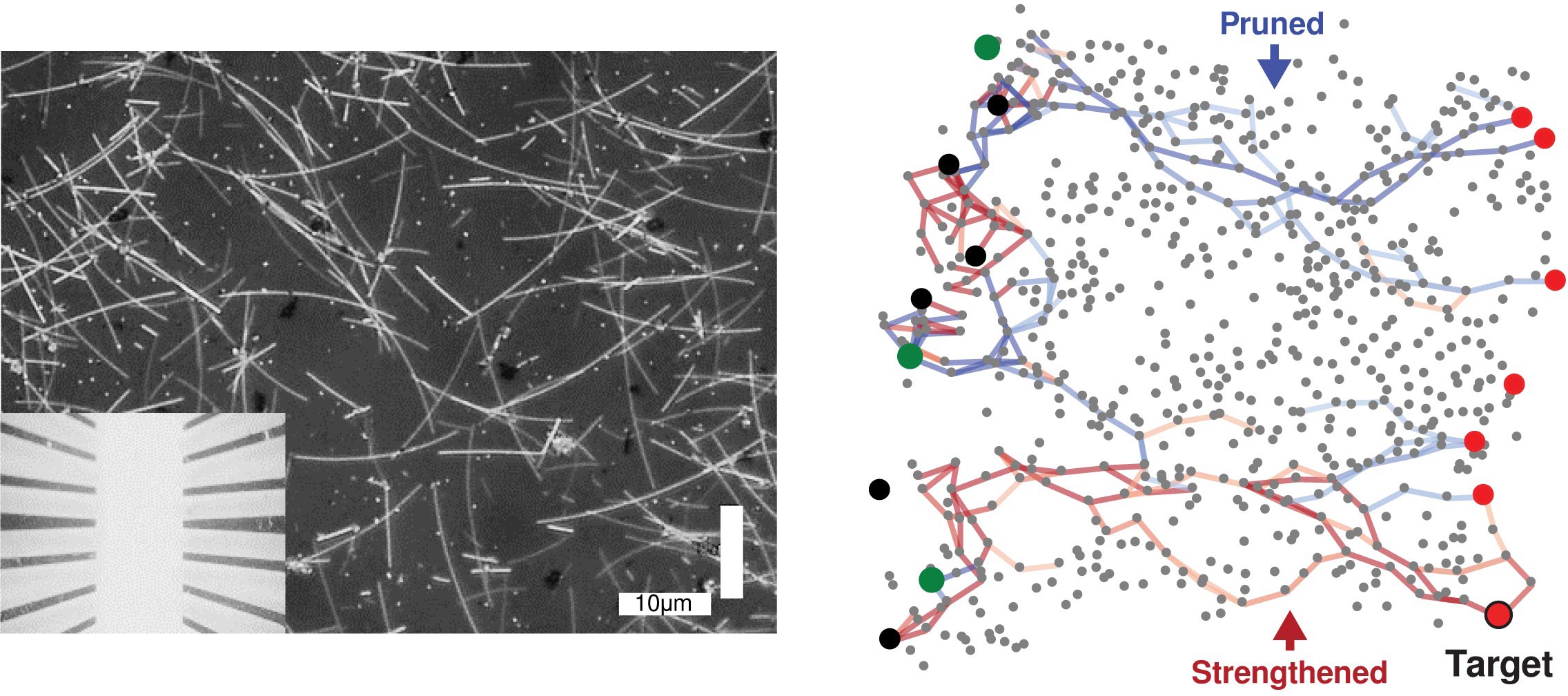
“This work builds on our previous research in which we showed how nanotechnology could be used to build a brain-inspired electrical device with neural network-like circuitry and synapse-like signaling.
“Our current work paves the way towards replicating brain-like learning and memory in non-biological hardware systems and suggests that the underlying nature of brain-like intelligence may be physical.”
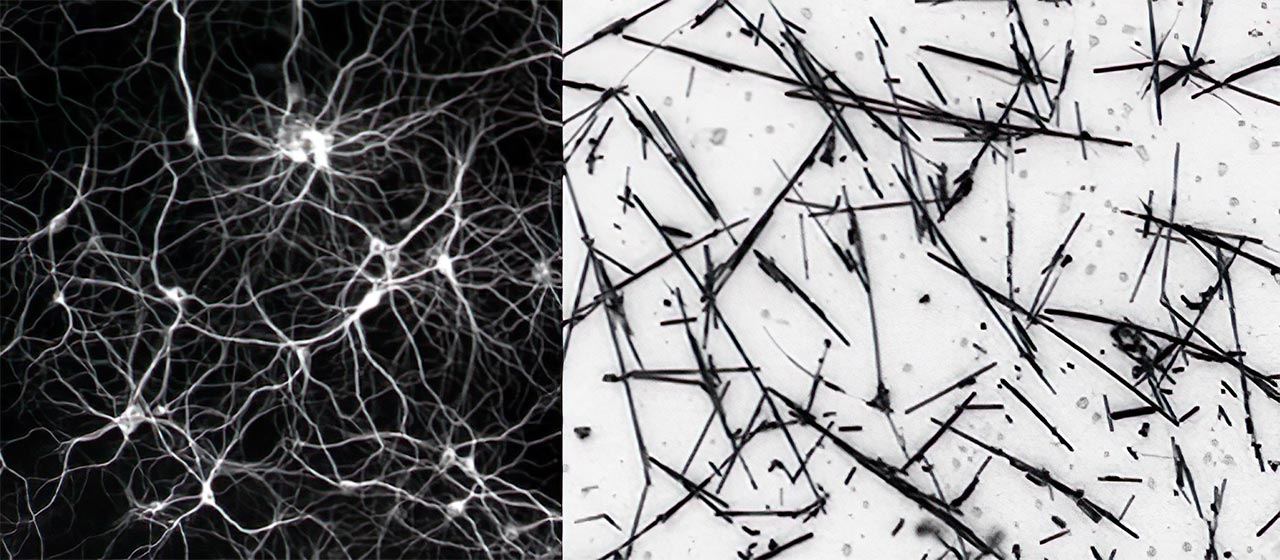
Nanowire networks are a type of nanotechnology typically made from tiny, highly conductive silver wires that are invisible to the naked eye, covered in a plastic material, which are scattered across each other like a mesh. The wires mimic aspects of the networked physical structure of a human brain.
Advances in nanowire networks could herald many real-world applications, such as improving robotics or sensor devices that need to make quick decisions in unpredictable environments.
Cognitive Function in Synthetic Systems
“This nanowire network is like a synthetic neural network because the nanowires act like neurons, and the places where they connect with each other are analogous to synapses,” senior author Professor Zdenka Kuncic, from the School of Physics, said.
“Instead of implementing some kind of machine learning task, in this study, Dr. Loeffler has actually taken it one step further and tried to demonstrate that nanowire networks exhibit some kind of cognitive function.”

To test the capabilities of the nanowire network, the researchers gave it a test similar to a common memory task used in human psychology experiments, called the N-Back task.
For a person, the N-Back task might involve remembering a specific picture of a cat from a series of feline images presented in a sequence. An N-Back score of 7, the average for people, indicates the person can recognize the same image that appeared seven steps back.
When applied to the nanowire network, the researchers found it could ‘remember’ a desired endpoint in an electric circuit seven steps back, meaning a score of 7 in an N-Back test.
Reinforcement and Memory Consolidation
“What we did here is manipulate the voltages of the end electrodes to force the pathways to change, rather than letting the network just do its own thing. We forced the pathways to go where we wanted them to go,” Dr. Loeffler said.
“When we implement that, its memory had much higher accuracy and didn’t really decrease over time, suggesting that we’ve found a way to strengthen the pathways to push them towards where we want them, and then the network remembers it.

“Neuroscientists think this is how the brain works, certain synaptic connections strengthen while others weaken, and that’s thought to be how we preferentially remember some things, how we learn, and so on.”
The researchers said when the nanowire network is constantly reinforced, it reaches a point where that reinforcement is no longer needed because the information is consolidated into memory.
“It’s kind of like the difference between long-term memory and short-term memory in our brains,” Professor Kuncic said.
“If we want to remember something for a long period of time, we really need to keep training our brains to consolidate that, otherwise it just kind of fades away over time.
“One task showed that the nanowire network can store up to seven items in memory at substantially higher than chance levels without reinforcement training and near-perfect accuracy with reinforcement training.”
Reference: “Neuromorphic learning, working memory, and metaplasticity in nanowire networks” by Alon Loeffler, Adrian Diaz-Alvarez, Ruomin Zhu, Natesh Ganesh, James M. Shine, Tomonobu Nakayama and Zdenka Kuncic, 21 April 2023, Science Advances.
DOI: 10.1126/sciadv.adg3289
Never miss a breakthrough: Join the SciTechDaily newsletter.
Follow us on Google and Google News.
2 Comments
Is cranial nano technology of service in a solution for sever tinnitus? I’ll volunteer! Thank you.
The University of Sydney should collaborate with MIT enhance Artificial intelligence work, the two fit each others achievements