
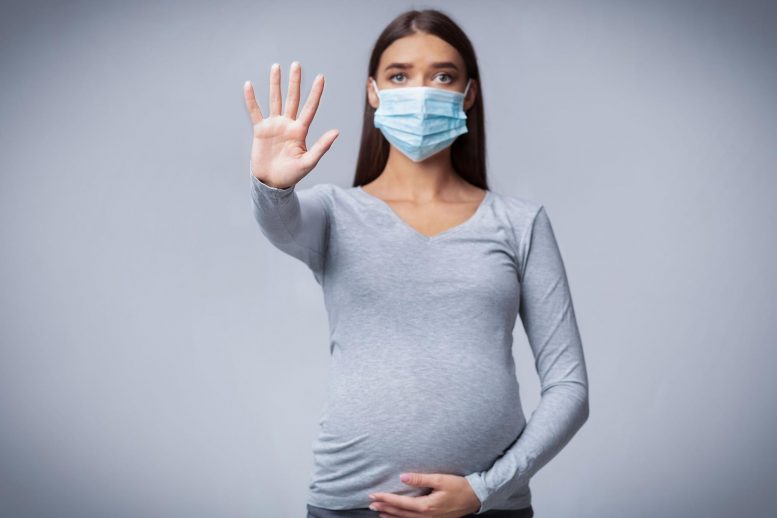
Early research suggests COVID-19 in pregnancy may affect infants’ neurodevelopment, particularly motor control.
According to a preliminary analysis presented at the 30th European Congress of Psychiatry, babies delivered to moms who had COVID-19 during pregnancy appear to exhibit different neurodevelopmental outcomes at 6 weeks.
“Not all babies born to mothers infected with COVID show neurodevelopmental differences, but our data shows that their risk is increased in comparison to those not exposed to COVID in the womb. We need a bigger study to confirm the exact extent of the difference, ” said Project Leader Dr. Rosa Ayesa Arriola.
When compared to babies from non-infected mothers, researchers found that infants born to mothers who had been infected show greater difficulties in relaxing and adapting their bodies when they are being held. This is especially true when SARS-CoV-2 infection took place in late pregnancy. Moreover, infants born from mothers who had COVID-19 tend to show greater difficulty in controlling head and shoulder movement. These alterations suggest a possible COVID effect on motor function (movement control).
The COGESTCOV-19 Project
The study results come from an initial evaluation of the Spanish COGESTCOV-19 project, which followed the course of pregnancy and baby development in mothers infected with COVID-19. The researchers are presenting the data on pregnancy and post-natal assessment at 6 weeks after birth, but the project will continue to see if there are longer-term effects. The group will monitor infant language and motor development between 18 and 42 months old.
The initial evaluation compared babies born to 21 COVID-positive pregnant women and their babies, with 21 healthy controls attending the Marqués de Valdecilla University Hospital in Santander, Spain. The mothers underwent a series of tests during and after pregnancy. These included hormonal and other biochemical tests (measuring such things as cortisol levels, immunological response, etc.) salivary tests, movement responses, and psychological questionnaires. All analyses were adjusted for infant age, sex, and other factors.
The post-natal tests included the Neonatal Behavioral Assessment Scale (NBAS), which measures the baby’s movement and behavior.
Behavioral and Motor Changes
Researcher Ms. Águeda Castro Quintas (University of Barcelona, Network Center for Biomedical Research in Mental Health), said:
“We found that certain elements of the NBAS measurement were changed in 6-week-old infants who had been exposed to the SARS-COV-2 virus. Effectively they react slightly differently to being held, or cuddled.”
We have been especially sensitive in how we have conducted these tests. Each mother and baby were closely examined by clinicians with expert training in the field and in the tests.
We need to note that these are preliminary results, but this is part of a project following a larger sample of 100 mothers and their babies. They have also been monitored during pregnancy and after birth. We also plan to compare these mothers and babies with data from another similar project (the epi-project) which looks at the effect of stress and genetics on a child’s neurodevelopment.”
Águeda Castro Quintas continued:
“This is an ongoing project, and we are at an early stage. We found that babies whose mothers had been exposed to COVID did show neurological effects at 6 weeks, but we don’t know if these effects will result in any longer-term issues, longer term observation may help us understand this.”
Need for Larger Studies and Monitoring
Co-researcher Nerea San Martín González, added:
“Of course, in babies who are so young, there are several things we just can’t measure, such as language skills or cognition. We also need to be aware that this is a comparatively small sample, so we are repeating the work, and we will follow this up over a longer period. We need a bigger sample to determine the role of infection on offspring’s neurodevelopmental alterations and the contribution of other environmental factors In the meantime, we need to stress the importance of medical monitoring to facilitate a healthy pregnancy, discussing any concerns with your doctor wherever necessary.”
Commenting, Project Leader Dr. Rosa Ayesa Arriola said:
“This is the right moment to establish international collaborations that would permit us to assess long-term neurodevelopment in children born during the COVID-19 pandemic. Research in this field is vital in understanding and preventing possible neurological problems and mental health vulnerabilities in those children in the coming years.”
In an independent comment, Dr. Livio Provenzi (University of Pavia, Italy) said:
“There is a great need to study both direct and indirect effects of the COVID-19 pandemic on the health and well-being of parents and infants. Pregnancy is a period of life which shapes much of our subsequent development, and exposure to adversity in pregnancy can leave long-lasting biological footprints. These findings from Dr. Rosa Ayesa Arriola’s group reinforce evidence of epigenetic alterations in infants born from mothers exposed to pandemic-related stress during pregnancy. It shows we need more large-scale, international research to allow us to understand the developmental effects of this health emergency, and to deliver better quality of care to parents and infants.”
Dr. Provenzi was not involved in this work.
Note: The epi-project is a multicentre project involving Hospital Clínic of Barcelona and Hospital Universitario Central de Asturias. It looks at the effects of genetics and stress on baby outcome. It is led by Prof. Dr. Lourdes Fañanás.
Funding: This research has been funded by the Spanish Ministry of Economy and Competitiveness, Instituto de Salud Carlos III through the University of Barcelona multicenter project – Intramural Grants (SAM15-20PI12 & SAM18PI01)-PI L. Fañanas and the Government of Cantabria (INNVAL20/02)-PI R. Ayesa. The authors do not have any conflict of interest regarding the development of this study and the publication of the results.
Never miss a breakthrough: Join the SciTechDaily newsletter.
Follow us on Google and Google News.
3 Comments
Perhaps someday, science will better understand the effect covid-19 has on the nervous system. I can say from personal experience that the effect is very serious and persists long after other symptoms have abated.
Is there a study finding the effects of the vaccine on pregnant mothers, on babies at 6 weeks ?
COVID has infected upwards of 90 million Americans and killed over a million. Even if less than 0.01% of vaccinated people have serious side effects, the risk to the baby and mother from potentially catching a disease that kills 1% or more of people it infects far outweighs the risk from the vaccine.