
Staff should be trained on food allergies and have epinephrine available to treat anaphylaxis.
Schools and child care centers should train staff on food allergies and have epinephrine available to treat anaphylaxis, but new guidelines do not recommend food bans.
The recommendations come from an international team, led by McMaster University, which has developed practice guidelines for the prevention and management of allergic reactions to food at child care centers and schools. The guidelines were published today (May 5, 2021) in the Journal of Allergy and Clinical Immunology.
“The management of food allergy is a sensitive topic,” said Susan Waserman, chair of the guidelines panel, an allergist and professor of medicine at McMaster University.
“Our goal is to help the school community understand the risk of allergic reactions — and offer evidence-informed guidance for managing it.”
The guidelines recommend that child care and school personnel receive training on how to prevent, recognize, and respond to allergic reactions. The guidelines also suggest that unassigned epinephrine autoinjectors, which are sold under the brand names ALLERJECT, Emerade, and EpiPen, be stocked on-site.
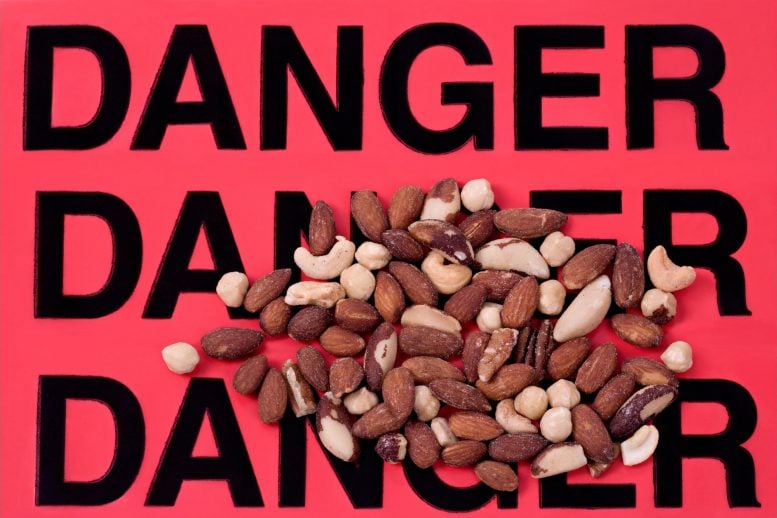
The guidelines recommend there be no site-wide food prohibitions, such as ‘nut-free’ schools, or allergen-restricted zones, such as ‘milk-free’ tables, except in limited special circumstances.
Alternative Strategies to Prevent Allergen Exposure
Research has found little evidence that food bans work. Child care centers and schools may use other common-sense strategies to reduce the risk of reaction, such as providing adult supervision during snack and meal times, avoiding allergens in curriculum and field trip activities, and promoting handwashing.
From one to 10 percent of infants and preschool children and one to 2.5 percent of school children have food allergy. Most people who develop a severe allergic reaction known as anaphylaxis survive, although there can be fatalities, especially if the reaction is not treated.
“Given that children spend much of their time in child care centers and schools, it is not surprising that food allergy management has become a topic of concern in these settings,” say the guidelines.
“Anxiety and fear about the risk of accidental exposure to food allergens, and the burden of managing that risk, may limit children’s participation in day-to-day activities. Children with food allergy are also at risk of allergy-related bullying.”
Guidelines Developed with Broad Stakeholder Input
The international guideline panel included 22 health-care professionals, school administrators, and parents of children with and without food allergy, along with a team of six researchers with methodology expertise. A systematic literature review of practices for managing food allergy in schools found a lack of high-quality evidence, so the guideline recommendations are graded as conditional.
In many cases, current policies and practices at schools and child care centers may not be supported by the best available evidence.
“It’s not possible to totally remove the risk of allergic reactions,” said Waserman. “However, interventions based on evidence may help community members manage the risk and support allergic students.”
“As more research becomes available, some of the recommendations might need to be updated,” she said. “We hope to see more high-quality research conducted in the future.”
Reference: “Prevention and management of allergic reactions to food in child care centers and schools: Practice guidelines” by Susan Waserman, MD, MSc; Heather Cruickshank, BA; Kyla J. Hildebrand, MD, MSsCH; Douglas Mack, MD; Laura Bantock, RN; Theresa Bingemann, MD; Derek K. Chu, MD, PhD; Carlos Cuello-Garcia, MD, PhD; Motohiro Ebisawa, MD, PhD; David Fahmy, MD; David M. Fleischer, MD; Lisa Galloway, BA, BEd; Greg Gartrell, MA; Matthew Greenhawt, MD; Nicola Hamilton, RN; Jonathan Hourihane, MD; Michael Langlois, CES, CHSC, CRSP; Richard Loh, MD; Antonella Muraro, MD, PhD; Lana Rosenfield, MD; Sally Schoessler, MSEd, BSN, RN, AE-C; Mimi L.K. Tang, MD; Brenda Weitzner, MD; Julie Wang, MD and Jan L. Brozek, MD, PhD, 5 May 2021, Journal of Allergy and Clinical Immunology.
DOI: 10.1016/j.jaci.2021.01.034
The guidelines are endorsed by the U.S. Allergy and Asthma Network; American Academy of Allergy, Asthma and Immunology; American College of Allergy, Asthma and Immunology; Canadian Society of Allergy and Clinical Immunology; and the World Allergy Organization.
The work was funded by the Allergy, Genes and Environment Network (AllerGen), a Canadian federally funded research network.
Never miss a breakthrough: Join the SciTechDaily newsletter.
Follow us on Google and Google News.