
Close Menu
    Facebook X (Twitter) Instagram
    SciTechDaily
    • Biology
    • Chemistry
    • Earth
    • Health
    • Physics
    • Science
    • Space
    • Technology
    Facebook X (Twitter) Pinterest YouTube RSS
    SciTechDaily
    Home»Space»New Cassini View of Enceladus Geyser from Recent Flyby
    Space

    New Cassini View of Enceladus Geyser from Recent Flyby

    By Preston Dyches, Jet Propulsion LaboratoryNovember 2, 2015No Comments2 Mins Read
    Facebook Twitter Pinterest Telegram LinkedIn WhatsApp Email Reddit
    Share
    Facebook Twitter LinkedIn Pinterest Telegram Email Reddit
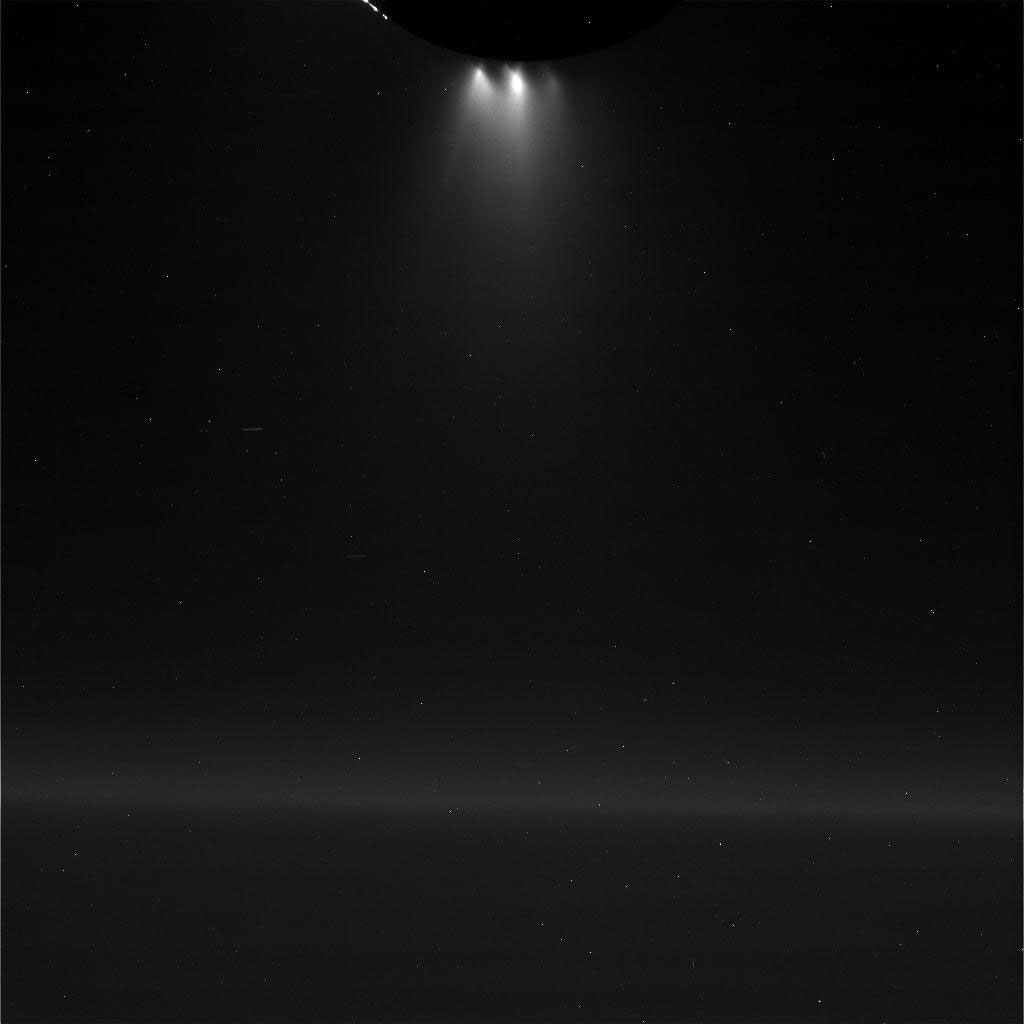
    New Cassini Image of Enceladus Geyser Flyby
    This unprocessed view of Saturn’s moon Enceladus was acquired by NASA’s Cassini spacecraft during a close flyby of the icy moon on October 28, 2015. Credit: NASA/JPL-Caltech/Space Science Institute

    Here is the first of the Cassini images from its recent flyby of Saturn’s moon Enceladus on October 28, 2015.

    NASA’s Cassini spacecraft has begun transmitting its latest images of Saturn’s icy, geologically active moon Enceladus, acquired during the dramatic October 28 flyby in which the probe passed about 30 miles (49 kilometers) above the moon’s south polar region. The spacecraft will continue transmitting its data from the encounter for the next several days.

    “Cassini’s stunning images are providing us a quick look at Enceladus from this ultra-close flyby, but some of the most exciting science is yet to come,” said Linda Spilker, the mission’s project scientist at NASA’s Jet Propulsion Laboratory in Pasadena, California.

    Researchers will soon begin studying data from Cassini’s gas analyzer and dust detector instruments, which directly sampled the moon’s plume of gas and dust-sized icy particles during the flyby. Those analyses are likely to take several weeks, but should provide important insights about the composition of the global ocean beneath Enceladus’ surface and any hydrothermal activity occurring on the ocean floor. The potential for such activity in this small ocean world has made Enceladus a prime target for future exploration in search of habitable environments in the solar system beyond Earth.

    Cassini’s next and final close Enceladus flyby will take place on December 19, when the spacecraft will measure the amount of heat coming from the moon’s interior. The flyby will be at an altitude of 3,106 miles (4,999 kilometers).

    Never miss a breakthrough: Join the SciTechDaily newsletter.
    Follow us on Google and Google News.

    Astronomy Cassini-Huygens Mission Enceladus NASA Planetary Science
    Share. Facebook Twitter Pinterest LinkedIn Email Reddit

    Related Articles

    Cassini Flyby Provides New Close-Up of Saturn’s Moon Enceladus

    Cassini Completes Deepest-Ever Dive Through the Icy Plume of Enceladus

    ScienceCasts Video: Close Encounter with Enceladus

    Cassini’s Deepest-Ever Dive Through the Enceladus Plume

    NASA Prepares for Historic Flyby of Icy Saturn Moon Enceladus

    NASA’s Cassini Reveals New Views of Saturn’s Moon Enceladus

    Cassini Spacecraft to Begin Flyby of Saturn’s Moon Enceladus

    Cassini Reveals Global Ocean in Saturn’s Moon Enceladus

    NASA Detects Ocean Inside Saturn’s Moon Enceladus

    Leave A Reply Cancel Reply

    • Facebook
    • Twitter
    • Pinterest
    • YouTube

    Don't Miss a Discovery

    Subscribe for the Latest in Science & Tech!

    Trending News

    Millions Take These IBS Drugs, But a New Study Finds Serious Risks

    Scientists Unlock Hidden Secrets of 2,300-Year-Old Mummies Using Cutting-Edge CT Scanner

    Bread Might Be Making You Gain Weight Even Without Eating More Calories

    Scientists Discover Massive Magma Reservoir Beneath Tuscany

    Europe’s Most Active Volcano Just Got Stranger – Here’s Why Scientists Are Rethinking It

    Alzheimer’s Symptoms May Start Outside the Brain, Study Finds

    Millions Take This Popular Supplement – Scientists Discover a Concerning Link to Heart Failure

    The Universe Is Expanding Too Fast and Scientists Can’t Explain Why

    Follow SciTechDaily
    • Facebook
    • Twitter
    • YouTube
    • Pinterest
    • Newsletter
    • RSS
    SciTech News
    • Biology News
    • Chemistry News
    • Earth News
    • Health News
    • Physics News
    • Science News
    • Space News
    • Technology News
    Recent Posts
    • Doctors Surprised by the Power of a Simple Drug Against Colon Cancer
    • Why Popular Diabetes Drugs Like Ozempic Don’t Work for Everyone: The “Genetic Glitch”
    • Scientists Create Improved Insulin Cells That Reverse Diabetes in Mice
    • Scientists Stunned After Finding Plant Thought Extinct for 60 Years
    • A Common Diabetes Drug May Hold the Key to Stopping HIV From Coming Back
    Copyright © 1998 - 2026 SciTechDaily. All Rights Reserved.
    • Science News
    • About
    • Contact
    • Editorial Board
    • Privacy Policy
    • Terms of Use

    Type above and press Enter to search. Press Esc to cancel.