
Close Menu
    Facebook X (Twitter) Instagram
    SciTechDaily
    • Biology
    • Chemistry
    • Earth
    • Health
    • Physics
    • Science
    • Space
    • Technology
    Facebook X (Twitter) Pinterest YouTube RSS
    SciTechDaily
    Home»Space»NASA’s Cassini Reveals New Views of Saturn’s Moon Enceladus
    Space

    NASA’s Cassini Reveals New Views of Saturn’s Moon Enceladus

    By Preston Dyches, Jet Propulsion LaboratoryOctober 18, 20151 Comment2 Mins Read
    Facebook Twitter Pinterest Telegram LinkedIn WhatsApp Email Reddit
    Share
    Facebook Twitter LinkedIn Pinterest Telegram Email Reddit
    Cassini Delivers Closest Northern Views of Saturn's Moon Enceladus
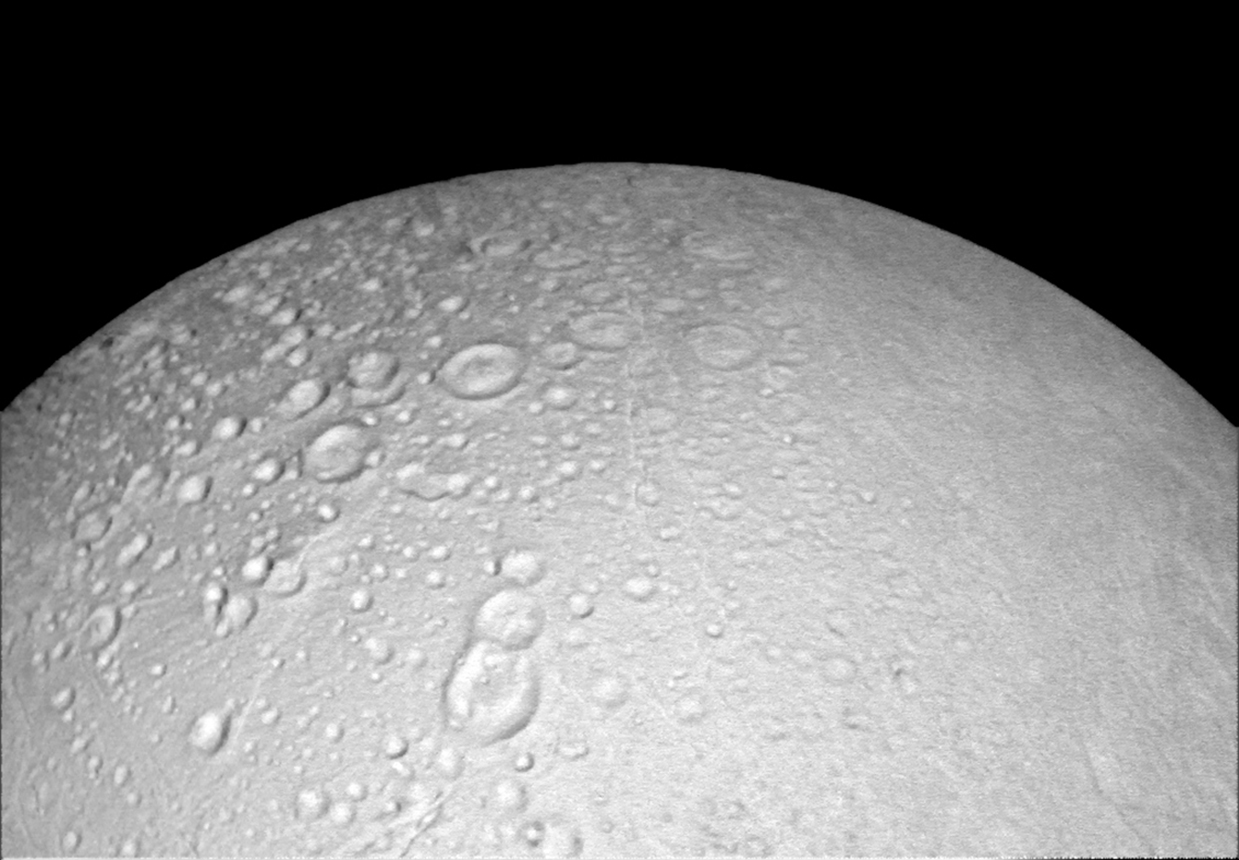
    NASA’s Cassini spacecraft zoomed by Saturn’s icy moon Enceladus on October 14, 2015, capturing this stunning image of the moon’s north pole. Credit: NASA/JPL-Caltech/Space Science Institute

    New images from NASA’s Cassini Spacecraft provide a close-up view of Saturn’s moon Enceladus.

    NASA’s Cassini Spacecraft has begun returning its best-ever views of the northern extremes of Saturn’s icy, ocean-bearing moon Enceladus. The spacecraft obtained the images during its October 14 flyby, passing 1,142 miles (1,839 kilometers) above the moon’s surface. Mission controllers say the spacecraft will continue transmitting images and other data from the encounter for the next several days.

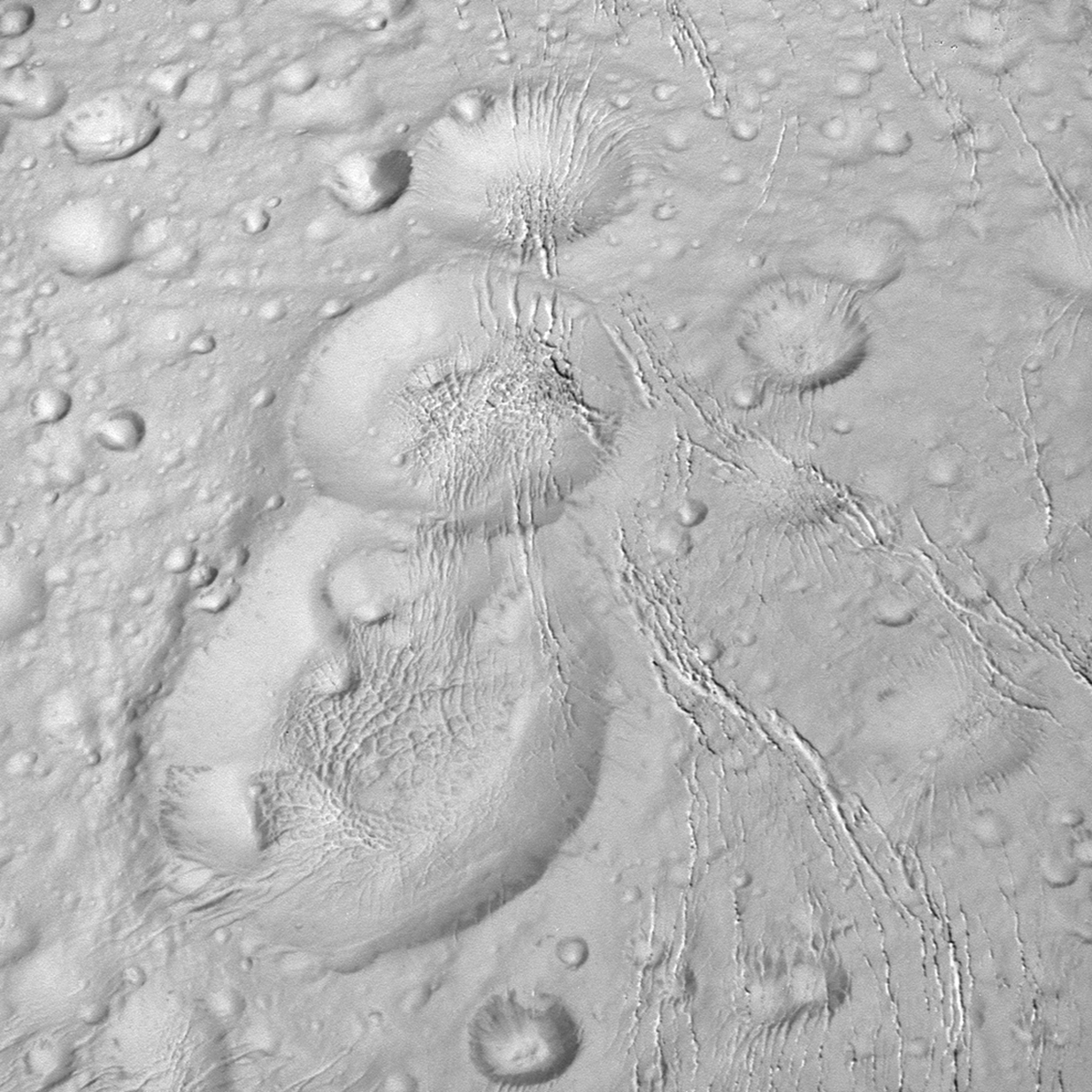
    Scientists expected the north polar region of Enceladus to be heavily cratered, based on low-resolution images from the Voyager mission, but the new high-resolution Cassini images show a landscape of stark contrasts. “The northern regions are crisscrossed by a spidery network of gossamer-thin cracks that slice through the craters,” said Paul Helfenstein, a member of the Cassini imaging team at Cornell University, Ithaca, New York. “These thin cracks are ubiquitous on Enceladus, and now we see that they extend across the northern terrains as well.”
    Cassini Delivers Closest Northern Views of Saturn's Moon Enceladus to Date
    Cassini Zooms in on Saturn's Moon Enceladus

    Left Image: This view from NASA’s Cassini spacecraft shows battered terrain around the north pole of Saturn’s icy moon Enceladus. Right Image: NASA’s Cassini spacecraft spied this tight trio of craters as it approached Saturn’s icy moon Enceladus for a close flyby on October 14, 2015.

    Cassini’s next encounter with Enceladus is planned for October 28, when the spacecraft will come within 30 miles (49 kilometers) of the moon’s south polar region. During the encounter, Cassini will make its deepest-ever dive through the moon’s plume of icy spray, sampling the chemistry of the extraterrestrial ocean beneath the ice. Mission scientists are hopeful data from that flyby will provide evidence of how much hydrothermal activity is occurring in the moon’s ocean, along with more detailed insights about the ocean’s chemistry — both of which relate to the potential habitability of Enceladus.

    Cassini’s final close Enceladus flyby will take place on December 19, when the spacecraft will measure the amount of heat coming from the moon’s interior. The flyby will be at an altitude of 3,106 miles (4,999 kilometers).

    Never miss a breakthrough: Join the SciTechDaily newsletter.
    Follow us on Google and Google News.

    Astronomy Cassini-Huygens Mission Enceladus NASA Planetary Science
    Share. Facebook Twitter Pinterest LinkedIn Email Reddit

    Related Articles

    New Cassini View of Enceladus Geyser from Recent Flyby

    Cassini Flyby Provides New Close-Up of Saturn’s Moon Enceladus

    Cassini Completes Deepest-Ever Dive Through the Icy Plume of Enceladus

    ScienceCasts Video: Close Encounter with Enceladus

    Cassini’s Deepest-Ever Dive Through the Enceladus Plume

    NASA Prepares for Historic Flyby of Icy Saturn Moon Enceladus

    Cassini Spacecraft to Begin Flyby of Saturn’s Moon Enceladus

    Cassini Reveals Global Ocean in Saturn’s Moon Enceladus

    NASA Detects Ocean Inside Saturn’s Moon Enceladus

    1 Comment

    1. Madanagopal.V.C. on October 18, 2015 9:37 am

      Saturn’s moon Enceladus surface is awash with watery material throughout. You can draw conclusion, from my theory ,which I had been advocating in all my comments,that all the farthest planets have been
      washed more with water and less with stones compared to the inner planets which received less water and more of stones from the comets which are the messengers of elixir of life viz.,water. Thank You.

      Reply
    Leave A Reply Cancel Reply

    • Facebook
    • Twitter
    • Pinterest
    • YouTube

    Don't Miss a Discovery

    Subscribe for the Latest in Science & Tech!

    Trending News

    Monster Storms on Jupiter Unleash Lightning Beyond Anything on Earth

    Scientists Create “Liquid Gears” That Spin Without Touching

    The Simple Habit That Could Help Prevent Cancer

    Millions Take These IBS Drugs, But a New Study Finds Serious Risks

    Scientists Unlock Hidden Secrets of 2,300-Year-Old Mummies Using Cutting-Edge CT Scanner

    Bread Might Be Making You Gain Weight Even Without Eating More Calories

    Scientists Discover Massive Magma Reservoir Beneath Tuscany

    Europe’s Most Active Volcano Just Got Stranger – Here’s Why Scientists Are Rethinking It

    Follow SciTechDaily
    • Facebook
    • Twitter
    • YouTube
    • Pinterest
    • Newsletter
    • RSS
    SciTech News
    • Biology News
    • Chemistry News
    • Earth News
    • Health News
    • Physics News
    • Science News
    • Space News
    • Technology News
    Recent Posts
    • Simple Blood Test May Predict Alzheimer’s Years Before Brain Scans Show Signs
    • Scientists Say Adding This Unusual Seafood to Your Diet Could Reverse Signs of Aging
    • U.S. Waste Holds $5.7 Billion Worth of Crop Nutrients
    • Scientists Say a Hidden Structure May Exist Inside Earth’s Core
    • Doctors Surprised by the Power of a Simple Drug Against Colon Cancer
    Copyright © 1998 - 2026 SciTechDaily. All Rights Reserved.
    • Science News
    • About
    • Contact
    • Editorial Board
    • Privacy Policy
    • Terms of Use

    Type above and press Enter to search. Press Esc to cancel.