
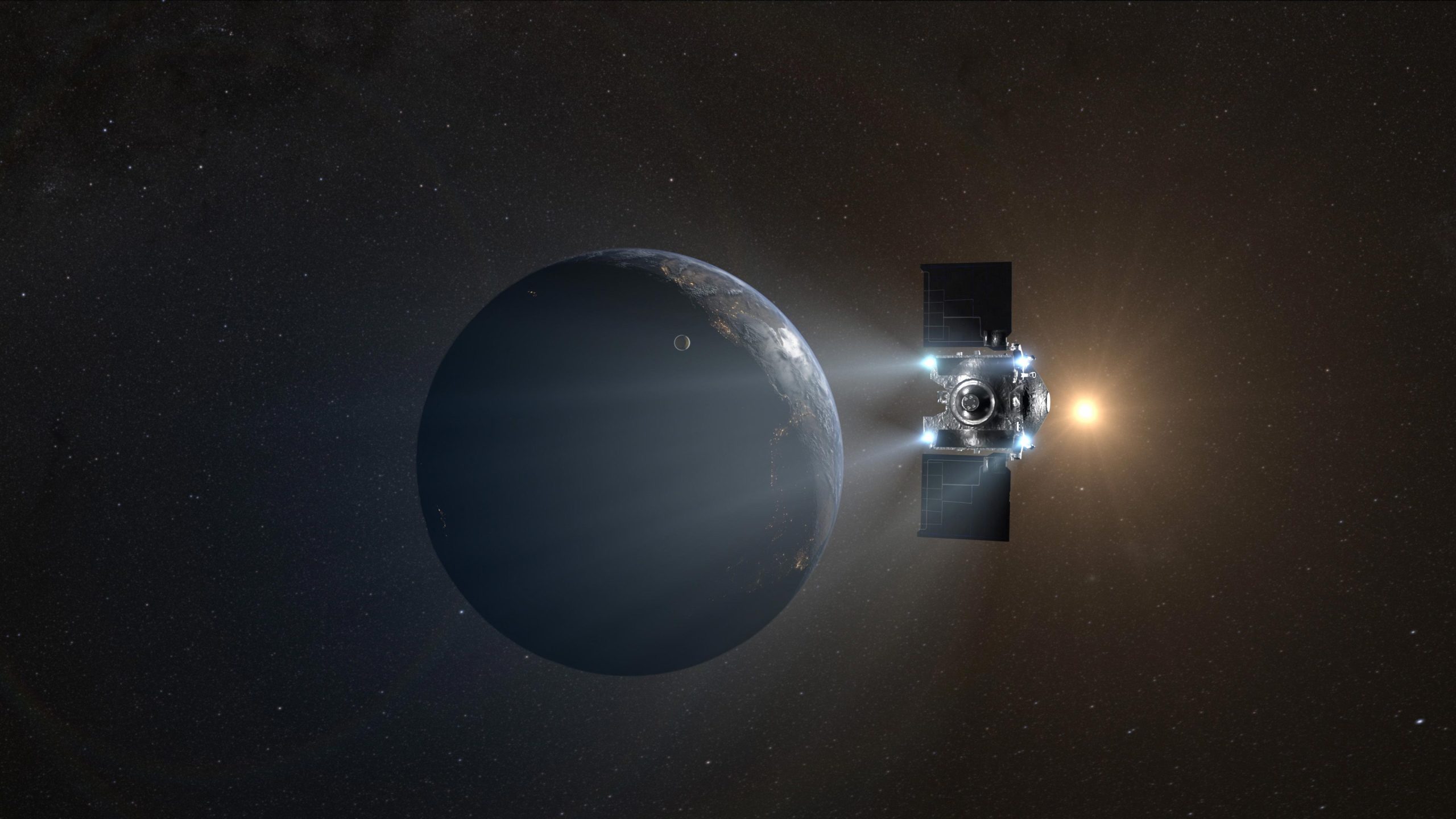
A recent study has disclosed initial findings from the samples collected during a billion-dollar NASA mission to Bennu, uncovering several unexpected results for the research team.
Researchers from Curtin University, as part of an international team, are exploring the origins of our solar system by studying a 4.5-billion-year-old asteroid, revealing secrets about how the solar system formed.
In September last year, after a seven-year journey, NASA’s billion-dollar OSIRIS-REx mission successfully returned samples from the asteroid Bennu, with specimens sent to research laboratories across the world including Curtin.
A new study published in Meteoritics and Planetary Science reveals the first findings from the samples — and there were some surprises for the team.
The samples consisted of mostly dark particles ranging from dust-sized to approximately 3.5 cm long, however, there are some lighter particles scattered throughout, some with stones also having brighter material forming veins and crusts.
Pristine and Primitive Material
OSIRIS-REx Sample Analysis Team member Associate Professor Nick Timms from Curtin’s School of Earth and Planetary Sciences said unlike meteorites which have fallen to Earth, the material collected from Bennu has been kept in pristine condition and hasn’t been contaminated by Earth’s atmosphere or biosphere.

“Analyses show Bennu is among the most chemically primitive materials known, similar in composition to the visible surface of the sun,” Associate Professor Timms said.
“This indicates Bennu has undergone different processes to the planets, and these processes changed the abundance of particular elements relative to the sun.”
Key Components and Surprising Discoveries
Analysis of the samples confirmed the presence of various components previously thought to be present, such as hydrated phyllosilicates (a type of mineral which forms in the presence of water) and carbon-rich material.
“This means asteroids such as this may have played a key role in delivering water and the building blocks of life to Earth,” Associate Professor Timms said.
The samples also contained several unexpected components.
“We were surprised to find magnesium-sodium phosphates, which further suggests Bennu experienced chemical environments which possibly involved water, Associate Professor Timms said.
“We also found other trace minerals, which offer clues as to the processes which have happened on Bennu over billions of years, such as temperature and pressure conditions. These trace minerals help paint a picture of Bennu’s evolution and also offer insights into the early solar system and how the different planetary bodies in the solar system were created.”
Associate Professor Timms said there will be many more discoveries made from the Bennu samples, which will have a wide range of implications for understanding the early solar system.
“The sample has presolar grains created before our solar system existed, which can provide a detailed biography of the lives of ancient stars,” Associate Professor Timms said.
“There are also very practical implications to understanding the composition of asteroids, from identifying potential mining opportunities to knowing how to best protect ourselves should an asteroid be on a collision course with Earth.”
Reference: “Asteroid (101955) Bennu in the laboratory: Properties of the sample collected by OSIRIS-REx” by Dante S. Lauretta, Harold C. Connolly, Joseph E. Aebersold, Conel M. O’D. Alexander, Ronald-L. Ballouz, Jessica J. Barnes, Helena C. Bates, Carina A. Bennett, Laurinne Blanche, Erika H. Blumenfeld, Simon J. Clemett, George D. Cody, Daniella N. DellaGiustina, Jason P. Dworkin, Scott A. Eckley, Dionysis I. Foustoukos, Ian A. Franchi, Daniel P. Glavin, Richard C. Greenwood, Pierre Haenecour, Victoria E. Hamilton, Dolores H. Hill, Takahiro Hiroi, Kana Ishimaru, Fred Jourdan, Hannah H. Kaplan, Lindsay P. Keller, Ashley J. King, Piers Koefoed, Melissa K. Kontogiannis, Loan Le, Robert J. Macke, Timothy J. McCoy, Ralph E. Milliken, Jens Najorka, Ann N. Nguyen, Maurizio Pajola, Anjani T. Polit, Kevin Righter, Heather L. Roper, Sara S. Russell, Andrew J. Ryan, Scott A. Sandford, Paul F. Schofield, Cody D. Schultz, Laura B. Seifert, Shogo Tachibana, Kathie L. Thomas-Keprta, Michelle S. Thompson, Valerie Tu, Filippo Tusberti, Kun Wang, Thomas J. Zega, C. W. V. Wolner and , 26 June 2024, Meteoritics & Planetary Science.
DOI: 10.1111/maps.14227
Never miss a breakthrough: Join the SciTechDaily newsletter.
Follow us on Google and Google News.