
New Canine Coronavirus Identified in Malaysian Child
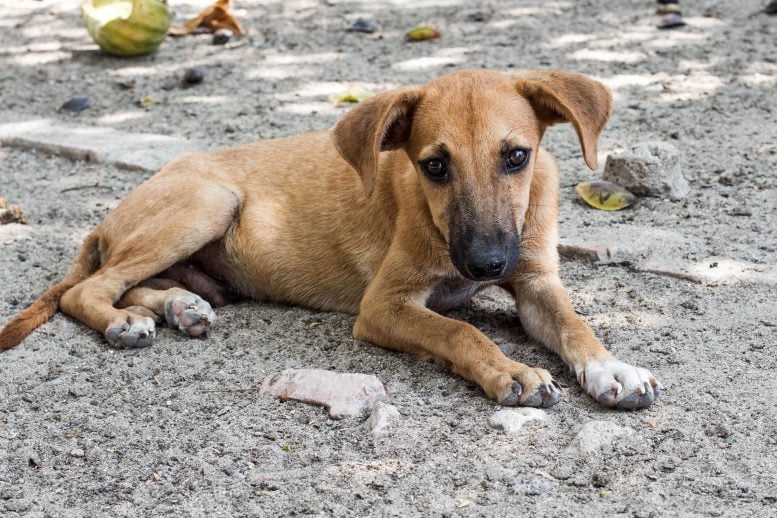
Researchers have discovered a new coronavirus, found in a child with pneumonia in Malaysia in 2018, that appears to have jumped from dog to human.
If confirmed as a pathogen, the novel canine-like coronavirus could represent the eighth unique coronavirus known to cause disease in humans. The discovery also suggests coronaviruses are being transmitted from animals to humans more commonly than was previously thought.
“How common this virus is, and whether it can be transmitted efficiently from dogs to humans or between humans, nobody knows,” said Gregory Gray, M.D., a professor of medicine, global health and environmental health at Duke University.
Broader Spillover Events Likely Underreported
“What’s more important is that these coronaviruses are likely spilling over to humans from animals much more frequently than we know,” said Gray, who led the research that appears in the journal Clinical Infectious Diseases. “We are missing them because most hospital diagnostic tests only pick up known human coronaviruses.”
Working with visiting scholar Leshan Xiu, a Ph.D. student, Gray was on a team that in 2020 developed a molecular diagnostic tool to detect most coronaviruses from the Coronaviridae family that includes SARS-CoV-2, which causes COVID-19.
The team used that tool to examine 301 archived pneumonia cases and picked up signals for canine coronaviruses from eight people hospitalized with pneumonia in Sarawak, a state in East Malaysia.
Researchers at Ohio State, led by Anastasia N. Vlasova, grew a virus from one of the clinical specimens, and through a painstaking process of genome reconstruction, were able to identify it as a novel canine coronavirus.
“There are probably multiple canine coronaviruses circulating and spilling over into humans that we don’t know about,” Gray said. Sarawak could be a rich place to detect them, he said, since it’s an equatorial area with rich biodiversity.
Most Spillovers May Be ‘Dead Ends’
“Many of those spillovers are dead ends, they don’t ever leave that first human host,” Gray said. “But if we really want to mitigate the threat, we need better surveillance where humans and animals intersect, and among people who are sick enough to get hospitalized for novel viruses.”
Gray said diagnostic tools like the one developed to find this virus have the potential to identify other viruses new to humans before they can cause a pandemic.
“These pathogens don’t just cause a pandemic overnight,” Gray said. “It takes many years for them to adapt to the human immune system and cause infection, and then to become efficient in human-to-human transmission. We need to look for these pathogens and detect them early.”
In addition to Gray and Vlasova, researchers included Annika Diaz, Teck-Hock Toh, Jeffrey Soon-Yit Lee and Linda J. Saif.
This work was supported by the U.S. Naval Medical Research Center-Asia, Vysnova Partners, Duke University’s Global Health Institute and The Ohio State University.
For more on this research, read New Human Coronavirus CCoV-HuPn-2018 Identified – Originated in Dogs.
Reference: “Novel Canine Coronavirus Isolated from a Hospitalized Pneumonia Patient, East Malaysia” by Anastasia N Vlasova, PhD, Annika Diaz, Debasu Damtie, MS, Leshan Xiu, MS, Teck-Hock Toh, MD, Jeffrey Soon-Yit Lee, MD, Linda J Saif, PhD, Gregory C Gray, MD, 20 May 2021, Clinical Infectious Diseases.
DOI: 10.1093/cid/ciab456
Never miss a breakthrough: Join the SciTechDaily newsletter.
Follow us on Google and Google News.
4 Comments
“What’s more important is that these coronaviruses are likely spilling over to humans from animals much more frequently than we know,”
If true it still doesn’t erase the evidence that shows sarscov2 is lab made
Is Covid 19 implicated?
Corona viruses🦠 have been around for millions of years.
However, unless the canine variety is Covid 19 , I don’t believe this theory.
In fact Dog 🐕 Meat is consumed in Korea maximum. It should have originated ( most likely North Korea ) as it is entirely dependent on China🇨🇳 for its survival. I am sure, that South Korea is an unlikely candidate, as they do Cook their dog meat and at a temperature above 70 degrees, it ( Covid 19 Viruses) cannot survive.
Views expressed are personal and not binding on anyone.
Is the dog an intermediate vector and if so, what is the source from which it became infected. There are numerous examples of viruses that are transmitted to humans from animals but the source is something like a bat. The key to understanding viruses that spill over to humans is tracing them back to the most common host
This article seems to be pushing the CCP narrative.