
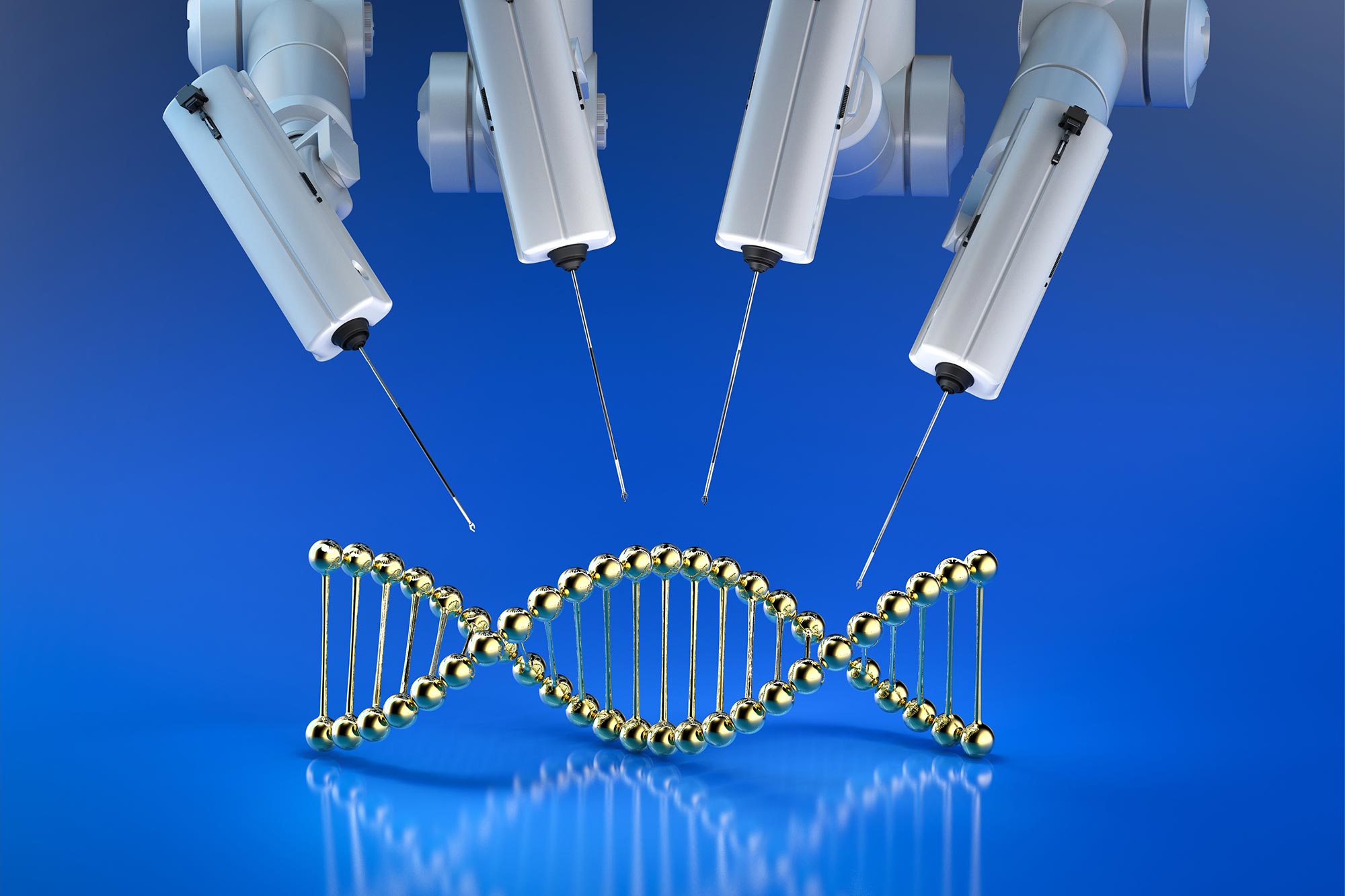
A study from the Hackett group at EMBL Rome led to the development of a powerful epigenetic editing technology, which unlocks the ability to precisely program chromatin modifications.
Understanding how genes are regulated at the molecular level is a central challenge in modern biology. This complex mechanism is mainly driven by the interaction between proteins called transcription factors, DNA regulatory regions, and epigenetic modifications – chemical alterations that change chromatin structure. The set of epigenetic modifications of a cell’s genome is referred to as the epigenome.
Advancements in Epigenome Editing
In a study published today (May 9) in Nature Genetics, scientists from the Hackett Group at European Molecular Biology Laboratory (EMBL) Rome have developed a modular epigenome editing platform – a system to program epigenetic modifications at any location in the genome. The system allows scientists to study the impact of each chromatin modification on transcription, the mechanism by which genes are copied into mRNA to drive protein synthesis.
Chromatin modifications are thought to contribute to the regulation of key biological processes such as development, response to environmental signals, and disease.

To understand the effects of specific chromatin marks on gene regulation, previous studies have mapped their distribution in the genomes of healthy and diseased cell types. By combining this data with gene expression analysis and the known effects of perturbing specific genes, scientists have ascribed functions to such chromatin marks.
However, the causal relationship between chromatin marks and gene regulation has proved difficult to determine. The challenge lies in dissecting the individual contributions of the many complex factors involved in such regulation – chromatin marks, transcription factors, and regulatory DNA sequences.
Breakthrough in Epigenome Editing Technology
Scientists from the Hackett Group developed a modular epigenome editing system to precisely program nine biologically important chromatin marks at any desired region in the genome. The system is based on CRISPR – a widely used genome editing technology that allows researchers to make alterations in specific DNA locations with high precision and accuracy.
Such precise perturbations enabled them to carefully dissect cause-and-consequence relationships between chromatin marks and their biological effects. The scientists also designed and employed a ‘reporter system’, which allowed them to measure changes in gene expression at single-cell level and to understand how changes in the DNA sequence influence the impact of each chromatin mark. Their results reveal the causal roles of a range of important chromatin marks in gene regulation.
Key Findings and Future Directions
For example, the researchers found a new role for H3K4me3, a chromatin mark that was previously believed to be a result of transcription. They observed that H3K4me3 can actually increase transcription by itself if artificially added to specific DNA locations.
“This was an extremely exciting and unexpected result that went against all our expectations,” said Cristina Policarpi, postdoc in the Hackett Group and leading scientist of the study. “Our data point towards a complex regulatory network, in which multiple governing factors interact to modulate the levels of gene expression in a given cell. These factors include the pre-existing structure of the chromatin, the underlying DNA sequence, and the location in the genome.”
Potential Applications and Future Research
Hackett and colleagues are currently exploring avenues to leverage this technology through a promising start-up venture. The next step will be to confirm and expand these conclusions by targeting genes across different cell types and at scale. How chromatin marks influence transcription across the diversity of genes and downstream mechanisms, also remains to be clarified.
“Our modular epigenetic editing toolkit constitutes a new experimental approach to dissect the reciprocal relationships between the genome and epigenome,” said Jamie Hackett, Group Leader at EMBL Rome. “The system could be used in the future to more precisely understand the importance of epigenomic changes in influencing gene activity during development and in human disease. On the other hand, the technology also unlocks the ability to program desired gene expression levels in a highly tunable manner. This is an exciting avenue for precision health applications and may prove useful in disease settings.”
Reference: “Systematic epigenome editing captures the context-dependent instructive function of chromatin modifications” by Cristina Policarpi, Marzia Munafò, Stylianos Tsagkris, Valentina Carlini and Jamie A. Hackett, 9 May 2024, Nature Genetics.
DOI: 10.1038/s41588-024-01706-w
Never miss a breakthrough: Join the SciTechDaily newsletter.
Follow us on Google and Google News.