

A new quantum system called giant superatoms could protect quantum information and enable entanglement between multiple qubits. The concept merges giant atoms and superatoms to improve stability and scalability for future quantum technologies.
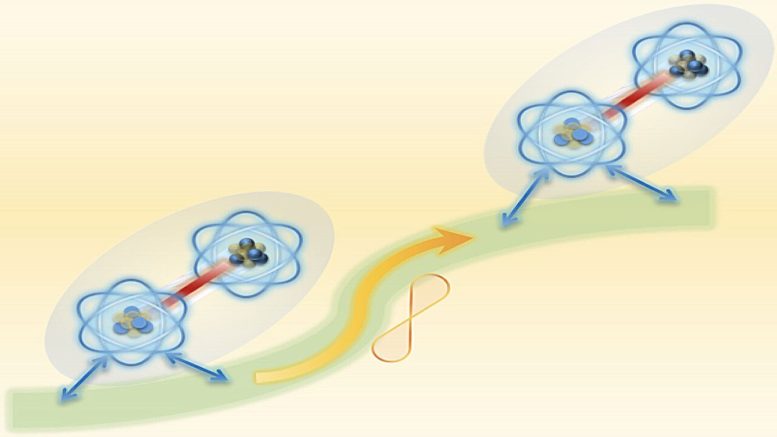
Scientists at Chalmers University of Technology in Sweden have introduced the theoretical framework for this new type of quantum system, built around the concept of ‘giant superatoms.’ The design allows quantum information to be protected, manipulated, and shared in new ways. Researchers believe this concept could represent an important advance toward building quantum computers capable of operating on a large scale.
Quantum computers are widely expected to transform fields such as pharmaceutical development and data encryption because they could solve problems that are far beyond the reach of conventional computers. Yet turning these machines into practical devices has proven difficult. One of the most difficult obstacles is decoherence, a process in which quantum bits, or qubits, lose their stored information after interacting with their surroundings. Even minimal disturbances, including electromagnetic noise, can disrupt the fragile quantum states required for reliable calculations.
“Quantum systems are extraordinarily powerful but also extremely fragile. The key to making them useful is learning how to control their interaction with the surrounding environment,” says Lei Du, postdoctoral researcher in applied quantum technology at Chalmers.
Lei Du is the lead author of a scientific paper that outlines the theoretical model of this new quantum system developed by the Chalmers research team. The design centers on the idea of giant superatoms and incorporates several important features. It reduces the effects of decoherence and provides greater stability while also bringing together multiple closely connected “atoms” that operate collectively.

A New Quantum System Built From Giant Superatoms
Giant superatoms unite two distinct quantum mechanical ideas: giant atoms and superatoms. Although both concepts have been studied individually recently, they have not previously been combined in a single system. These structures behave in ways similar to atoms, but they are not naturally occurring. Instead, they are engineered systems that physicists create in the laboratory.
The term giant atom was introduced by researchers at Chalmers slightly more than ten years ago and has since become widely used in the field. A giant atom is typically constructed to function as a qubit (which is the smallest unit of quantum information). Unlike ordinary atoms, it connects to light or sound waves at multiple, spatially separated points. This arrangement allows the atom to interact with its environment at several locations at the same time, helping preserve the quantum information it holds.
“Waves that leave one connection point can travel through the environment and return to affect the atom at another point—similar to hearing an echo of your own voice before you’ve finished speaking. This self-interaction leads to highly beneficial quantum effects, reduces decoherence, and gives the system a form of memory of past interactions,” explains Anton Frisk Kockum, Associate Professor of Applied Quantum Physics at Chalmers and co-author of the study.

Although giant atoms have already expanded scientific understanding of quantum behavior, they have not fully taken advantage of another central quantum effect: entanglement. This phenomenon allows several qubits to share a single quantum state so they function as one unified system. Such capability is essential for building powerful, large-scale quantum computers.
Combining Giant Atoms and Superatoms to Enable Entanglement
To address this limitation, the researchers combined the giant atom concept with the idea of a superatom. A superatom consists of multiple natural atoms that share a common quantum state and behave together like one larger atom.
According to the researchers, merging these concepts should make it easier to produce the complex quantum states needed for future technologies such as quantum communication networks and extremely sensitive sensors.
“A giant superatom may be envisaged as multiple giant atoms working together as a single entity, exhibiting a non-local interaction between light and matter. This enables quantum information from multiple qubits to be stored and controlled within one unit, without the need for increasingly complex surrounding circuitry,” explains Lei Du.
“Giant superatoms open the door to entirely new capabilities, giving us a powerful new toolbox. They allow us to control quantum information and create entanglement in ways that were previously extremely difficult, or even impossible,” says Janine Splettstoesser, Professor of Applied Quantum Physics at Chalmers and co-author of the study.

Toward Scalable and Hybrid Quantum Technologies
The findings point to new possibilities for building quantum systems that are both scalable and dependable. The researchers are now working toward turning the theoretical concept into a physical system. Their design could also integrate with other quantum platforms and serve as a component that links different types of quantum technologies.
“There is currently strong interest in hybrid approaches, in which different quantum systems work together, because each has its own strengths,” says Anton Frisk Kockum. “Our research shows that smart design can reduce the need for increasingly complex hardware, and giant superatoms are bringing us one step closer to practically applicable quantum technology.”
Reference: “Dressed Interference in Giant Superatoms: Entanglement Generation and Transfer” by Lei Du, Xin Wang, Anton Frisk Kockum and Janine Splettstoesser, 25 November 2025, Physical Review Letters.
DOI: 10.1103/crzs-k718
This study was funded by the Swedish Foundation for Strategic Research, Wallenberg Center for Quantum Technology, Knut and Alice Wallenberg Foundation, HORIZON EUROPE Digital, and the National Natural Science Foundation of China.
Never miss a breakthrough: Join the SciTechDaily newsletter.
Follow us on Google and Google News.
2 Comments
To address this limitation, the researchers combined the giant atom concept with the idea of a superatom. A superatom consists of multiple natural atoms that share a common quantum state and behave together like one larger atom.
VERY GOOD!
Please ask researchers to think deeply:
1. How does physics define atoms today?
2. How do you understand quantum?
3. What is the relationship between atoms and quantum?
4. Which form of matter is not multimodal?
Please ask researchers to think deeply:
Which form of matter is not multimodal?