
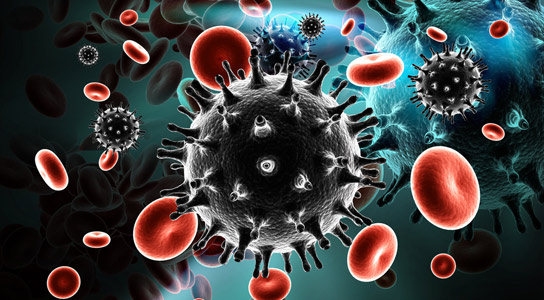
New research from Yale University shows that HIV can establish itself in the brain as soon as four months after initial infection, dampening the hopes of an impending cure for a disease that afflicts more than 35 million people.
Within two years of infection, a genetically distinct version of HIV replicates in the brains of as many as one in four patients, researchers at the Yale School of Medicine and University of North Carolina (UNC) report March 26 in the journal PLOS Pathogens.
While it was known that in the late stages of infection HIV can establish itself in the central nervous system and even cause a form of dementia, many scientists had hoped that an early diagnosis might allow new therapies to eradicate the virus in patients before it becomes lodged in the brain, where not all drugs used to treat the disease are as effective as they are in other parts of the body.
“HIV in the central nervous system can also be distinct from that found in the blood, which adds yet another obstacle to developing new treatment strategies,” said Serena Spudich of the Department of Neurology at Yale, who is the senior author of the paper.
She also noted that even if it was possible to wipe out the virus in the bloodstream, its survival in the central nervous system means that, in theory, the disease could reestablish itself in the patient.
The researchers examined the cerebral spinal fluid of 72 patients within the first two years of infection, and they found up to 25% had evidence of HIV infection or a strong immune system response to infection.
The authors also urged routine HIV testing to catch the infection as early as possible and the prompt initiation of antiretroviral therapy — or ART — to reduce replication and inflammation.
Christa Buckheit Sturdevant, formerly of UNC and now at Duke University, is the lead author of the paper. Samples were collected from study participants with the help of Dr. Richard Price at the University of California-San Francisco and were analyzed in the laboratory of Ronald Swanstrom at UNC.
The research was funded by the National Institute of Mental Health.
Reference: “Compartmentalized Replication of R5 T Cell-Tropic HIV-1 in the Central Nervous System Early in the Course of Infection” by Christa Buckheit Sturdevant, Sarah B. Joseph, Gretja Schnell, Richard W. Price, Ronald Swanstrom and Serena Spudich, 26 March 2015, T PLOS Pathogens.
DOI: 10.1371/journal.ppat.1004720
Never miss a breakthrough: Join the SciTechDaily newsletter.
Follow us on Google and Google News.
2 Comments
As Lynn Margulis said in reference to her theory that AIDS is syphilis, “I’m not controversial, I’m right.”
HIV is a corona virus like SARS and all these viruses undergo changes in their structure as a rule for the struggle for their existence. Each virus has a location in the human body, like HPV the papilloma virus finding only its residence in the epithelial cells of the skin and mucous membrane of cervix. When bacteria can become drug resistant by changing its DNA formulae so that they can secrete new enzymes (Enzymes are only their hands and legs for fighting) to combat their enemies of existence like drugs, these viruses which are only half living and half chemistry can at the best alter their viral capsule from one form to another to survive. By changing the structure of their shell only these viruses had undergone changes from one living place in human being to another living place (organs) in humans and as well as other animals and birds. Right on the opposite direction we develop resistance for these viruses by forming antibodies which are our weapons for the fight. But ultimately viruses and Bacteria only may win since they rule the earth for billions of years compared to the human beings who came very very late and may live only for a million years at best. It is after all their world which we inhabit temperorily for very very tiny period. Thank You.