

Experts warn that satellite launches and discarded spacecraft are creating an unsustainable burden on both Earth and orbit.
They advocate for a circular space economy built on reusable materials, better design, debris recovery, and advanced digital tools.
Environmental impact of rockets and space missions
Each rocket launch consumes large amounts of valuable materials and releases significant quantities of greenhouse gases and ozone-depleting chemicals into the atmosphere. In a paper published today (December 1) in the journal Chem Circularity, a team of sustainability and space researchers explores how the familiar ideas of reducing, reusing, and recycling could be incorporated into satellites and spacecraft, from early design and manufacturing through in-orbit repair and end-of-life repurposing.
“As space activity accelerates, from mega-constellations of satellites to future lunar and Mars missions, we must make sure exploration doesn’t repeat the mistakes made on Earth,” says senior author and chemical engineer Jin Xuan of the University of Surrey. “A truly sustainable space future starts with technologies, materials and systems working together.”
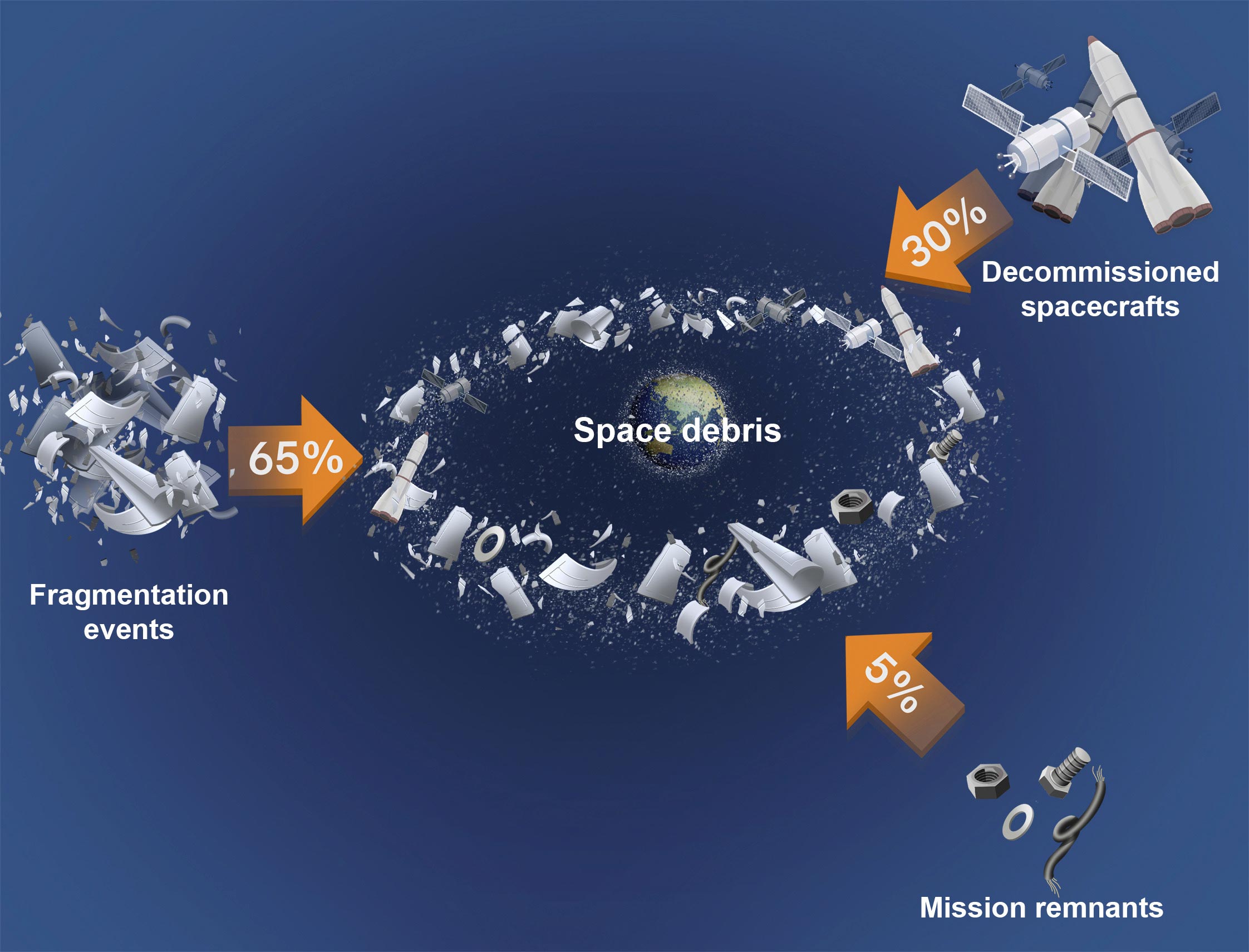
Space junk, graveyard orbits, and lost materials
The environmental footprint does not end once a mission is complete. When satellites and spacecraft are retired, even more material is effectively thrown away, because these systems are seldom recycled or reused. Instead, many satellites are shifted into so-called “graveyard orbits” or remain as pieces of orbital debris that can disrupt or damage active satellites.
According to the authors, this pattern is not viable in the long run, particularly as private spaceflight and commercial launches rapidly increase. They argue that a move toward a circular space economy—where materials and systems are designed for reuse, repair, and recycling—is essential to protect the long-term future of the space sector, and they point to precedents in personal electronics and the automotive industry as valuable sources of guidance.
“Our motivation was to bring the conversation about circularity into the space domain, where it’s long overdue,” says Xuan. “Circular economy thinking is transforming materials and manufacturing on Earth, but it’s rarely applied to satellites, rockets, or space habitats.”
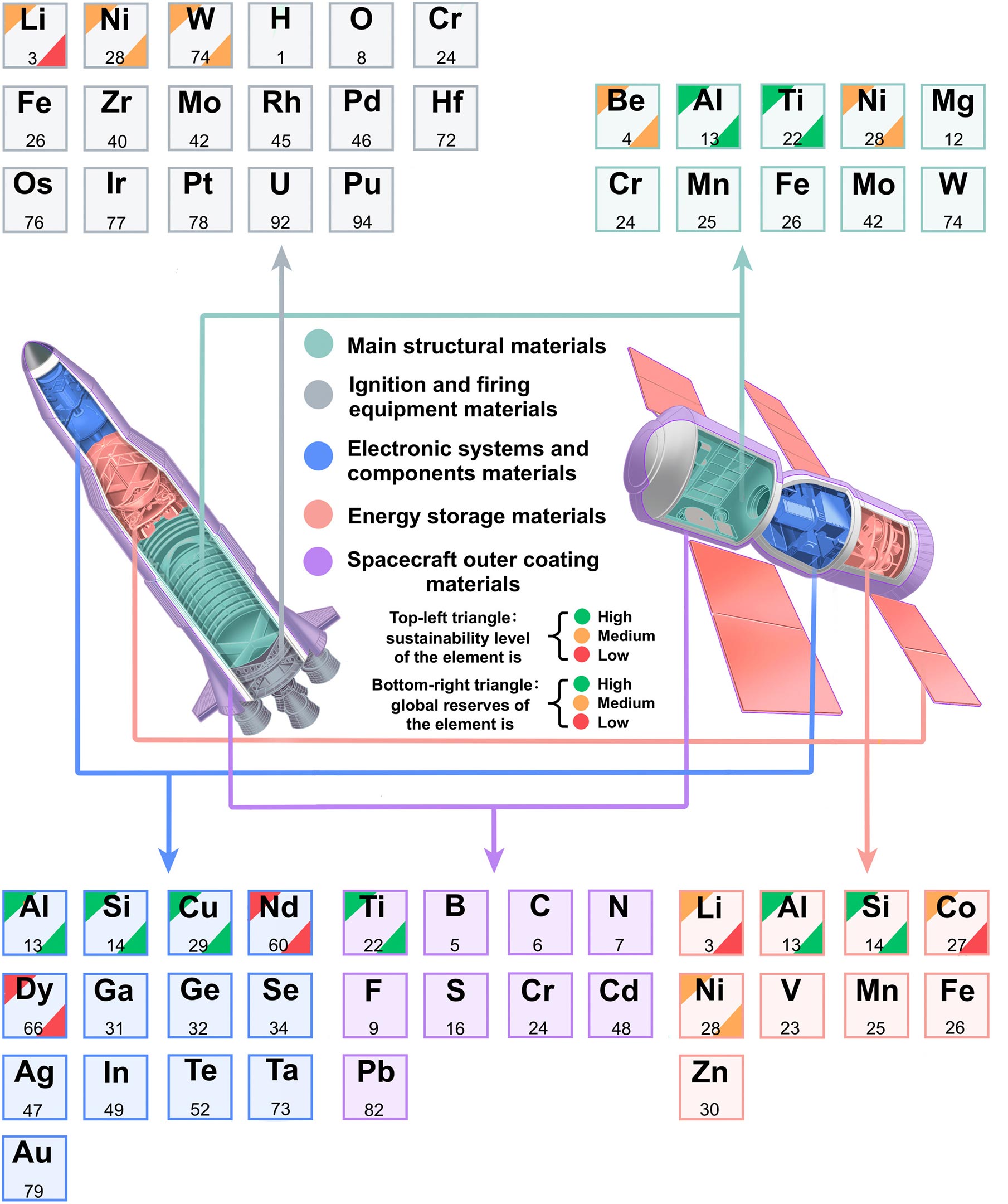
Applying the 3 Rs to satellites, spacecraft, and space stations
The researchers suggest that building a circular space economy begins with the familiar 3 Rs—reduce, reuse, and recycle—the authors say. To cut waste, they recommend that spacecraft and satellites be designed to be more durable and easier to repair. They also propose that space stations be reimagined as multipurpose hubs that support refueling, in-orbit repair of visiting spacecraft, and even manufacturing of new satellite components, which could decrease the number of launches required.
To make reuse and recycling of spacecraft and space stations practical, the space sector would also need better ways to bring hardware back safely. The authors highlight technologies such as parachutes and airbags that enable soft landings, while cautioning that any reused parts must undergo strict safety checks, since spacecraft and satellites experience severe wear and stress in the space environment.
Cleaning up orbital debris and using AI to protect space
The team also calls for more active recovery of orbital debris, for example by deploying nets or robotic arms to capture and retrieve discarded objects. This approach would make it possible to recycle their materials and would also reduce the likelihood of collisions that generate even more debris.
Data analysis and digital tools, including AI systems, are identified as key enablers of more sustainable space operations, the authors say. For instance, analyzing data generated by spacecraft could guide better design choices and reduce waste. In addition, computer simulations could take the place of some expensive, resource-intensive physical tests, and AI could help spacecraft and satellites avoid collisions with existing debris.
Rethinking the whole space system and building global cooperation
Because a circular space economy would change how the entire sector functions, the authors emphasize that the problem cannot be solved by focusing on isolated parts or single technologies. Instead, they argue that the space community must examine the whole system at once, from materials and manufacturing to in-orbit operations and retirement.
“We need innovation at every level, from materials that can be reused or recycled in orbit and modular spacecraft that can be upgraded instead of discarded, to data systems that track how hardware ages in space,” says Xuan.
“But just as importantly, we need international collaboration and policy frameworks to encourage reuse and recovery beyond Earth. The next phase is about connecting chemistry, design, and governance to turn sustainability into the default model for space.”
Reference: “Resource and material efficiency in the circular space economy” by Zhilin Yang, Lirong Liu, Lei Xing, Adam Amara and Jin Xuan, 1 December 2025, Chem Circularity.
DOI: 10.1016/j.checir.2025.100001
This research was supported by funding from the UK Engineering and Physical Sciences Research Council, the Leverhulme Trust, and the Surrey-Adelaide Partnership Fund.
Never miss a breakthrough: Join the SciTechDaily newsletter.
Follow us on Google and Google News.