
Close Menu
    Facebook X (Twitter) Instagram
    SciTechDaily
    • Biology
    • Chemistry
    • Earth
    • Health
    • Physics
    • Science
    • Space
    • Technology
    Facebook X (Twitter) Pinterest YouTube RSS
    SciTechDaily
    Home»Space»The Final Orbit: Unraveling a Satellite’s Death Spiral
    Space

    The Final Orbit: Unraveling a Satellite’s Death Spiral

    By European Space Agency (ESA)November 27, 2023No Comments2 Mins Read
    Facebook Twitter Pinterest Telegram LinkedIn WhatsApp Email Reddit
    Share
    Facebook Twitter LinkedIn Pinterest Telegram Email Reddit
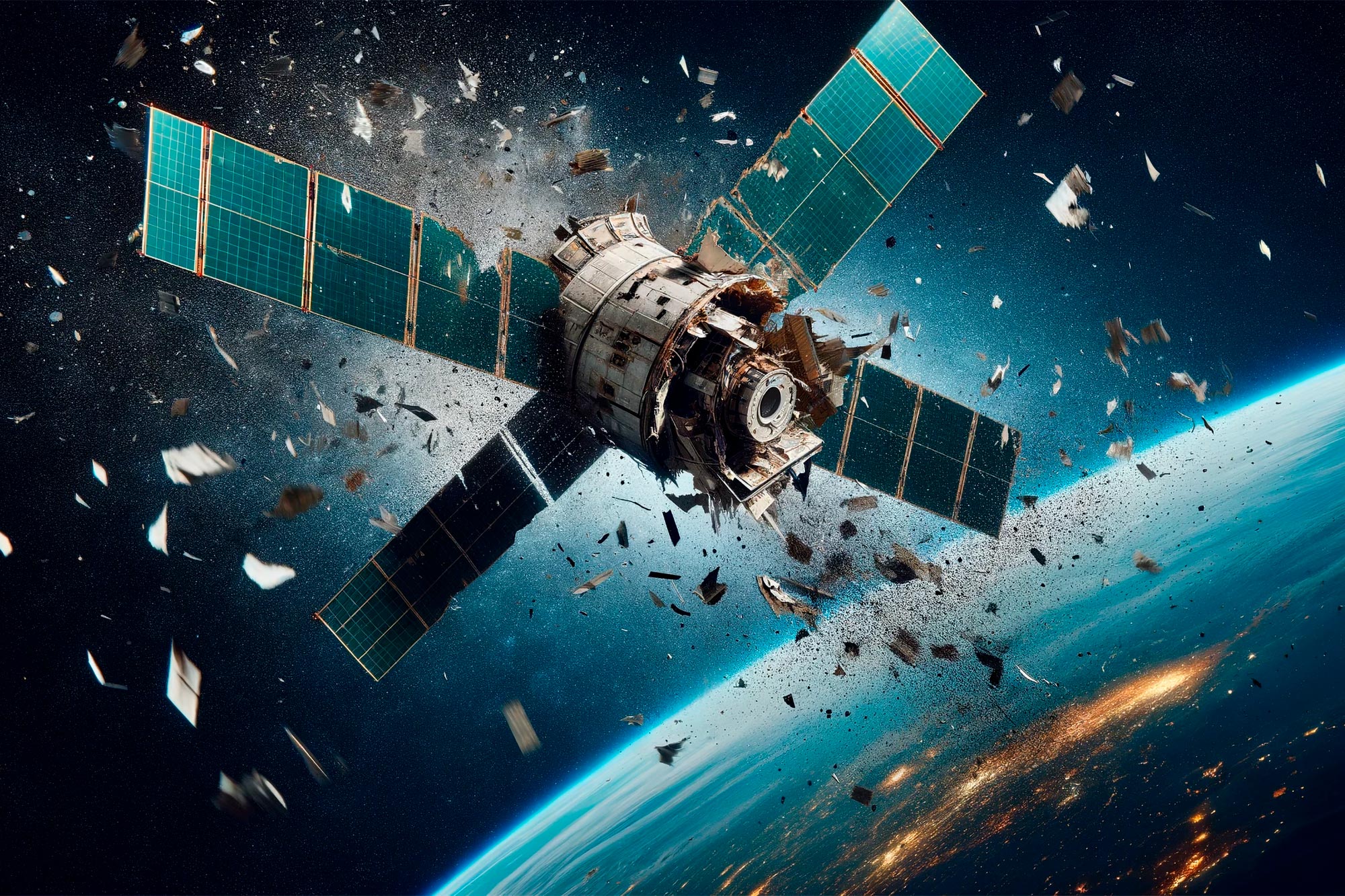
    Satellite Breaking Up in Orbit
    The European Space Agency, in partnership with the University of Bern’s Astronomical Institute, conducted a study to understand the unpredictable tumbling of defunct satellites in space. This research is crucial for ESA’s Clean Space initiative, which seeks to safely remove these satellites from crowded orbits.

    ESA and the University of Bern conducted a study to understand and predict the tumbling of defunct satellites. This research supports ESA’s efforts to remove these satellites from busy orbits, considering various influencing factors like gravity and solar radiation.

    Down on the ground, death equals stillness – but not in space. Abandoned satellites are prone to tumble in unpredictable ways and an ESA project with the Astronomical Institute of the University of Bern sought to better understand this behavior.

    ESA’s Clean Space initiative has plans to remove dead satellites from highly trafficked orbits. The preferred method of ‘Active Debris Removal’ involves grabbing the target object, in which case knowledge of its precise orientation and motion will be vital. So the need is clear to understand the tumbling that almost all satellites and rocket bodies undergo after their mission end-of-life.

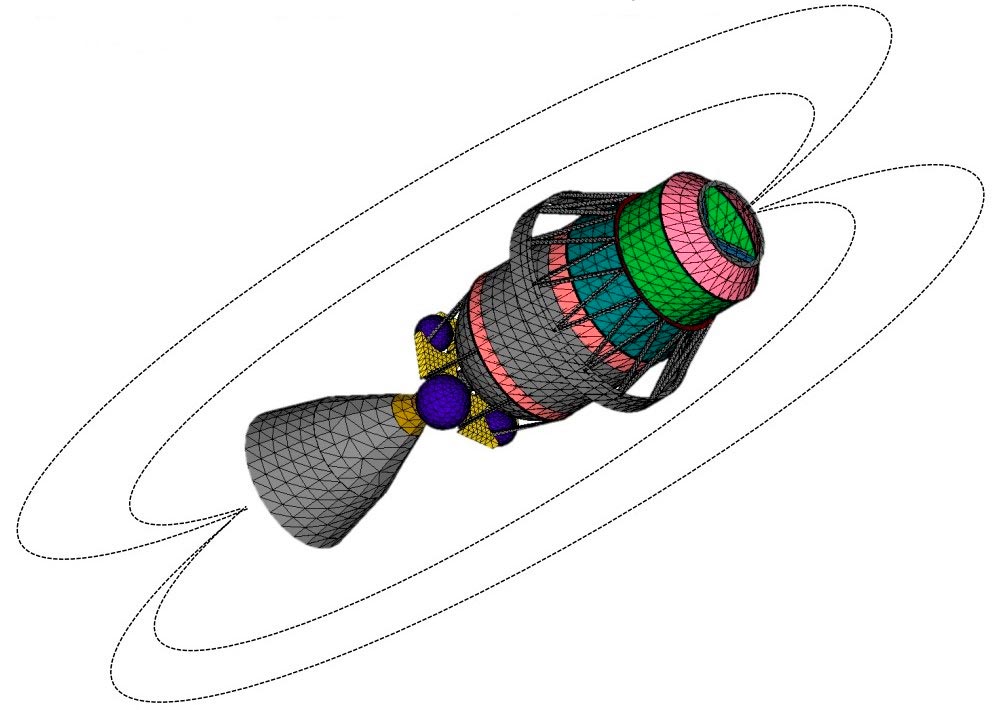
    The project combined optical, laser ranging, and radar observations to refine an existing ‘In-Orbit Tumbling Analysis’ computer model, aiming to identify, understand, and predict the attitude motion of a fully defunct satellite within a few passes. More than 20 objects were observed during a two-year campaign.
    Satellite Death Spiral
    Credit: ESA/University of Bern

    The long list of perturbation triggers includes ‘eddy currents’ as internal magnetic fields interact with Earth’s magnetosphere, drag from the vestigial atmosphere, gravity gradients between the top of an object and its bottom, outgassing and fuel leaks, the faint but steady push of sunlight – known as ‘solar radiation pressure’ – micrometeoroid and debris impacts, even the sloshing of leftover fuel.

    Among the study findings were rocket bodies and satellites in lower orbits are mostly influenced by gravity gradients and eddy currents, while up at geostationary altitudes, satellites with large solar panels are sensitive to solar radiation pressure.

    The project was supported through ESA’s General Support Technology Programme, developing promising technologies for space.

    Never miss a breakthrough: Join the SciTechDaily newsletter.
    Follow us on Google and Google News.

    European Space Agency Popular Space Debris
    Share. Facebook Twitter Pinterest LinkedIn Email Reddit

    Related Articles

    ESA’s Aeolus: A Historic End to a Trailblazing Mission

    Swarm Spacecraft Dodges Collision With Space Junk During Climb To Escape Sun’s Wrath

    ESA’s Solar Orbiter Spacecraft Is Skimming Earth for a Gravity Assist – And It’s One of the Riskiest Planetary Flybys Ever

    Drive to Destruction: Simulating Burn-Up During Atmospheric Reentry

    Clean Space Initiative to Target Orbital Debris

    Herschel Image of the Vela C Region

    Researchers Discover First Intermediate-Mass Black Hole

    ESA’s Vega Rocket Has Launched on Its Maiden Voyage, Carries 9 Satellites

    ESA’s Hershel Space Telescope Captures Incredible Views of Eagle Nebula

    Leave A Reply Cancel Reply

    • Facebook
    • Twitter
    • Pinterest
    • YouTube

    Don't Miss a Discovery

    Subscribe for the Latest in Science & Tech!

    Trending News

    Mezcal “Worm” in a Bottle Mystery: DNA Testing Reveals a Surprise

    New Research Reveals That Your Morning Coffee Activates an Ancient Longevity Switch

    This Is What Makes You Irresistible to Mosquitoes

    Shockingly Powerful Giant Octopuses Ruled the Seas 100 Million Years Ago

    Scientists Stunned by New Organic Molecules Found on Mars

    Rewriting Dinosaur Evolution: Scientists Unearth Remarkable 150-Million-Year-Old Stegosaur Skull

    Omega-3 Supplements Linked to Cognitive Decline in Surprising New Study

    First-of-Its-Kind Discovery: Homer’s Iliad Found Embedded in a 1,600-Year-Old Egyptian Mummy

    Follow SciTechDaily
    • Facebook
    • Twitter
    • YouTube
    • Pinterest
    • Newsletter
    • RSS
    SciTech News
    • Biology News
    • Chemistry News
    • Earth News
    • Health News
    • Physics News
    • Science News
    • Space News
    • Technology News
    Recent Posts
    • New Research Challenges Long-Held Beliefs About How the Brain Makes Decisions
    • Breakthrough Technology Reveals New Treatment Targets for Cancer
    • Scientists Discover New Way To Make Drug-Resistant Cancer Treatable Again
    • This Simple Exercise Trick Builds Muscle With Less Effort, Study Finds
    • Middle Age Is Becoming a Breaking Point in America, Study Reveals
    Copyright © 1998 - 2026 SciTechDaily. All Rights Reserved.
    • Science News
    • About
    • Contact
    • Editorial Board
    • Privacy Policy
    • Terms of Use

    Type above and press Enter to search. Press Esc to cancel.