
Close Menu
    Facebook X (Twitter) Instagram
    SciTechDaily
    • Biology
    • Chemistry
    • Earth
    • Health
    • Physics
    • Science
    • Space
    • Technology
    Facebook X (Twitter) Pinterest YouTube RSS
    SciTechDaily
    Home»Health»New Insights Into Infertility – Scientists Solve Century-Old Sperm Mystery
    Health

    New Insights Into Infertility – Scientists Solve Century-Old Sperm Mystery

    By Michigan State UniversityJanuary 30, 2024No Comments3 Mins Read
    Facebook Twitter Pinterest Telegram LinkedIn WhatsApp Email Reddit
    Share
    Facebook Twitter LinkedIn Pinterest Telegram Email Reddit
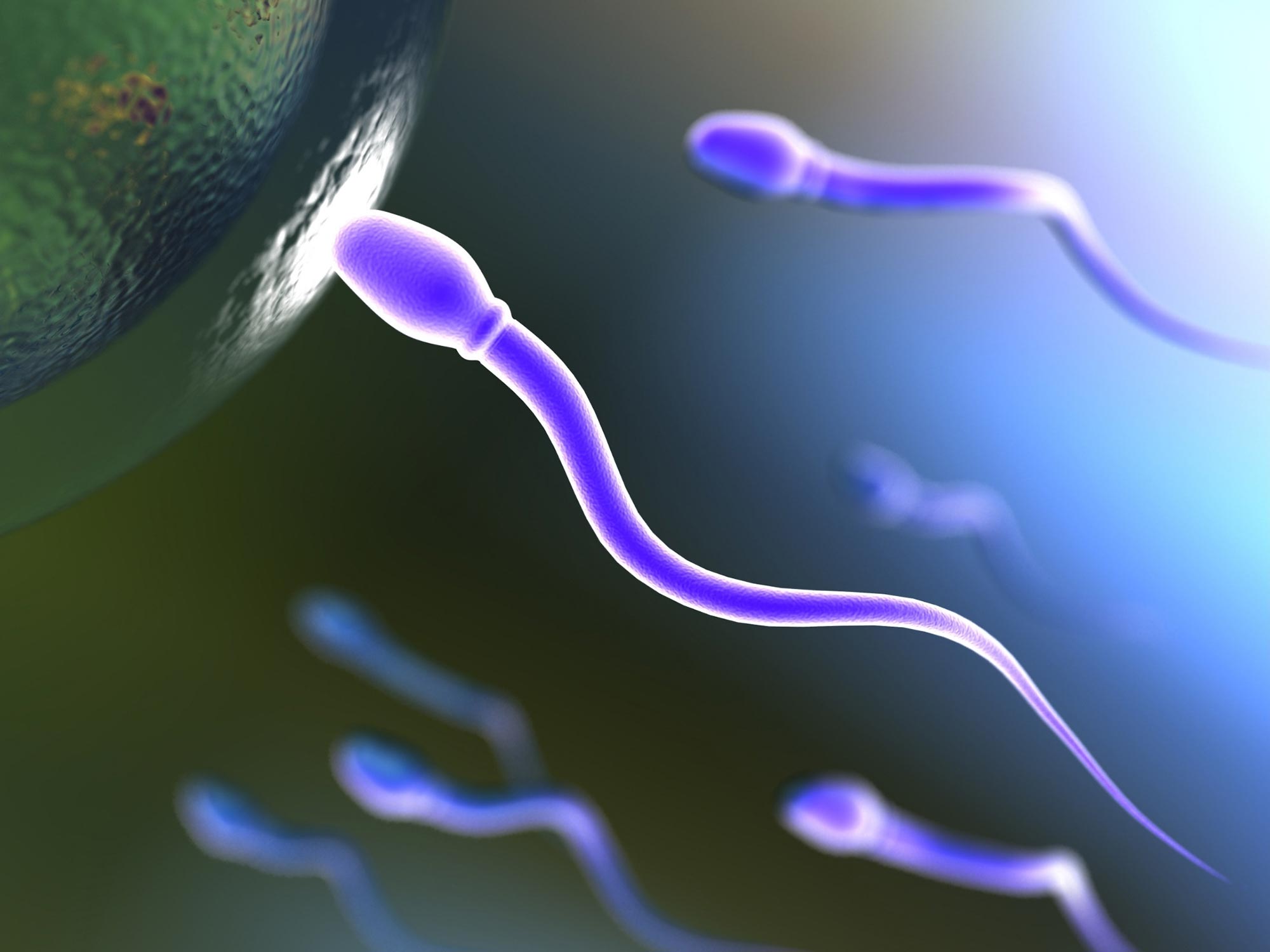
    Sperm Illustration
    Researchers at Michigan State University have discovered that the cytoplasmic droplet in sperm is crucial for storing proteins vital for fertility, controlled by a protein trafficking system influenced by the SYPL1 gene. This breakthrough could have significant implications for fertility research and control.

    Researchers at Michigan State University have unraveled the enigma of a lesser-understood sperm structure known as the cytoplasmic droplet (CD). The CD, characterized by an enlarged cytoplasm—a viscous, gelatinous substance encapsulated by a cellular membrane—is located near the sperm’s head, specifically at its neck. This phenomenon is observed in all mammals, humans included. This new genetic model is the first of its kind.

    Despite being first discovered more than 100 years ago, it’s been unclear how the CD forms and what its function is due to the lack of molecular and genetic tools to study it.

    Scientists have often disregarded it, but it can’t be ignored anymore said Chen Chen, an associate professor in the Department of Animal Science and the Reproductive and Developmental Sciences Program in MSU’s College of Agriculture and Natural Resources.

    “Our new study using mice shows that the CD is indeed an actively forming organelle purposefully designed to regulate sperm maturation and fertility,” Chen said. “It acts as a ‘storage room’ to pack up critical proteins needed for sperm function before its long journey to reach the egg. It’s like packing for a trip to Mars — the spaceship needs to load up everything needed for the journey before leaving Earth.”

    The Role of SYPL1 Gene in CD Formation

    Chen and his research team discovered a novel protein trafficking system within the developing sperm that actively transports essential proteins via small membrane vesicles to the CD — the sperm storage room. This process is controlled by a gene called SYPL1. The SYPL1 protein resides on these membrane vesicles and plays a pivotal role in directing them to reach the CD. You can think of these vesicles as cargo trucks delivering protein cargos to the sperm storage room, Chen said.

    Chen noted that when the SYPL1 gene is deleted in mice, this protein trafficking system collapses, and critical metabolic enzymes and essential proteins fail to be shipped to the CD, resulting in an empty CD devoid of vesicles — something he had never seen before. Consequently, without major CD contents, mutant sperm lose their motility and ability to cope with osmotic changes — they bend, leading to infertility.

    “I believe this study represents a breakthrough in understanding the CD formation and its potential function,” Chen said. “At the cellular level, it helps us realize that there is a specialized protein trafficking system that actively transports cargo to the CD for future use by sperm for their journey to the egg.

    “Fundamentally, this finding will change people’s misconception about this mysterious sperm structure. It will open new avenues for research on the CD as a biomarker for fertility in humans and animals and, possibly, on targeting this novel pathway for fertility control.”

    Reference: “SYPL1 defines a vesicular pathway essential for sperm cytoplasmic droplet formation and male fertility” by Jiali Liu, Louis Hermo, Deqiang Ding, Chao Wei, Jeffrey M. Mann, Xiaoyuan Yan, Ashley F. Melnick, Yingjie Wu, Alicia Withrow, Jose Cibelli, Rex A. Hess and Chen Chen, 22 August 2023, Nature Communications.
    DOI: 10.1038/s41467-023-40862-1

    Never miss a breakthrough: Join the SciTechDaily newsletter.
    Follow us on Google and Google News.

    Fertility Infertility Michigan State University Reproduction Sperm
    Share. Facebook Twitter Pinterest LinkedIn Email Reddit

    Related Articles

    Breakthrough Discovery Could Finally Be the Key to Male Birth Control

    The Hidden Danger in Protein Supplements: How a Gym Lifestyle Can Affect Male Fertility

    Worldwide Fertility Crisis: 10 Expert-Backed Recommendations for Tackling Male Infertility

    Get Fit and Fertile: Strong Link Found Between Physical Labor and Male Reproductive Health

    Losing Weight Can Double Your Sperm Count and Improve Fertility

    Reproductive Sciences Experts Discover Gene Crucial to Sperm Cell Production

    Newly Discovered Sperm Movement Could Help Treat Male Infertility

    Extinction of the Human Species? Harvard Researchers Say Not to Panic Over Declining Sperm Counts

    Norwegian Researchers Are Collecting Sperm From COVID-19 Patients – Here’s Why

    Leave A Reply Cancel Reply

    • Facebook
    • Twitter
    • Pinterest
    • YouTube

    Don't Miss a Discovery

    Subscribe for the Latest in Science & Tech!

    Trending News

    Bees Have a Hidden Nutritional Superpower, Oxford Study Reveals

    A Century-Old Belief About Diamond Has Just Been Overturned

    The Universe Can Expand Faster Than Light Without Breaking Physics

    The Exercise Paradox: Why Workouts Don’t Guarantee Weight Loss

    This Ancient Sea Animal Fights Viruses in the Opposite Way Humans Do

    39 Sweeteners Put to the Test Produced Surprising Gut Changes

    This Experimental Drug Repaired the Gut and Reversed Severe Fatty Liver Disease

    Physicists Just Turned a Black Hole Energy Theory Into Reality

    Follow SciTechDaily
    • Facebook
    • Twitter
    • YouTube
    • Pinterest
    • Newsletter
    • RSS
    SciTech News
    • Biology News
    • Chemistry News
    • Earth News
    • Health News
    • Physics News
    • Science News
    • Space News
    • Technology News
    Recent Posts
    • 3.1-Billion-Year-Old Rocks Rewrite the History of Earth’s Early Tectonics
    • Ancient DNA Reveals a Medieval Burial Mystery: They Weren’t Family
    • The Truth About Vikings Is More Complicated Than Museums Admit
    • Chromosome Chaos Reveals 81 New Cancer-Causing Genes
    • Rare Autism-Linked Syndrome Is Far More Common Than Scientists Thought
    Copyright © 1998 - 2026 SciTechDaily. All Rights Reserved.
    • Science News
    • About
    • Contact
    • Editorial Board
    • Privacy Policy
    • Terms of Use

    Type above and press Enter to search. Press Esc to cancel.