
Close Menu
    Facebook X (Twitter) Instagram
    SciTechDaily
    • Biology
    • Chemistry
    • Earth
    • Health
    • Physics
    • Science
    • Space
    • Technology
    Facebook X (Twitter) Pinterest YouTube RSS
    SciTechDaily
    Home»Health»New Nanotech Bandages Kill Bacteria and Speed Up Healing
    Health

    New Nanotech Bandages Kill Bacteria and Speed Up Healing

    By American Chemical SocietyFebruary 3, 2025No Comments2 Mins Read
    Facebook Twitter Pinterest Telegram LinkedIn WhatsApp Email Reddit
    Share
    Facebook Twitter LinkedIn Pinterest Telegram Email Reddit
    Wound Bandage Healing
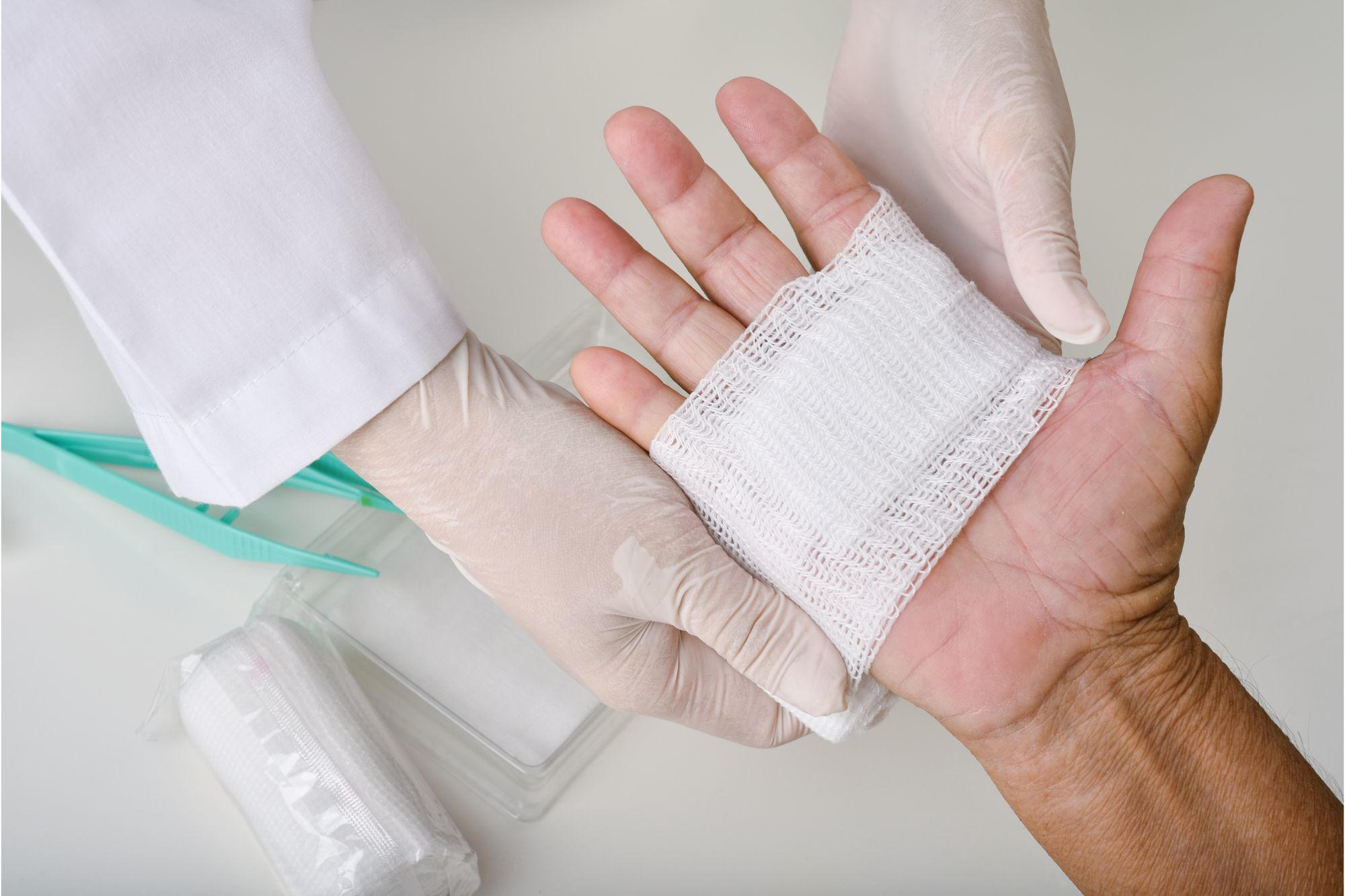
    Scientists have developed nanoflower-coated bandages with antibiotic, anti-inflammatory, and biocompatible properties to aid wound healing. These bandages, made with copper(II) phosphate and tannic acid, effectively combat infections and could revolutionize wound treatment. (Stock image)

    Researchers have developed nanoflower-coated bandages with antibiotic and anti-inflammatory properties, capable of killing bacteria and promoting wound healing.

    A carnation-like nanostructure could one day be used in bandages to promote wound healing. Researchers report in ACS Applied Bio Materials that laboratory tests of their nanoflower-coated dressings demonstrate antibiotic, anti-inflammatory, and biocompatible properties.

    They state that these results indicate tannic acid and copper(II) phosphate sprouted nanoflower bandages are promising candidates for treating infections and inflammatory conditions.

    Antibacterial Nanoflower
    This elegant nanoflower adds antioxidant, antibacterial, and antibiofilm properties when applied to electrospun nanofiber bandages. Credit: Adapted from ACS Applied Bio Materials 2025, DOI: 10.1021/acsabm.4c00788

    The Science Behind Nanoflowers

    Nanoflowers are tiny, self-assembling structures. But their large surface area provides plenty of space to attach drug molecules, making the flowers particularly suitable for delivering medications. For their bandage blooms, Fatemeh Ahmadpoor, Pier Francesco Ferrari, and colleagues chose copper(II) phosphate and tannic acid because of the antibiotic and anti-inflammatory properties of both reagents.

    After growing their flowers in a saline solution, the researchers attached the bioinspired structures onto strips of electrospun nanofiber fabric. In tests, the nanoflower-coated bandages inactivated a broad spectrum of cultured bacteria (including E. coli, Pseudomonas aeruginosa, and Staphylococcus aureus) and their antibiotic-resistant biofilms, scavenged reactive oxygen species, and didn’t damage lab-grown human cells.

    Ahmadpoor and Ferrari say these nanoflower-coated bandages represent a breakthrough advancement by providing a natural, cost-effective, and highly efficient solution for combating infections and accelerating wound healing, with the potential to redefine treatment standards.

    Reference: “Self-Assembled Nanoflowers from Natural Building Blocks with Antioxidant, Antibacterial, and Antibiofilm Properties” by Fatemeh Ahmadpoor, Naeimeh Eghbalifam, Paolo Canepa, Domenico Palombo, Patrizia Perego and Pier Francesco Ferrari, 6 January 2025, ACS Applied Bio Materials.
    DOI: 10.1021/acsabm.4c00788

    The authors acknowledge funding from the Italian Ministry of University and Research.

    Never miss a breakthrough: Join the SciTechDaily newsletter.
    Follow us on Google and Google News.

    American Chemical Society Bacteria Biomedical Engineering Wounds
    Share. Facebook Twitter Pinterest LinkedIn Email Reddit

    Related Articles

    The $1 Cure: How Programmable Bacteria Are Reshaping Cancer Therapy

    Reviving Ancient Wisdom: Historical Recipes Inspire Modern Medical Innovations

    Killing Over 99% of Bacteria – Scientists Have Invented a Nano-Thin Superbug-Slaying Material

    Speeding Healing by 30%: The First Transient Electronic Bandage

    New Type of Cholera Vaccine May Offer Much Longer-Lasting Protection

    Antimicrobial Coating for Orthopedic Implants Prevents Dangerous Bacterial Infections

    Bacteria Reprogrammed to Make Designer Molecule Used in Pharmaceutical Drugs

    Smart Bandages Automatically Sense and Treat Bacterial Infections

    New Strategy Makes Bacteria More Vulnerable to Antibiotics

    Leave A Reply Cancel Reply

    • Facebook
    • Twitter
    • Pinterest
    • YouTube

    Don't Miss a Discovery

    Subscribe for the Latest in Science & Tech!

    Trending News

    Scientists Uncover Potential Brain Risks of Popular Fish Oil Supplements

    Scientists Discover a Surprising Way To Make Bread Healthier and More Nutritious

    After 60 Years, Scientists Uncover Unexpected Brain Effects of Popular Diabetes Drug Metformin

    New Research Uncovers Hidden Side Effects of Popular Weight-Loss Drugs

    Scientists Rethink Extreme Warming After Surprising Ocean Discovery

    Landmark Study Links Never Marrying to Significantly Higher Cancer Risk

    Researchers Discover Unknown Beetle Species Just Steps From Their Lab

    Largest-Ever Study Finds Medicinal Cannabis Ineffective for Anxiety, Depression, PTSD

    Follow SciTechDaily
    • Facebook
    • Twitter
    • YouTube
    • Pinterest
    • Newsletter
    • RSS
    SciTech News
    • Biology News
    • Chemistry News
    • Earth News
    • Health News
    • Physics News
    • Science News
    • Space News
    • Technology News
    Recent Posts
    • Not Just Alzheimer’s: Scientists Uncover Clues to a Second, Overlooked Disorder
    • Scientists Uncover Dangerous Connection Between Serotonin and Heart Valve Disease
    • Scientists Discover a “Protector” Protein That Could Help Reverse Hair Loss
    • Powerful Lasers Reveal How Matter Becomes Plasma in Trillionths of a Second
    • A Simpler Path to Super-Resolution: Scientists Reinvent Microscopy
    Copyright © 1998 - 2026 SciTechDaily. All Rights Reserved.
    • Science News
    • About
    • Contact
    • Editorial Board
    • Privacy Policy
    • Terms of Use

    Type above and press Enter to search. Press Esc to cancel.