
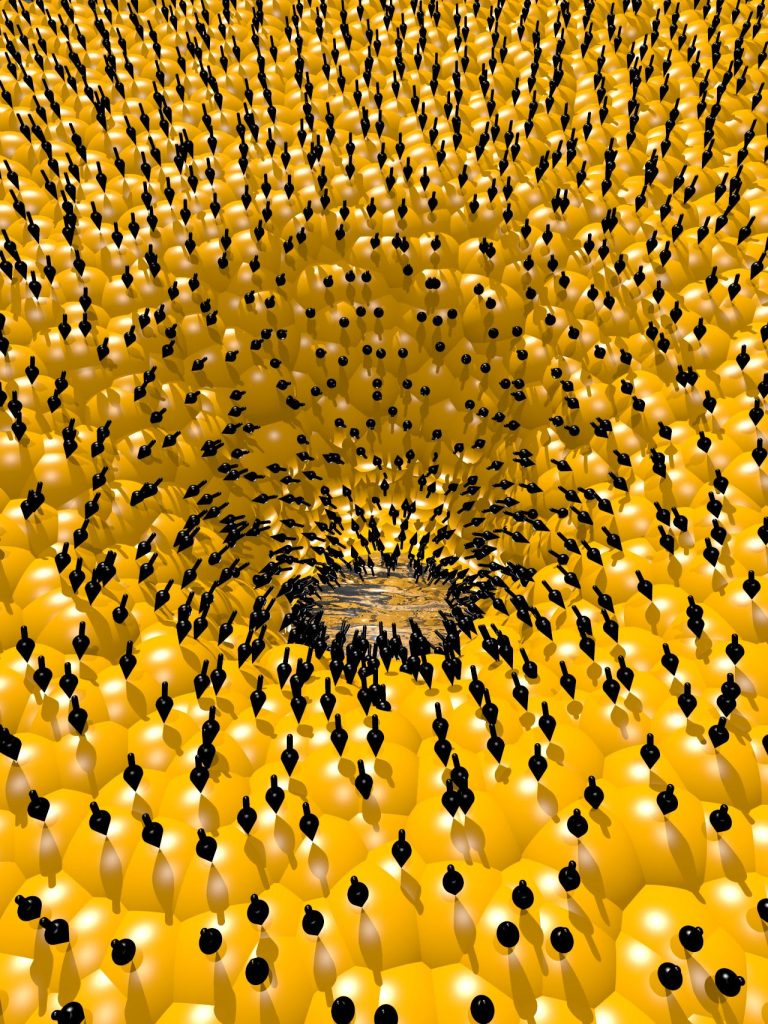
Electroporation studies reveal new insights into membrane pore dynamics and link lipid oxidation to aging and disease.
Powerful electric fields have the ability to generate pores in biological membranes through a process called electroporation. Deliberately inducing these imperfections in membranes is a crucial technique not only in medicine and biotechnology but also in the treatment of food items.
A Franco-German research team, headed by Dr. Carlos Marques from the Ecole Normale Supérieure in Lyon, France, and Prof. Dr. Jan Behrends from the Institute of Physiology at the University of Freiburg, has recently collected data that casts fundamental doubt on what has been accepted for decades as the standard model of this mechanism.
“This is a challenge for theory building and numerical simulations in this field,” says Marques. The results have now been published in the Proceedings of the Academy of Sciences of the United States of America (PNAS). They could help to improve the transport of active substances in cells.
Therapeutic Substances Enter Cells Through Electropores
Direct current electric fields above a certain intensity disrupt the organization of lipids, fat-like molecules that form the basic structure of biological membranes in a bilayer, stacked together in a kind of liquid crystal. The resulting electropores, which are usually only stable for a very short time, allow water and solutes in the surrounding medium – such as drugs or other active substances, including RNA or DNA – to enter a cell.
Since the bilayer of lipids is very thin, measuring only five-millionths of a millimeter, it is not necessary to apply very high voltages to generate very high field strengths (volts per meter). Thus, even at a voltage of 0.1 volts across the membrane, the field strength is 20 million volts per meter. In air, for example, spark discharge already occurs at three million volts per meter. However, it must be direct current voltage; alternating current fields in the megahertz-gigahertz range such as those generated by cell phones do not cause pores. While the technique is well established, there is still a need to optimize electroporation of cell membranes for various purposes, such as to introduce genetic material for gene therapy. For this purpose, it is important to understand precisely the mechanism of pore formation under electric fields.
A Standard Model With Little Experimental Verification
A standard theoretical model of electroporation from the 1970s assumes that the electric field applies pressure to the lipids, thereby increasing the probability of pore formation. So far, however, there is only little experimental verification of the model. This is due, first, to the difficulty of directly detecting the formation of electropores and, second, to the necessity of carrying out a very large number of such experiments in order to arrive at statistically tenable conclusions. This is because, in contrast to pores formed by proteins, electropores exhibit a very diverse, less stereotypical behavior.
A method that is capable of detecting the formation of pores with great accuracy and high time resolution is the electrical measurement of ionic current. Ions are positively or negatively charged constituents of the salts present in all biological fluids and, thus, inside and outside the cell. They are practically incapable of penetrating intact membranes, but as soon as a pore is opened, they are transported through it in the electric field. This transport of charged particles can be measured with highly sensitive amplifiers as a tiny electric current of a few billionths to millionths of an ampere. For this purpose, artificial lipid bilayers are created in thin Teflon layers via tiny openings of around 0.1 millimeters in diameter and placed between two electrodes. This technique of membrane formation is highly susceptible to failure – only one membrane is formed at a time, which breaks easily, especially during tests with higher voltages.
New Method for Creating Lipid Layers
For their experiments, the research group used a microchip with many openings, through which significantly more stable lipid layers can be generated very quickly and repeatedly using simplified procedures. This so-called microelectrode cavity array (MECA) was developed by Jan Behrends’s research group and has been produced and made commercially available by the Freiburg start-up company Ionera Technologies GmbH founded in 2014.
With the help of this device, it was now possible for the doctoral candidate Eulalie Lafarge from the Charles Sadron Institute at the University of Strasbourg and Dr. Ekaterina Zaitseva from the Freiburg research group to generate hundreds of membranes in a relatively short time and to measure and quantify pore formation as a function of the strength of the direct current field.
The results demonstrated that, contrary to the prediction of the old standard model, the energy barrier for pore formation decreases not with the square of the field strength but proportionally to the field strength. In other words, doubling the field strength reduces the energy barrier only by half, not fourfold. This suggests a fundamentally different mechanism: a destabilization of the interface between lipid and water due to a reorientation of the water molecules in the electric field.
Oxidized Membranes Also Studied
This result was also confirmed for membranes whose lipids were oxidized to varying degrees. This is interesting because lipid oxidation is a natural process in the regulation of cell membrane function and plays a role in the natural aging of the organism and possibly also in diseases such as Parkinson’s and Alzheimer’s. “Particularly in view of the medical significance of this topic, we want to pursue it further, also including optical methods, in order to reach a real understanding of this important phenomenon,” says Behrends.
Reference: “Activation energy for pore opening in lipid membranes under an electric field” by Eulalie J. Lafarge, Pierre Muller, André P. Schroder, Ekaterina Zaitseva, Jan C. Behrends and Carlos M. Marques, 7 March 2023, Proceedings of the National Academy of Sciences.
DOI: 10.1073/pnas.2213112120
Never miss a breakthrough: Join the SciTechDaily newsletter.
Follow us on Google and Google News.