
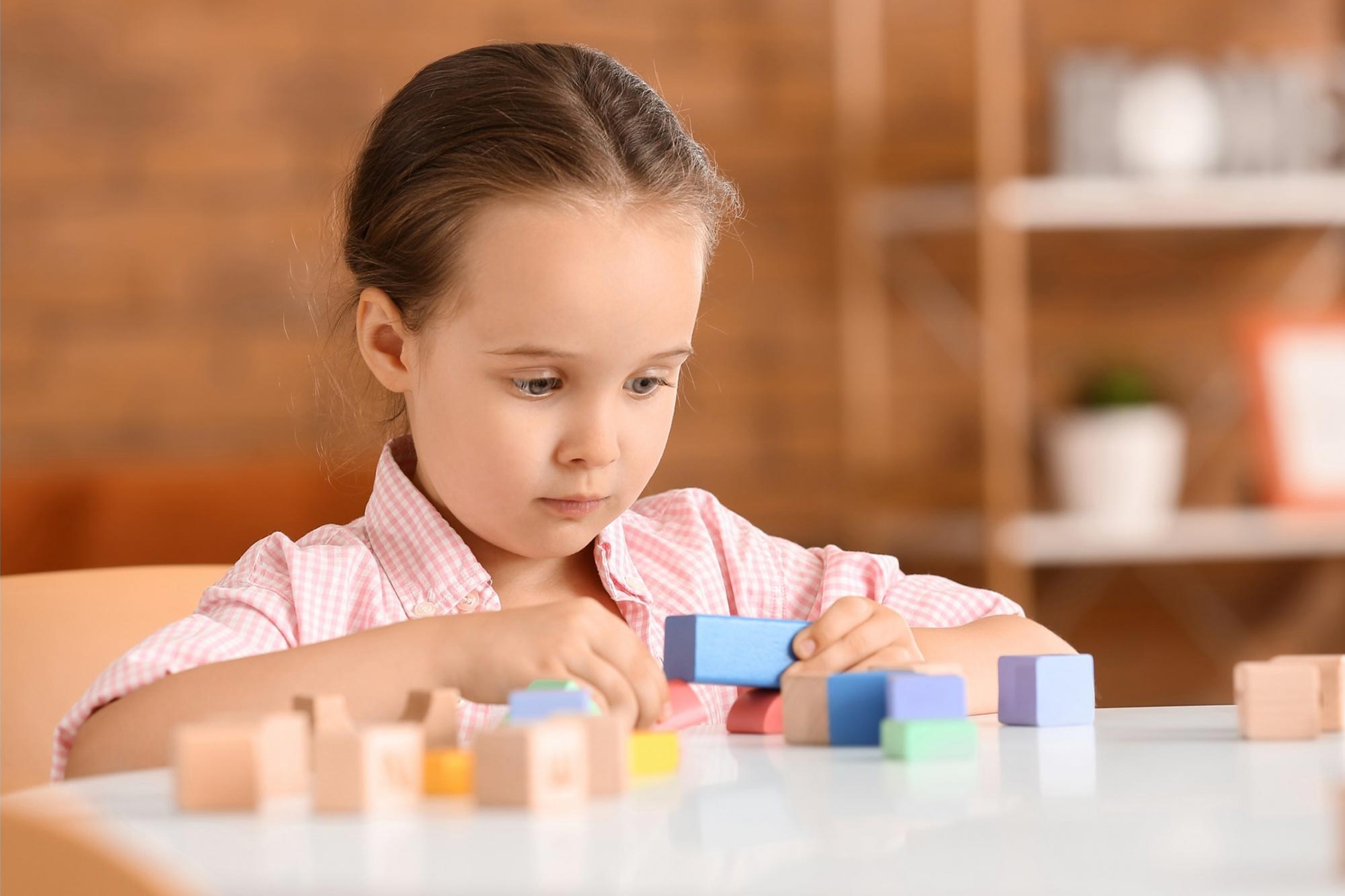
Using an innovative AI-driven observation method, a groundbreaking study reveals that avoiding eye contact may not be exclusive to individuals with autism.
Children with autism are commonly thought to struggle with social interaction and often show reduced attention during interpersonal exchanges. One widely recognized behavioral marker in autism diagnosis is the tendency to avoid eye contact. However, research has shown that even typically developing children rarely make sustained eye contact during everyday play, raising questions about the reliability of this marker for clinical assessment.
In an effort to better understand the behavioral indicators of autism, a recent study led by Lu Qu and Qiaoyun Liu from the Shanghai Institute of Artificial Intelligence for Education at East China Normal University offers new insights. Published in the ECNU Review of Education on March 17, 2025, the study found that autistic children display social attention patterns similar to those of their typically developing peers during play—both groups tend to focus more on toys than on faces. These findings challenge the long-held belief that reduced eye contact is a definitive or distinguishing feature of autism.
Limitations of Traditional Autism Assessments
According to the researchers, most conventional studies use an artificial clinical setting to measure children’s joint attention skills. These tests involve presenting stimuli, such as toys, to children and observing their gaze patterns to assess their ability to follow and initiate joint attention. However, these tests are usually conducted in standardized lab environments and may not fully reflect children’s performance in natural settings.
Tiding over these conventional methods, the authors in this study utilized a novel, non-intrusive AI-powered observation lab to analyze gaze, vocalizations, and movements in natural settings—addressing limitations of traditional lab-based assessments like the Autism Diagnostic Observation Schedule (ADOS). This approach captured authentic behaviors, revealing that standardized tests may overlook critical social communication strategies. The research involved multimodal behavioral analysis of children across three groups: typically developing children, autistic children, and children with developmental delays. Ethical approval was obtained from East China Normal University, with funding from the China Postdoctoral Science Foundation and National Key Research and Development Program.
The results of this study were quite surprising. Both autistic and typically developing children spent 60%—80% of their playtime focused on toys and only 6%—14% looking at adults’ faces, suggesting that eye contact avoidance may not be unique to autism only.
Nonverbal communicative cues, such as caregivers’ hand movements, were also found to play a significant role in joint attention during interactions. These results align with recent studies in Current Biology (2022), which found that children rarely look at faces during natural play, regardless of autism diagnosis.
Implications for Autism Understanding and Diagnosis
These findings may have important implications for understanding attention spans in children with autism. According to the authors, the long-held belief that autistic children avoid eye contact may be exaggerated. While autistic children are known to look at their parents’ faces less often than typically developing children, this difference may not be that significant. Additionally, these findings suggest that children may use other communication cues to participate in social settings, especially during play-related activities.
Moreover, these findings could have significant implications for clinical practice as well. Many clinical interventions for autistic children focus on improving attention and encouraging eye contact. However, the results of this study suggest that these interventions may not be suitable for all autistic children, especially for play-related activities. Instead, the authors suggest that using alternative interventions, such as parents’ hand positions and communicative gestures, could be more effective.
“Our findings emphasize the need to rethink interventions focused solely on eye contact,” said lead researchers Qu and Liu. Adding further, they claim, “Targeting broader cues, such as gestures, could better support autistic children’s communication development.” The study calls for updated diagnostic frameworks and personalized intervention strategies that reflect the diverse ways in which children engage socially.
According to Qu and Liu, “In this era of artificial intelligence, our understanding of the core symptoms of autism needs continuous updating. Classical research paradigms must be re-examined, and continuous exploration and research must be conducted to understand children’s natural behaviors in social communication, especially in a natural environment.” Going ahead, the researchers hope that studies like this help improve and provide appropriate and effective support for autistic children.
Reference: “Is a Child Who Doesn’t Look at People Always Autistic?—A Closer Look at Joint Attention” by Lu Qu (瞿璐) and Qiaoyun Liu (刘巧云), 27 May 2024, ECNU Review of Education.
DOI: 10.1177/20965311251319050
Never miss a breakthrough: Join the SciTechDaily newsletter.
Follow us on Google and Google News.