
Close Menu
    Facebook X (Twitter) Instagram
    SciTechDaily
    • Biology
    • Chemistry
    • Earth
    • Health
    • Physics
    • Science
    • Space
    • Technology
    Facebook X (Twitter) Pinterest YouTube RSS
    SciTechDaily
    Home»Biology»New Research Links Irritable Bowel Syndrome to Reduced Bacterial Diversity
    Biology

    New Research Links Irritable Bowel Syndrome to Reduced Bacterial Diversity

    By American Society for MicrobiologyMarch 8, 2023No Comments3 Mins Read
    Facebook Twitter Pinterest Telegram LinkedIn WhatsApp Email Reddit
    Share
    Facebook Twitter LinkedIn Pinterest Telegram Email Reddit
    Gut Bacteria Microbiome
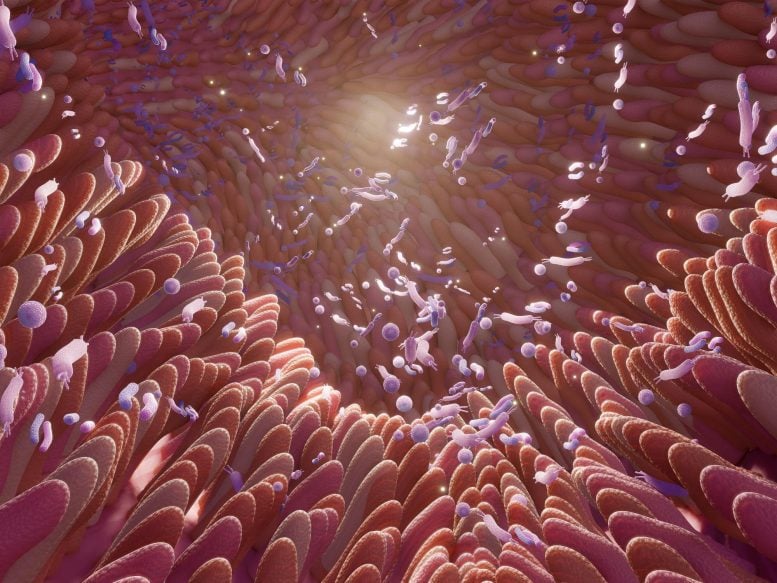
    Irritable Bowel Syndrome (IBS) is a common gastrointestinal disorder that affects the large intestine. It is characterized by symptoms such as abdominal pain, bloating, constipation, and diarrhea.

    Linking Gut Microbiota Diversity to IBS

    According to a team of Korean researchers, individuals with Irritable Bowel Syndrome (IBS) have a decreased diversity of bacteria in their intestines compared to healthy individuals. This is the first study to establish a clear connection between IBS and a reduction in gut microbiota diversity. The findings were published in the American Society for Microbiology’s journal Microbiology Spectrum.

    Normally, “More than 10,000 species of microorganism live in the human intestine,” said corresponding author Jung Ok Shim, M.D., Ph.D., professor of Pediatric Gastroenterology, Hepatology, and Nutrition, Department of Pediatrics, Korea University College of Medicine, Seoul. Disruption of the microbiome of the human gastrointestinal tract can trigger IBS. Typically, IBS causes bloating, diarrhea, and stomach pain or cramps.

    Previous studies of gut bacteria in patients with IBS have been controversial, with inconsistent results, due to small sample size and lack of consistent analytical methods used among these studies, said Shim. The investigators combined their own dataset with 9 published, shared datasets, encompassing 576 IBS patients and 487 healthy controls, analyzing them with a “unified data processing and analytical method.”

    The researchers found that the gut bacterial community is less diverse in IBS patients than in healthy people, said Shim. Additionally, the abundance of 21 bacterial species differed between IBS patients and healthy controls. However, the findings were not statistically significant in the pediatric cohort due to a small sample size.

    The investigators proved that the disturbed gut bacterial community “is associated with IBS, though this does not mean that the relationship is causal,” said Shim. “Functional studies are needed to prove whether the change in gut micro-organisms contributes to the development of IBS.”

    Implications for IBS Pathogenesis and Treatment

    Even though IBS is a common disorder, its pathogenesis remains unknown, and as yet there is no effective treatment strategy. “Based on the epidemiological studies of IBS patients, altered gut microbiota was proposed as one of the possible causes of IBS,” the researchers write. “Acute bacterial gastroenteritis can cause chronic, asymptomatic, low-grade intestinal wall inflammation sufficient to alter neuromuscular and epithelial cell function.”

    “Gut Bacterial Dysbiosis in Irritable Bowel Syndrome: a Case-Control Study and a Cross-Cohort Analysis Using Publicly Available Data Sets” by Gun-Ha Kim, Kihyun Lee and Jung Ok Shim, 18 January 2023, Microbiology Spectrum.
    DOI: 10.1128/spectrum.02125-22

    Never miss a breakthrough: Join the SciTechDaily newsletter.
    Follow us on Google and Google News.

    American Society for Microbiology Bacteria Gastroenterology Gut Korea University
    Share. Facebook Twitter Pinterest LinkedIn Email Reddit

    Related Articles

    In Search for the Origins of Antibiotic Resistance – Scientists Discover 18 Never-Before-Seen Species of Gut Microbes

    Marine Bacteria Turn Up the Heat on Asbestos Detoxification

    Gut Bugs: The Microbes Responsible for Controlling Your Body’s Temperature

    Plastic Pollution in the Ocean May Harbor Novel Antibiotics

    Probiotic Protection? Gut Bacteria Discovered That Protects the Intestine From Invasion of the COVID-19 Virus

    E. coli’s Secret Weapon in Launching Infections Revealed

    Microbiota in Pregnant Women Looks Like Those of People with Diabetes

    Widespread Presence of Antibiotic Resistant Bacteria in Agricultural Soils

    Autistic Children Have Different Gastrointestinal Bacteria

    Leave A Reply Cancel Reply

    • Facebook
    • Twitter
    • Pinterest
    • YouTube

    Don't Miss a Discovery

    Subscribe for the Latest in Science & Tech!

    Trending News

    Millions Take These IBS Drugs, But a New Study Finds Serious Risks

    Scientists Unlock Hidden Secrets of 2,300-Year-Old Mummies Using Cutting-Edge CT Scanner

    Bread Might Be Making You Gain Weight Even Without Eating More Calories

    Scientists Discover Massive Magma Reservoir Beneath Tuscany

    Europe’s Most Active Volcano Just Got Stranger – Here’s Why Scientists Are Rethinking It

    Alzheimer’s Symptoms May Start Outside the Brain, Study Finds

    Millions Take This Popular Supplement – Scientists Discover a Concerning Link to Heart Failure

    The Universe Is Expanding Too Fast and Scientists Can’t Explain Why

    Follow SciTechDaily
    • Facebook
    • Twitter
    • YouTube
    • Pinterest
    • Newsletter
    • RSS
    SciTech News
    • Biology News
    • Chemistry News
    • Earth News
    • Health News
    • Physics News
    • Science News
    • Space News
    • Technology News
    Recent Posts
    • Simple Blood Test May Predict Alzheimer’s Years Before Brain Scans Show Signs
    • Scientists Say Adding This Unusual Seafood to Your Diet Could Reverse Signs of Aging
    • U.S. Waste Holds $5.7 Billion Worth of Crop Nutrients
    • Scientists Say a Hidden Structure May Exist Inside Earth’s Core
    • Doctors Surprised by the Power of a Simple Drug Against Colon Cancer
    Copyright © 1998 - 2026 SciTechDaily. All Rights Reserved.
    • Science News
    • About
    • Contact
    • Editorial Board
    • Privacy Policy
    • Terms of Use

    Type above and press Enter to search. Press Esc to cancel.