
Close Menu
    Facebook X (Twitter) Instagram
    SciTechDaily
    • Biology
    • Chemistry
    • Earth
    • Health
    • Physics
    • Science
    • Space
    • Technology
    Facebook X (Twitter) Pinterest YouTube RSS
    SciTechDaily
    Home»Chemistry»New Research Reveals How Ultraviolet Light Degrades Coronavirus
    Chemistry

    New Research Reveals How Ultraviolet Light Degrades Coronavirus

    By University of SouthamptonJanuary 30, 2024No Comments3 Mins Read
    Facebook Twitter Pinterest Telegram LinkedIn WhatsApp Email Reddit
    Share
    Facebook Twitter LinkedIn Pinterest Telegram Email Reddit
    UVC Light Degrading SARS CoV 2 Viral Particle
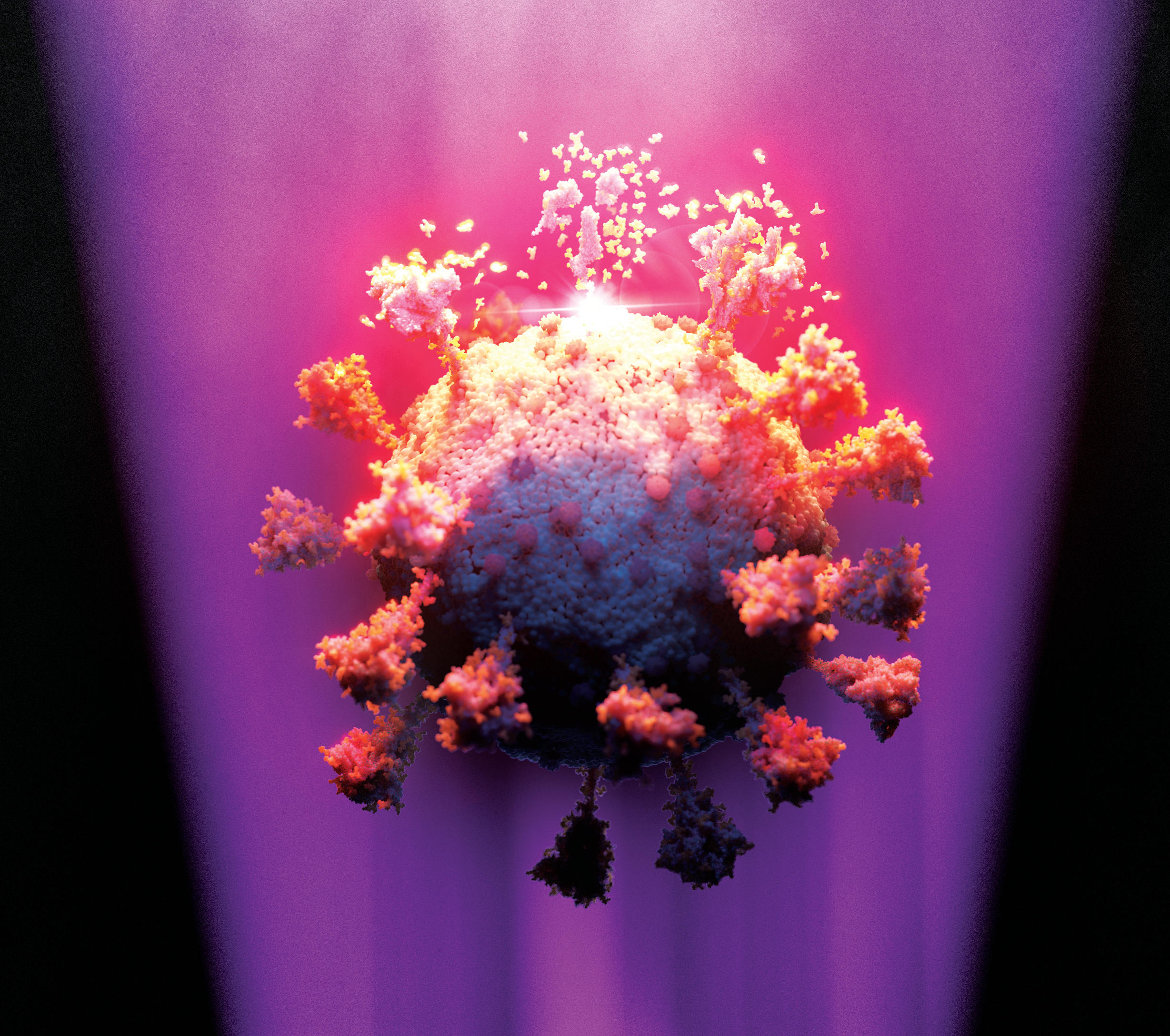
    A study by the University of Southampton has revealed that ultraviolet laser light effectively deactivates SARS-CoV-2 by damaging its genetic material and protein spikes. This discovery, enhancing the understanding of light-based virus deactivation, paves the way for novel disinfection methods in environments where traditional approaches are not feasible. Credit: University of Southampton

    New research has revealed how light can be used to destroy infectious coronavirus particles that contaminate surfaces. Scientists are interested in how environments, such as surgeries, can be thoroughly disinfected from viruses such as SARS-CoV-2 that caused the COVID-19 pandemic.

    SARS-CoV-2 viral particles are composed of a core of nucleic acid chains that contain the genetic information of the virus, surrounded by a lipid membrane with proteinous spikes sticking out. Each component is necessary for infection.

    Researchers from the University of Southampton investigated how ultraviolet laser light destroys the virus by impacting each of these critical components. By using a specialized ultraviolet laser at two different wavelengths the scientists were able to determine how each viral component degraded under the bright light. They found the genomic material was highly sensitive to degradation and protein spikes lost their ability to bind to human cells.

    The Role of UVC Light in Viral Deactivation

    UV light includes UVA, UVB, and UVC light. Very little UVC light at frequencies below 280nm reaches the earth’s surface from the sun. It is this lesser-studied UVC light that the team in Southampton used for their study due to its disinfectant properties. UVC light is strongly absorbed by different viral components, including the genetic material (~260nm) and the proteinous spikes (~230nm), allowing the team to select laser frequencies of 266nm and 227nm for the project.

    The University of Southampton scientists, led by Professor Sumeet Mahajan, worked closely with scientists from the laser manufacturer, called M Squared Lasers, and the resulting co-authored study has been published in a journal of the American Chemical Society called ACS Photonics. The team found that 266nm light caused RNA damage at low powers, affecting the genetic information of the virus. 266nm light also damaged the structure of the SARS-CoV-2 spike protein, reducing its ability to bind to human cells by breaking down disulfide bonds and aromatic amino acids.

    The 227nm light was less effective at inducing RNA damage, but more effective at damaging proteins through oxidation (a chemical reaction involving oxygen) which unfolds the protein’s structure.

    Implications of the Research

    Importantly, SARS-CoV-2 has among the largest genomes for RNA viruses. This makes it especially sensitive to genomic damage.

    Professor Mahajan said: “Light deactivation of airborne viruses offers a versatile tool for disinfection of our public spaces and sensitive equipment that may otherwise prove difficult to decontaminate with conventional methods. Now we understand the differential sensitivity of molecular components in viruses to light deactivation this opens up the possibility of a finely tuned disinfection technology.”

    Light-based deactivation has received a lot of attention because of the wide range of applications where conventional liquid-based deactivation methods aren’t suitable. Now the mechanism of deactivation is better understood this is an important step in rolling out the technology.

    Reference: “Mechanisms of SARS-CoV-2 Inactivation Using UVC Laser Radiation” by George Devitt, Peter B. Johnson, Niall Hanrahan, Simon I. R. Lane, Magdalena C. Vidale, Bhavwanti Sheth, Joel D. Allen, Maria V. Humbert, Cosma M. Spalluto, Rodolphe C. Hervé, Karl Staples, Jonathan J. West, Robert Forster, Nullin Divecha, Christopher J. McCormick, Max Crispin, Nils Hempler, Graeme P. A. Malcolm and Sumeet Mahajan, 26 December 2023, ACS Photonics.
    DOI: 10.1021/acsphotonics.3c00828

    Never miss a breakthrough: Join the SciTechDaily newsletter.
    Follow us on Google and Google News.

    COVID-19 Photonics University of Southampton
    Share. Facebook Twitter Pinterest LinkedIn Email Reddit

    Related Articles

    Scientists Discover Small Molecules That Successfully Target COVID Spike Proteins

    Scientists Go “Inside” the COVID-19 Viral Protein To Attack a Weak Point

    MIT’s New Carbon Nanotube-Based Sensor Can Detect COVID-19 or Other Emerging Pathogens

    New Fundamental Limit of Trapping and Exploiting Light at the Nanoscale

    Viruses From Plants/Bacteria Key Ingredient for New COVID-19 Vaccine Candidates

    Hidden SARS-CoV-2 “Gate” Discovered – Opens To Allow COVID Infection

    Scientists Catch Shape-Shifting Coronavirus Protein Complex in the Act

    International Study Shows Laboratory Developed Protein Spikes Consistent With COVID-19 Virus

    Kids Are Using Soft Drinks to Fake Positive COVID-19 Tests – Here’s the Science and How to Spot It

    Leave A Reply Cancel Reply

    • Facebook
    • Twitter
    • Pinterest
    • YouTube

    Don't Miss a Discovery

    Subscribe for the Latest in Science & Tech!

    Trending News

    Scientists Uncover Potential Brain Risks of Popular Fish Oil Supplements

    Scientists Discover a Surprising Way To Make Bread Healthier and More Nutritious

    After 60 Years, Scientists Uncover Unexpected Brain Effects of Popular Diabetes Drug Metformin

    New Research Uncovers Hidden Side Effects of Popular Weight-Loss Drugs

    Scientists Rethink Extreme Warming After Surprising Ocean Discovery

    Landmark Study Links Never Marrying to Significantly Higher Cancer Risk

    Researchers Discover Unknown Beetle Species Just Steps From Their Lab

    Largest-Ever Study Finds Medicinal Cannabis Ineffective for Anxiety, Depression, PTSD

    Follow SciTechDaily
    • Facebook
    • Twitter
    • YouTube
    • Pinterest
    • Newsletter
    • RSS
    SciTech News
    • Biology News
    • Chemistry News
    • Earth News
    • Health News
    • Physics News
    • Science News
    • Space News
    • Technology News
    Recent Posts
    • Early Warning Signals of Esophageal Cancer May Be Hiding in Plain Sight
    • Researchers Have Discovered a THC-Free Cannabis Compound That May Replace Opioids
    • Common Blood Pressure Drug Shows Surprising Power Against Deadly Antibiotic-Resistant Superbug
    • Students Build Dark Matter Detector and Set New Experimental Limits
    • Scientists Discover Caffeine Can Repair Key Memory Circuits After Sleep Loss
    Copyright © 1998 - 2026 SciTechDaily. All Rights Reserved.
    • Science News
    • About
    • Contact
    • Editorial Board
    • Privacy Policy
    • Terms of Use

    Type above and press Enter to search. Press Esc to cancel.