
Close Menu
    Facebook X (Twitter) Instagram
    SciTechDaily
    • Biology
    • Chemistry
    • Earth
    • Health
    • Physics
    • Science
    • Space
    • Technology
    Facebook X (Twitter) Pinterest YouTube RSS
    SciTechDaily
    Home»Chemistry»Scientists Discover Small Molecules That Successfully Target COVID Spike Proteins
    Chemistry

    Scientists Discover Small Molecules That Successfully Target COVID Spike Proteins

    By American Chemical SocietyFebruary 8, 2023No Comments3 Mins Read
    Facebook Twitter Pinterest Telegram LinkedIn WhatsApp Email Reddit
    Share
    Facebook Twitter LinkedIn Pinterest Telegram Email Reddit
    Small Molecules Keep SARS-CoV-2 Closed for Business
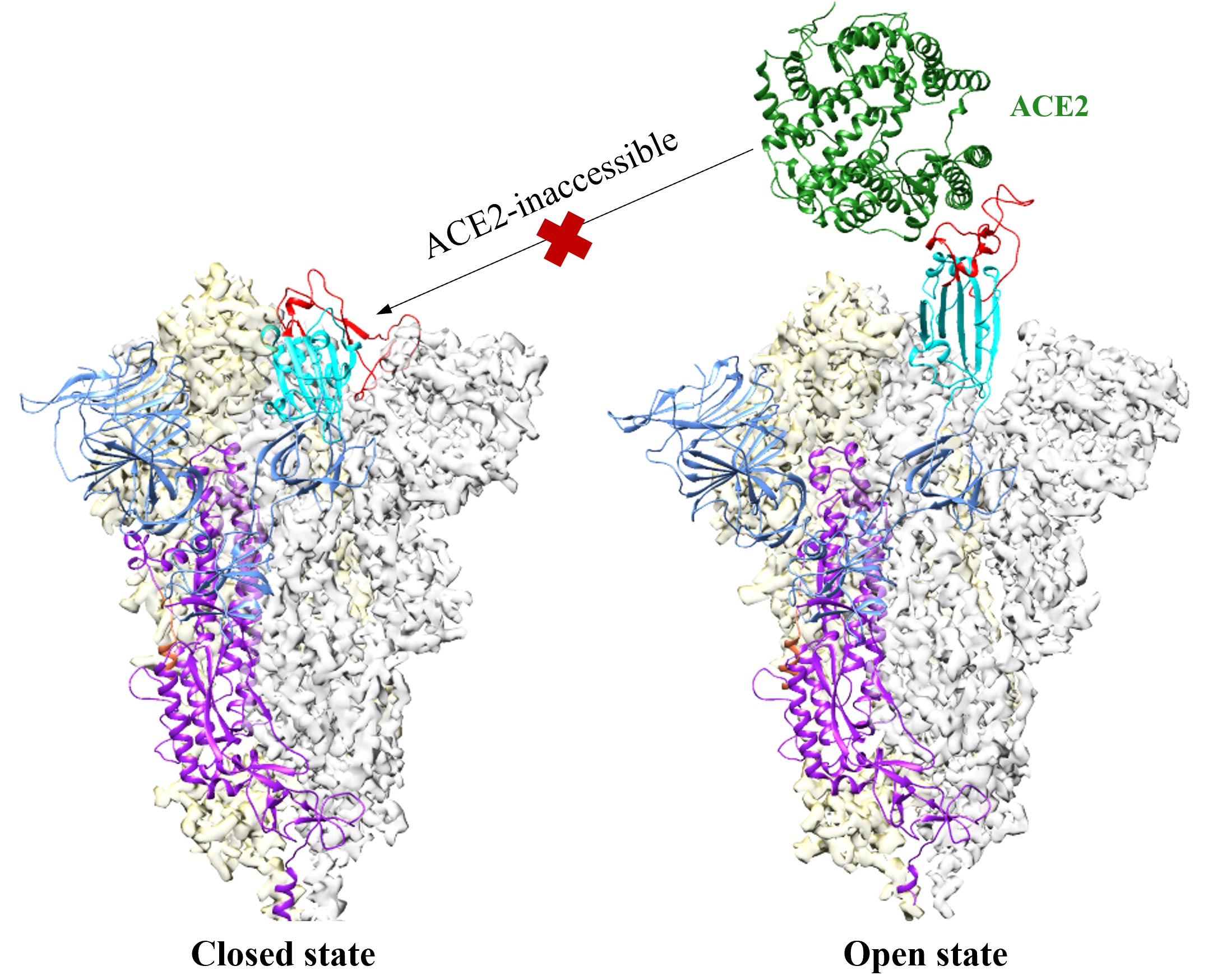
    Some small molecules can lock SARS-CoV-2 spike proteins in a harmless closed configuration (left) instead of the infectious open configuration (right). Credit: Adapted from ACS Central Science 2023, DOI: 10.1021/acscentsci.2c01190

    Using Small Molecules To Keep SARS-CoV-2 Closed for Business

    The infamous spike proteins on the surface of SARS-CoV-2 help it bind to and enter human cells. Because of their important role in spreading infection, these spike proteins are one of the main targets for COVID-19 vaccines and treatments. But those remedies gradually lose effectiveness when certain segments of the spike proteins mutate. Now, researchers report in ACS Central Science that they have discovered small molecules that successfully target other segments that mutate less.

    Spike proteins change shape when they attack a cell. In their “open” structure, they expose a section known as the receptor-binding domain (RBD) so it can attach to the ACE2 protein on human cells. In the “closed” structure, this RBD segment is tucked inside the spike protein and can’t bind to human cells. Antibodies contained in some COVID-19 therapies or stimulated by vaccines or infection target the RBD domain so it can’t bind to ACE2. However, some emerging variants of the coronavirus contain mutations in the RBD fragment. That means vaccines and antibody therapies designed to target that fragment could become less effective as the virus mutates.

    Targeting the Achilles’ Heel of the Spike Protein

    To get around this problem, other, less mutation-prone parts of the spike protein could be targeted instead. One possibility is a pocket in the spike protein that has been dubbed the Achilles’ heel of the virus. When this cranny is occupied by free fatty acids (FFAs) or a few other compounds, the protein remains locked in its closed, harmless configuration. However, those compounds aren’t suitable treatments because they aren’t stable or they bind weakly. So, Jianhui Huang, Niu Huang, and colleagues decided to look for other potential treatments that lack these flaws.

    Using computer modeling, the team screened a library of small molecules, seeking ones that could slip into this pocket and stick firmly to the spike protein, keeping it in the closed shape. The researchers then used surface plasmon resonance and other techniques to evaluate analogs of these molecules for improved binding and solubility. The resulting compounds, which can bind to spike proteins from the original coronavirus as well as the omicron BA.4 variant, could serve as a starting point for developing broad-spectrum treatments for COVID-19, the team says.

    Reference: “In Silico Discovery of Small Molecule Modulators Targeting the Achilles' Heel of SARS-CoV-2 Spike Protein” by Qing Wang, Fanhao Meng, Yuting Xie, Wei Wang, Yumin Meng, Linjie Li, Tao Liu, Jianxun Qi, Xiaodan Ni, Sanduo Zheng, Jianhui Huang and Niu Huang, 8 February 2023, ACS Central Science.
    DOI: 10.1021/acscentsci.2c01190

    The authors acknowledge support from the Beijing Municipal Science & Technology Commission and Tsinghua University.

    Never miss a breakthrough: Join the SciTechDaily newsletter.
    Follow us on Google and Google News.

    American Chemical Society COVID-19 Infectious Diseases
    Share. Facebook Twitter Pinterest LinkedIn Email Reddit

    Related Articles

    Copper Foam Is Highly Efficient, Durable as a Filter for Reusable Masks and Air Cleaners

    Disinfected by the Sun: New Cotton Face Mask Kills Up to 99.9999% of Bacteria and Viruses in Daylight

    Medication Used for Alcoholism Treatment Is Potentially Effective Against COVID-19

    You’re Using Disinfectants Wrong. Here’s How to Destroy 99.9% of Viruses/Coronaviruses and Bacteria [Video]

    Not Sure if You’ve Already Had Coronavirus? This Test Might Tell You (Video)

    How Effective Are Cloth Masks Against Coronavirus? [Video]

    Diagnostic Biosensor Detects SARS-CoV-2 From Nasopharyngeal Swab in Less Than a Minute

    Does Soap Actually ‘Kill’ the Coronavirus? Here’s the Chemistry [Video]

    Chemists Design New Compounds That Thwart Viruses – Blocks Replication of Coronavirus

    Leave A Reply Cancel Reply

    • Facebook
    • Twitter
    • Pinterest
    • YouTube

    Don't Miss a Discovery

    Subscribe for the Latest in Science & Tech!

    Trending News

    Bone-Strengthening Discovery Could Reverse Osteoporosis

    Scientists Uncover Hidden Trigger Behind Stem Cell Aging

    Scientists Find Way to Reverse Fatty Liver Disease Without Changing Diet

    Could Humans Regrow Limbs? New Study Reveals Promising Genetic Pathway

    Scientists Reveal Eating Fruits and Vegetables May Increase Your Risk of Lung Cancer

    Scientists Reverse Brain Aging With Simple Nasal Spray

    Scientists Uncover Potential Brain Risks of Popular Fish Oil Supplements

    Scientists Discover a Surprising Way To Make Bread Healthier and More Nutritious

    Follow SciTechDaily
    • Facebook
    • Twitter
    • YouTube
    • Pinterest
    • Newsletter
    • RSS
    SciTech News
    • Biology News
    • Chemistry News
    • Earth News
    • Health News
    • Physics News
    • Science News
    • Space News
    • Technology News
    Recent Posts
    • This Student Recreated the Universe in a Bottle. What She Discovered Could Help Reveal How Life Started on Earth
    • Alzheimer’s Symptoms May Start Outside the Brain, Study Finds
    • Cancer’s Secret Weapon? Scientists Reveal How Tumors “Learn” To Survive Treatment
    • Millions Take This Popular Supplement – Scientists Discover a Concerning Link to Heart Failure
    • What Makes Rubber So Strong? Scientists Finally Solve 100-Year-Old Mystery
    Copyright © 1998 - 2026 SciTechDaily. All Rights Reserved.
    • Science News
    • About
    • Contact
    • Editorial Board
    • Privacy Policy
    • Terms of Use

    Type above and press Enter to search. Press Esc to cancel.