
The COVID-19 pandemic, caused by the SARS-CoV-2 virus, has changed the way people live around the world. As of October 14, 2021, more than 716,000 people have died in the United States alone. Health experts agree that COVID-19 vaccines are one important way to help bring an end to the pandemic.
But getting a vaccine can be scary for both kids and adults. Plus, there is a lot of information about how the COVID-19 vaccines work, but some of it can be hard to understand.
As a pediatrician, infectious disease doctor and scientist who studies germs like bacteria and viruses, I have devoted close attention to the pandemic and the development of the COVID-19 vaccines.

Vaccines are made to resemble invaders
The most important thing to understand about vaccines is that they teach your body how to gear up to fight an infection, without your body having to deal with the infection itself. In this way, vaccines help your body be prepared for invasions by germs that could otherwise make you very sick.
All three of the COVID-19 vaccines available in the U.S. focus on what is called the spike protein of the SARS-CoV-2 virus, or coronavirus. SARS-CoV-2 is a round virus, with bumps all over it – sort of like a baseball covered in golf tees. The bumps are the spike proteins.
On an actual coronavirus, spike proteins allow the COVID-19 virus to get into cells so the virus can make more copies of itself. It does this by sticking to certain kinds of proteins, called receptors, on human cells – particularly lung cells. In this way, the virus can break into healthy cells and infect them.
The Pfizer-BioNTech, Moderna, and Johnson & Johnson vaccines all work similarly by giving the body’s cells the instructions to make the spike protein. The Pfizer and Moderna vaccines carry these instructions on a molecule called mRNA. This single-stranded molecule looks like a long piece of tape with the instructions to make a protein coded on one side.
The Johnson & Johnson vaccine, on the other hand, passes the instructions to cells through DNA molecules. It uses a virus called an adenovirus, which cannot make copies of itself, to carry the spike proteins’ DNA into human cells. This DNA gets copied into mRNA, which then translates the instructions into proteins – in this case, the spike protein of the coronavirus.
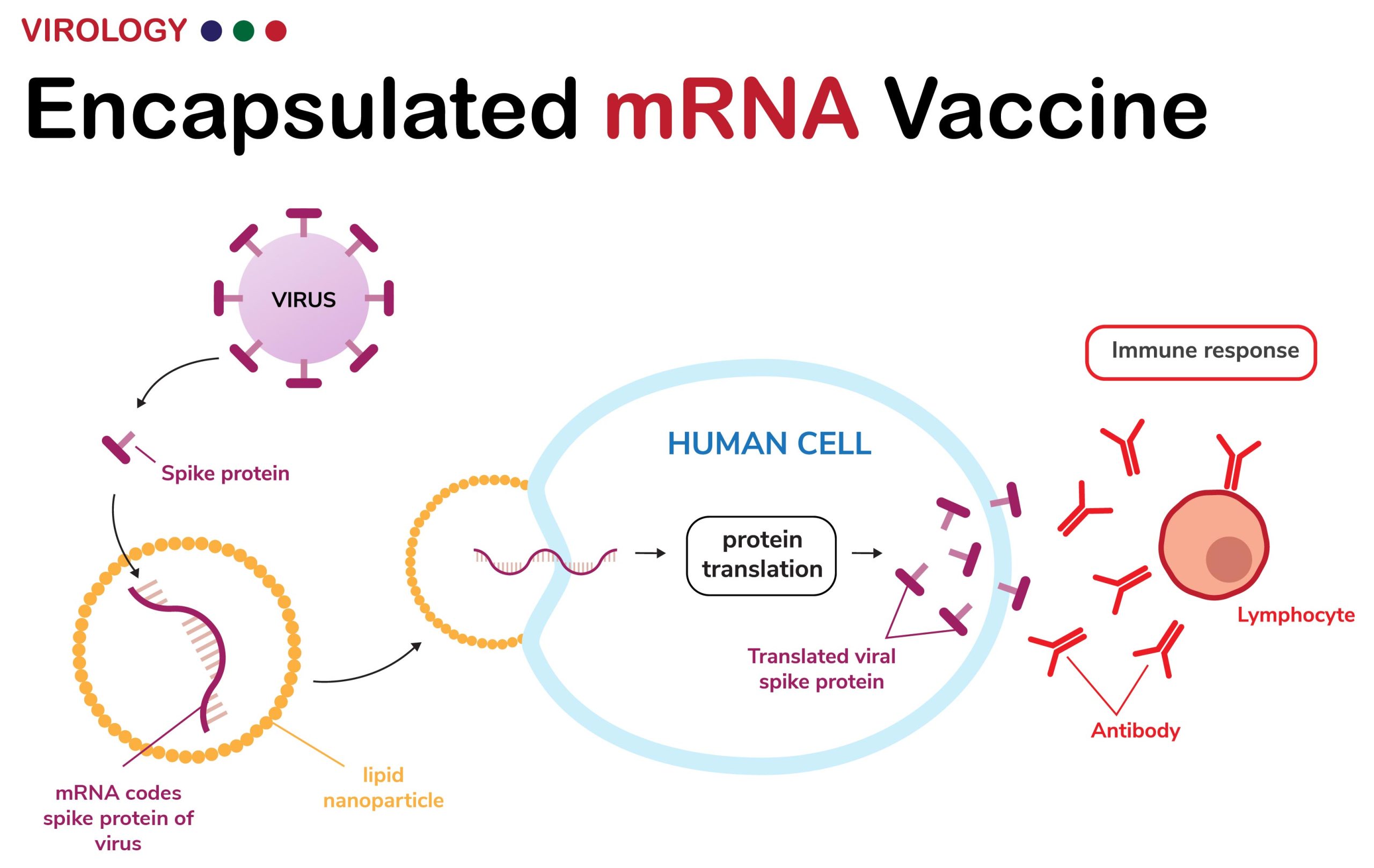
So the main difference between the three vaccines is that the Pfizer and Moderna shots give your body instructions for the spike protein through mRNA, while the Johnson & Johnson shot directs it via DNA. After that, all three vaccines work the same way.
What happens when the vaccine enters your body?
Once a COVID-19 vaccine is injected, the mRNA or DNA gets swallowed up by tissue cells and special immune cells that live in muscles, skin, and organs called dendritic cells. Dendritic cells keep watch over all parts of the body like sentinels, searching for signs of invading germs – like the coronavirus.
As soon as the DNA or mRNA is inside the dendritic or tissue cells, the cells use the instructions to create spike proteins. This process usually takes less than 12 hours. After the spike proteins are made and ready to “show” to the immune system, the mRNA or DNA is broken down by the cell and eliminated.
It’s important to know that even though your cells have made their own spike proteins, they don’t have enough information to make copies of the full virus. But the spike proteins can trigger the body’s immune system to amp up its defense so it is ready if the whole coronavirus invades.
When the tissue cells and dendritic cells recognize the spike proteins as unwelcome visitors, the cells place sections of the spike proteins on their exterior for other cells to see. The dendritic cells also release “danger” signals at the same time to let other cells know that the spike protein presents a threat. The danger signals are like flashing neon yellow signs pointing to the displayed spike protein piece saying, “This does not belong!”
These warning signals then fire up your body’s immune response.
What happens once the immune system gets revved up?
Thanks to that process, the body is now on high alert and ready to learn to fight invaders – in this case, the spike proteins made after injection with the COVID-19 vaccine.
Immune cells in the body, called B-cells and T-cells, recognize the warning signs of an outside invader. Thousands of these cells rush to the area to learn about this new threat so they can help provide protection.
B-cells are specialists at building “traps,” called antibodies, that will take down any invading spike proteins. Different B-cells make lots of specialized antibodies that recognize different parts of a virus or bacteria. And B-cells will act like a factory, continuing to make antibodies against the perceived threat even after it’s gone in order to protect the body for a long time to come.
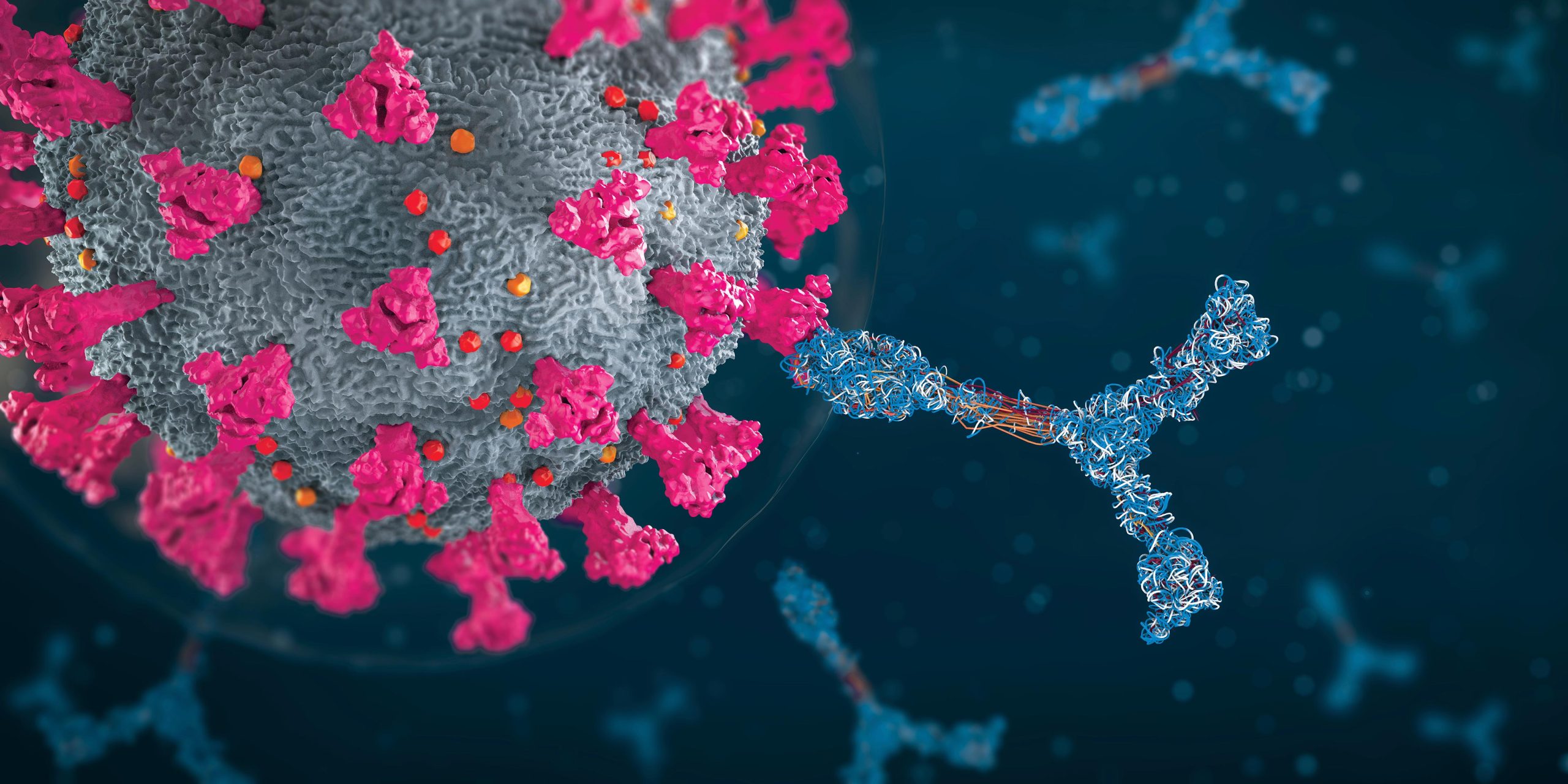
One type of T-cell, called helper T-cells, assist the B-cells in making antibodies when danger signals are present. Another kind of T-cell is there to check if other cells in the body are infected by the virus. If that type of T-cell spots an infected cell, it removes the infected cell so it cannot create more copies and pass on the infection to other cells.
Why is my arm sore?
As all of these important processes are happening inside your body, you might see some physical signs that there’s a struggle going on underneath the skin. If your arm gets sore after you get the shot, it’s because immune cells like the dendritic cells, T-cells, and B-cells are racing to the arm to inspect the threat.
You might also experience a fever or other signs of sickness. All of these mean that your body is doing exactly what it’s supposed to. This is a safe and natural process that happens when the body is learning how to fight the spike proteins. That way, if you do come into contact with the real coronavirus, your body has learned how to protect you from it.
Written by Glenn J Rapsinski, Pediatric Infectious Diseases Fellow, University of Pittsburgh.
This article was first published in The Conversation.
Never miss a breakthrough: Join the SciTechDaily newsletter.
Follow us on Google and Google News.
3 Comments
Yes, the vaccines are very good at stuffing up the virus spikes to keep the virus out of our cells. But some do get in.
All the coronaviruses and all their variants have different protein spikes, with Delta having one that’s more efficient at getting around the vaccines. But the real problem is in the virus itself, not its protein shell, and why the most dangerous (MERS, SARS, and Covid-19) are so infectious. My independent research has found multiple one-in-a-million nucleotide sequence matches between all the coronaviruses and the human genome. Those sequences are the same as some of the loops of human tRNA. Using those loops and their amino acid code matches, viruses may be able to fool the nucleus membrane in cells to allow the virus to enter and associate with the human DNA, creating more opportunities for further infection. Our immune system may be compromised and may no longer be able to stop the virus and other diseases from attacking organs throughout the body. Vaccines that attack the virus protein shells while ignoring their contents are doomed to failure from the Darwin effect, but recognizing these loops suggests a possible approach to successful coronavirus vaccines. Only the infection process is considered in my work, not the innate virulence of the virus. For more info, check out this YouTube, Coronavirus – Using Your DNA Against You. https://www.youtube.com/watch?v=8dOIzD6ch8s
What about the fact that the spike proteins are found well outside of the injection site, like the liver, spleen and lymph nodes? It is Clear that the spike proteins themselves are responsible for much of the damage from COVID.
The cells that are making the spike proteins also mark themselves for destruction by the immune system. It states clearly in this article that the mRNA is getting into the dendritic cells and they are making the spike proteins. The machinery in our dendritic cells will set up a MHC-1 marker with the spike protein saying I need to be destroyed I am making spike protein antigens. It concerns me that we are setting up the immune system to destroy otherwise healthy cells (particularly dendritic cells) which are of major importance for future immunity not just CoVID.