
Close Menu
    Facebook X (Twitter) Instagram
    SciTechDaily
    • Biology
    • Chemistry
    • Earth
    • Health
    • Physics
    • Science
    • Space
    • Technology
    Facebook X (Twitter) Pinterest YouTube RSS
    SciTechDaily
    Home»Biology»New Research Reveals That Butterflies and Moths Share Ancient “Blocks” of DNA
    Biology

    New Research Reveals That Butterflies and Moths Share Ancient “Blocks” of DNA

    By University of ExeterSeptember 18, 2023No Comments3 Mins Read
    Facebook Twitter Pinterest Telegram LinkedIn WhatsApp Email Reddit
    Share
    Facebook Twitter LinkedIn Pinterest Telegram Email Reddit
    Butterfly DNA
    New research reveals that butterflies, moths, and aquatic caddisflies share DNA “blocks” dating back over 200 million years, identified through a tool developed by scientists at universities in the UK, Germany, and Japan. This discovery, which illustrates the linkage and evolution of chromosomes among these species, not only sheds light on their genetic history but also potentially aids in the study of chromosome evolution in other organisms.

    New research indicates that butterflies and moths share “blocks” of DNA dating back more than 200 million years.

    Researchers from the Universities of Exeter (UK), Lübeck (Germany), and Iwate (Japan) developed a method to analyze the chromosomes of various butterflies and moths.
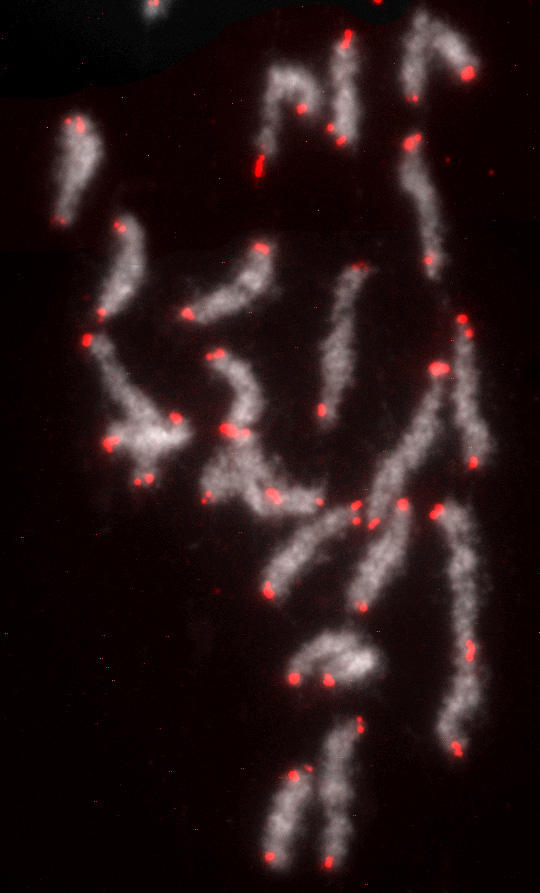
    Chromosomes of the African Monarch Butterfly
    The chromosomes of the African Monarch butterfly. The red dots highlight the ends of each chromosome using a DNA probe linked to a fluorescent reporter. Credit: University of Exeter

    They found blocks of chromosomes that exist in all moth and butterfly species, and also in Trichoptera – aquatic caddisflies that shared a common ancestor with moths and butterflies some 230 million years ago.

    Lepidoptera’s Varying Chromosome Numbers

    Moths and butterflies (collectively called Lepidoptera) have widely varying numbers of chromosomes – from 30 to 300 – but the study’s findings show remarkable evidence of shared blocks of homology (similar structure) going back through time.

    “DNA is compacted into individual particles or chromosomes that form the basic units of inheritance,” said Professor Richard ffrench-Constant, from the Centre for Ecology and Conservation on Exeter’s Penryn Campus in Cornwall.

    “If genes are on the same ‘string’, or chromosome, they tend to be inherited together and are therefore ‘linked’.

    “However, different animals and plants have widely different numbers of chromosomes, so we cannot easily tell which chromosomes are related to which.

    “This becomes a major problem when chromosome numbers vary widely – as they do in the Lepidoptera.
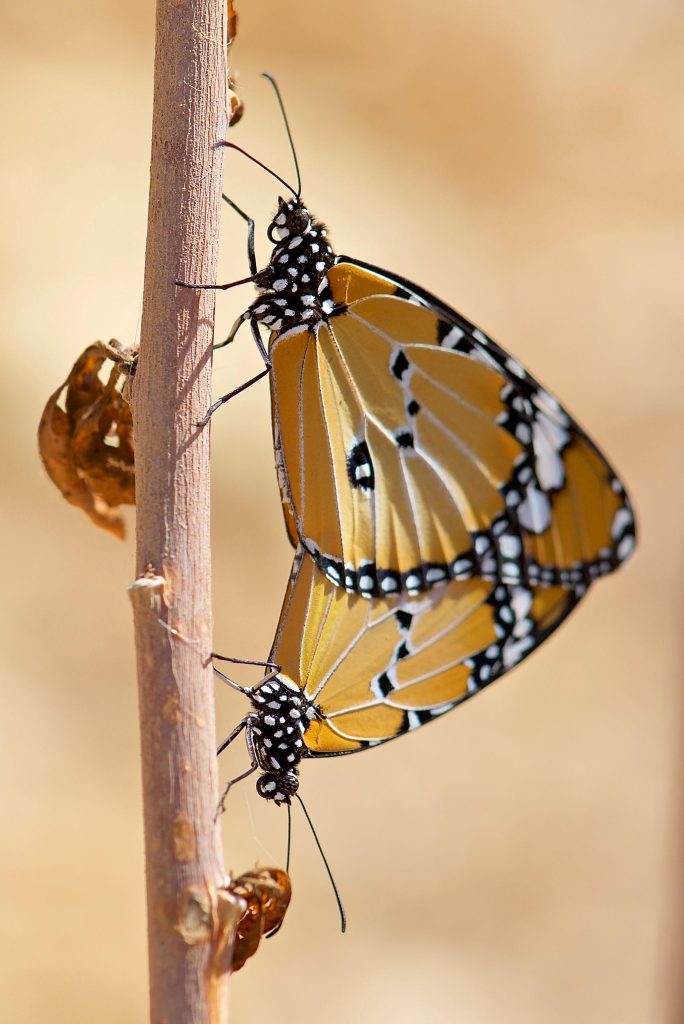
    A Male and Female African Monarch Mating
    A male and female African monarch mating. Credit: University of Exeter

    “We developed a simple technique that looks at the similarity of blocks of genes on each chromosome and thus gives us a true picture of how they change as different species evolve.

    “We found 30 basic units of ‘synteny’ (literally meaning ‘on the same string’ where the string is DNA) that exist in all butterflies and moths, and go back all the way to their sister group the caddisflies or Trichoptera.”

    Butterflies as Conservation and Evolution Models

    Butterflies are often seen as key indicators of conservation, and many species worldwide are declining due to human activity.

    However, this study shows that they are also useful models for the study of chromosome evolution.

    The study improves scientific understanding of how moth and butterfly genes have evolved and, importantly, similar techniques may also provide insights about the evolution of chromosomes in other groups of animals or plants.

    Reference: “Lepidopteran Synteny Units reveal deep chromosomal conservation in butterflies and moths” by Walther Traut, Ken Sahara and Richard H ffrench-Constant, 13 June 2023, G3: Genes, Genomes, Genetics.
    DOI: 10.1093/g3journal/jkad134

    Never miss a breakthrough: Join the SciTechDaily newsletter.
    Follow us on Google and Google News.

    Butterflies DNA Evolution Genetics University of Exeter
    Share. Facebook Twitter Pinterest LinkedIn Email Reddit

    Related Articles

    DNA Sequencing Reveals Carolina Parakeet Extinction Was Driven by Humans

    Is Evolution Predictable? Important Implications for the Way We Undertand Life on Earth

    Rapid Evolution of Deadly Pathogen: Cholera Bacterium Can Steal Up to 150 Genes in One Go

    DNA Study Reveals Clues about Primate Evolution

    Prolific Changes in the Human Genome in the Past 5,000 Years

    DNA Could Predate Existence of Life As We Know It

    Improved Estimates of DNA’s Mutation Rate Paint Clearer Picture of Human Prehistory

    Butterfly Research Reveals Genetic Sharing from Hybridization

    Human Y-Chromosome Has Enough Genes to Stay for Millions of Years

    Leave A Reply Cancel Reply

    • Facebook
    • Twitter
    • Pinterest
    • YouTube

    Don't Miss a Discovery

    Subscribe for the Latest in Science & Tech!

    Trending News

    Why Popular Diabetes Drugs Like Ozempic Don’t Work for Everyone: The “Genetic Glitch”

    Scientists Stunned After Finding Plant Thought Extinct for 60 Years

    Scientists Discover Tiny New Spider That Hunts Prey 6x Its Size

    Natural Component From Licorice Shows Promise for Treating Inflammatory Bowel Disease

    Scientists Warn: Popular Sweetener Linked to Dangerous Metabolic Effects

    Monster Storms on Jupiter Unleash Lightning Beyond Anything on Earth

    Scientists Create “Liquid Gears” That Spin Without Touching

    The Simple Habit That Could Help Prevent Cancer

    Follow SciTechDaily
    • Facebook
    • Twitter
    • YouTube
    • Pinterest
    • Newsletter
    • RSS
    SciTech News
    • Biology News
    • Chemistry News
    • Earth News
    • Health News
    • Physics News
    • Science News
    • Space News
    • Technology News
    Recent Posts
    • This Common Habit Could Signal Serious Health Problems in Later Life
    • Common Food Preservative Linked to Rising Suicide Deaths Among Young People
    • Seeing the Invisible: Scientists Develop New Way To Track Particles in 3D
    • The Atomic Gap That Could Cost the Semiconductor Industry Billions
    • Earth’s Secret Advantage: Why Most Alien Worlds May Be Too Dry for Life
    Copyright © 1998 - 2026 SciTechDaily. All Rights Reserved.
    • Science News
    • About
    • Contact
    • Editorial Board
    • Privacy Policy
    • Terms of Use

    Type above and press Enter to search. Press Esc to cancel.