

Vikings played a significant role in the global walrus ivory trade, traveling long distances and interacting with Arctic populations, as confirmed by new DNA analysis.
In Medieval Europe and the Middle East, merchants from distant lands exchanged rare and valuable goods. Among the most sought-after was ivory, sourced from regions that few could even envision.
Because when the Crusades temporarily prevented trade in ivory from elephants, walrus ivory became a popular commodity, and seeing as walruses only live in icy-cold parts of the world, it must have been brought to European markets from faraway places.
New research from the University of Copenhagen shows that the Vikings were (the first) part of a network that supplied not just Europe and the Middle East, but probably also East Asia with walrus ivory.
“Our study shows that the Vikings regularly traveled the around 6,000 kilometers to Pikialasorsuaq in Northwest Greenland, an area characterized by harsh climatic conditions. And they probably didn’t do it for the thrill of it, but to obtain this precious commodity, which they brought to Northern Europe and other parts of the world,” says Associate Professor Morten Tange Olsen from the Globe Institute at the University of Copenhagen, who is one of the authors of the new study.
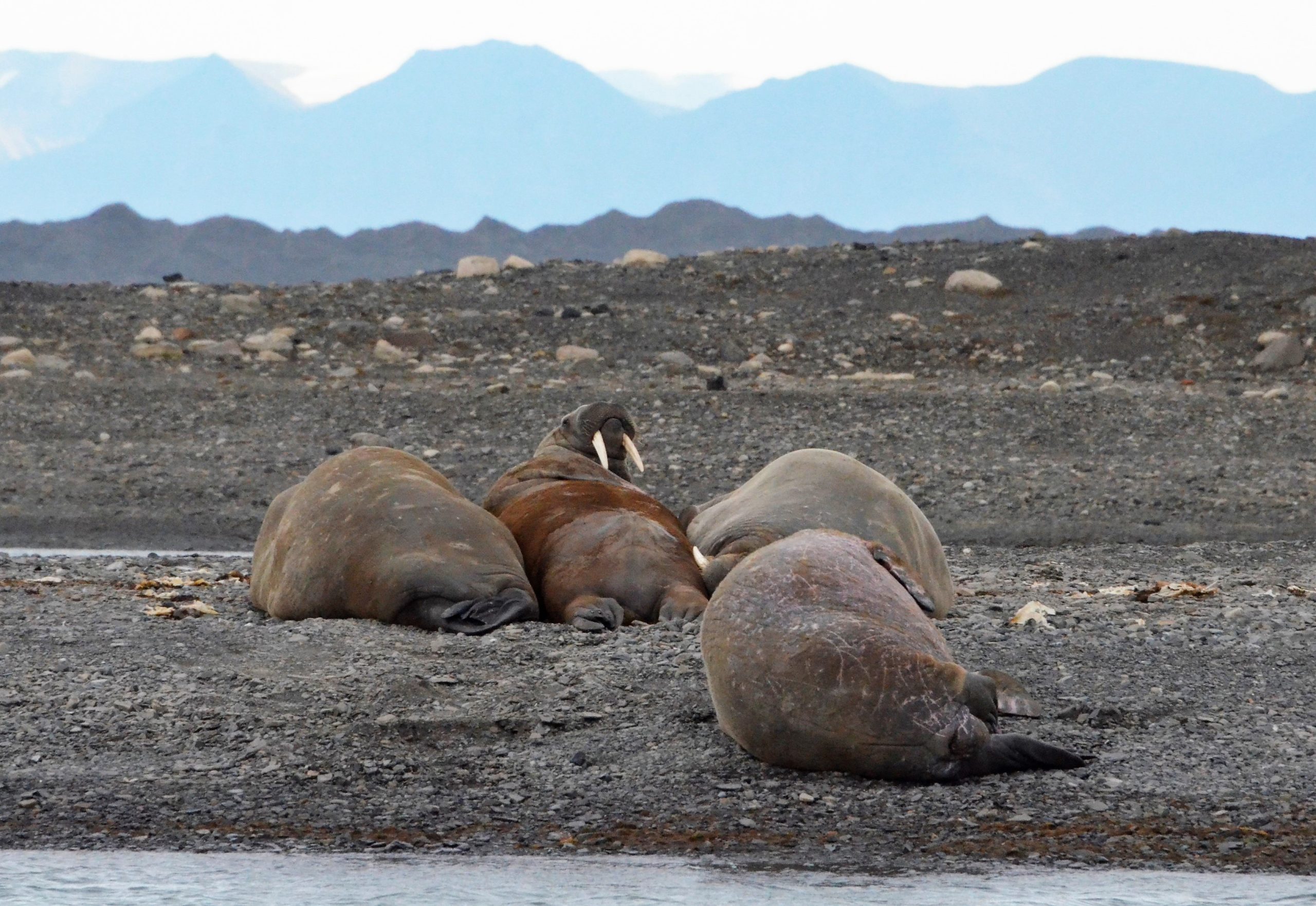
The researchers conducted DNA analyses, which show that the Vikings covered a greater distance than previously believed in their search for walruses.
The study is a collaboration between researchers at the University of Copenhagen, the University of Lund in Sweden and the University of Groningen in the Netherlands and international partners from Greenland, Iceland and Canada.
Trade and exchange of hunting techniques
To prove that the Vikings did indeed cover such a great distance, the researchers studied fragments of walrus skulls mainly, obtained from excavations of Viking villages in Europe and settlements in Greenland and Canada.
“DNA sequences from these fragments provided us with a genetic map of the place of origin of various Arctic walrus populations at the time of the Vikings. This enabled us to show in which part of the Arctic the animals were caught,” says Morten Tange Olsen.
The study also demonstrates that the Vikings probably had more dealings with indigenous Arctic populations than previously assumed, including the Thule and Dorset cultures.
“Our research shows that the Vikings were extremely well-traveled and had a well-established network that covered a larger area than previously believed and which in time and place must have overlapped with early Greenlandic and Canadian cultures,” says Morten Tange Olsen, who is a marine mammal biologist and geneticist. He believes the cross-disciplinary collaboration between archaeologists, biologists, and geneticists is what has made the study a success.
The new study once again shows that the Vikings had a remarkable ability to navigate and survive in harsh climatic conditions, and that they helped create a global trade network that reached beyond the borders of Europe.
“Now, for the first time ever, we have a clear genetic map of Arctic walrus populations, which tells us where the Norsemen went to obtain the precious commodity, ivory.”
Morten Tange Olsen and his colleagues hope the study will open our eyes to the Vikings’ complex and extensive trade network and interaction with other cultures.
Reference: “Greenland Norse walrus exploitation deep into the Arctic” by Emily J. Ruiz-Puerta, Greer Jarrett, Morgan L. McCarthy, Shyong En Pan, Xénia Keighley, Magie Aiken, Giulia Zampirolo, Maarten J. J. E. Loonen, Anne Birgitte Gotfredsen, Lesley R. Howse, Paul Szpak, Snæbjörn Pálsson, Scott Rufolo, Hilmar J. Malmquist, Sean P. A. Desjardins, Morten Tange Olsen and Peter D. Jordan, 27 September 2024, Science Advances.
DOI: 10.1126/sciadv.adq4127
Never miss a breakthrough: Join the SciTechDaily newsletter.
Follow us on Google and Google News.
1 Comment
Fascinating research! The Vikings’ role in the walrus ivory trade highlights their remarkable adaptability and far-reaching connections, reshaping our understanding of medieval commerce and cultural exchange. Truly enlightening!