
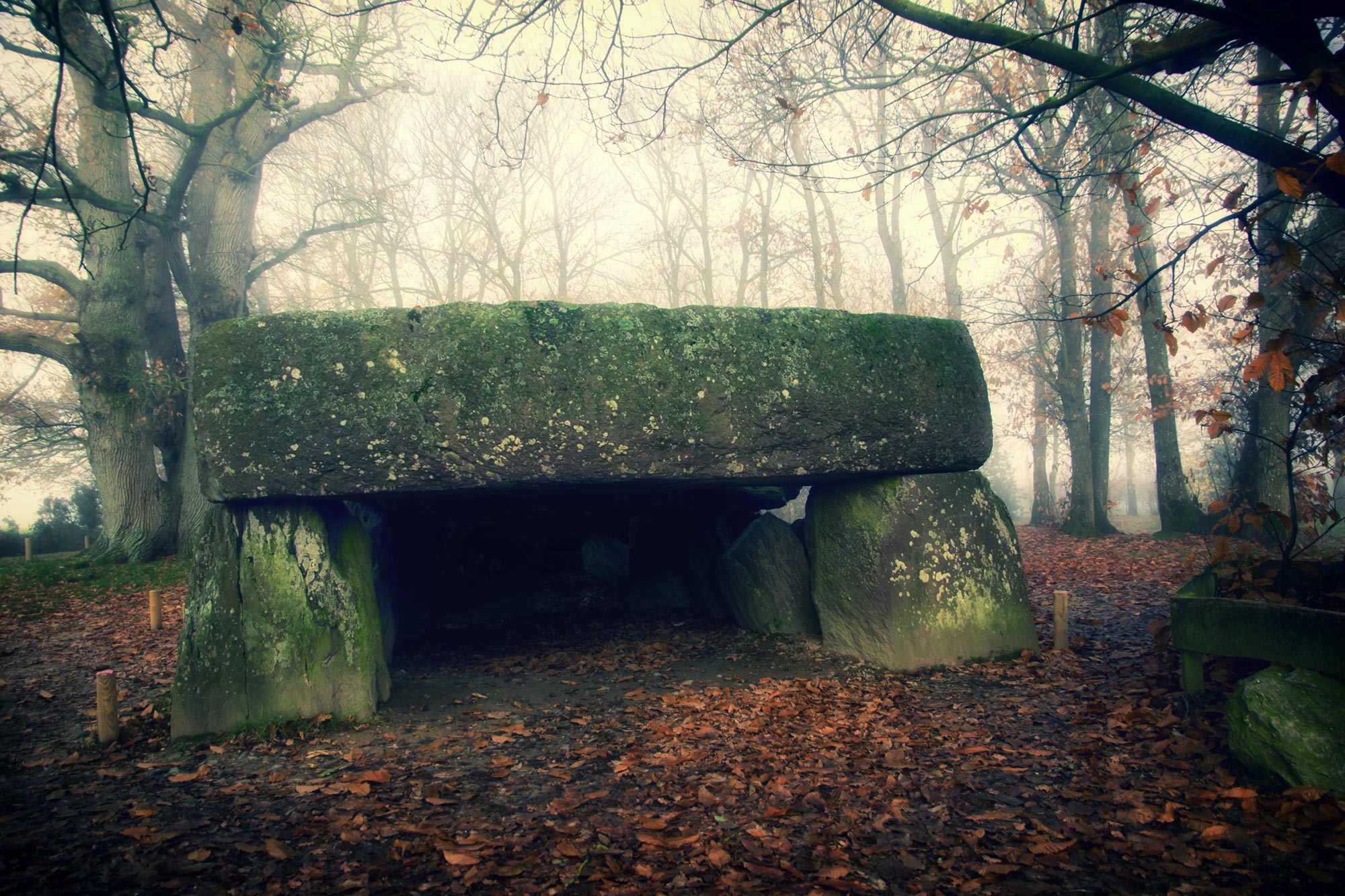
A genetic study of a prehistoric burial site near Paris reveals a sharp break between two populations, suggesting a major decline followed by the arrival of new groups from distant regions.
An international team led by the University of Copenhagen has uncovered evidence that one of France’s largest Stone Age burial sites records a dramatic population collapse followed by the arrival of new groups from southern Europe. The discovery reshapes understanding of the so-called “Neolithic decline,” a period when populations across much of northern Europe dropped sharply.
The study, published in Nature Ecology & Evolution, is based on DNA from 132 individuals buried in a large megalithic tomb near Bury, about 50 kilometers (31 miles) north of Paris. The site was used during two separate phases, divided by a major population decline around 3000 BC.
Genetic results show that individuals buried before and after this decline were not related, indicating a near-complete population replacement.
“We see a clear genetic break between the two periods,” said Frederik Valeur Seersholm, assistant professor at the Globe Institute at the University of Copenhagen and one of the study’s lead authors.
“The earlier group resembles Stone Age farming populations from northern France and Germany, while the later group shows strong genetic links to southern France and the Iberian Peninsula.”
Together, the findings point to a steep drop in the local population, followed by migration from the south.
Disease and High Mortality
Using a method that examines all genetic material preserved in bone, the team identified traces of ancient pathogens. These included the plague bacterium Yersinia pestis and louse-borne relapsing fever caused by Borrelia recurrentis.
“We can confirm that plague was present, but the evidence does not support it as the sole cause of the population collapse,” said Martin Sikora, associate professor at the University of Copenhagen and senior author of the study. “The decline was likely driven by a combination of disease, environmental stress, and other disruptive events.”
Skeletal analysis also revealed unusually high death rates during the earlier burial phase, especially among children and adolescents.
“The demographic pattern is a strong indicator of crisis,” said Laure Salanova, research director at France’s National Centre for Scientific Research (CNRS).
Shift in social organization
The genetic data also point to a shift in how these communities were organized.
During the earlier phase, multiple generations of extended families were buried together, suggesting close-knit groups. In the later phase, burials became more selective and were dominated by a single male lineage, indicating a different social structure.
“This indicates that the population change was accompanied by a shift in how society was structured,” Seersholm said.
A wider European pattern
The results add to growing evidence that the Neolithic decline affected large parts of northern and western Europe, not just Scandinavia and northern Germany.
They may also help explain why the construction of megalithic tombs and other large stone monuments ended across Europe at roughly the same time.
“We now see that end of these monumental constructions coincides with the disappearance of the population that built them,” Seersholm said.
Reference: “Population discontinuity in the Paris Basin linked to evidence of the Neolithic decline” by Frederik V. Seersholm, Abigail Ramsøe, Jialu Cao, Philippe Chambon, Karl-Göran Sjögren, Hugh McColl, Fabrice Demeter, Charleen Gaunitz, Lasse Vinner, Jesper Stenderup, Gabriele Scorrano, Ralph Fyfe, T. Douglas Price, Morten Fischer Mortensen, Sascha Krüger, Torben Dehn, Svend Illum Hansen, Kristine Vesterdorf, Thorfinn Sand Korneliussen, Morten E. Allentoft, Kristian Kristiansen, Laure Salanova, Eske Willerslev and Martin Sikora, 3 April 2026, Nature Ecology & Evolution.
DOI: 10.1038/s41559-026-03027-z
Never miss a breakthrough: Join the SciTechDaily newsletter.
Follow us on Google and Google News.
3 Comments
I think you’ve put the wrong reference at the end.
Yes, the reference is very much not to even a related article.
In the 5000s, archaeologists will find the same pattern of replacement…