
The findings of a study published with Frontiers suggest that those who engage in regular exercise may lower their risk of developing anxiety by almost 60%.
The findings of a study published with Frontiers suggest that those who engage in regular exercise may lower their risk of developing anxiety by almost 60%. Using data on almost 400,000 people spanning more than two decades, the authors from Lund University in Sweden were also able to identify a noticeable difference in exercise performance level and the risk of developing anxiety between males and females.
A quick online search for ways to improve our mental health will often come up with a myriad of different results. However, one of the most common suggestions put forward as a step to achieving wellness – and preventing future issues – is doing some physical exercise, whether it be a walk or playing a team sport.
Anxiety disorders – which typically develop early in a person’s life – are estimated to affect approximately 10% of the world’s population and have been found to be twice as common in women compared to men.
And while exercise is put forward as a promising strategy for the treatment of anxiety, little is known about the impact of exercise dose, intensity or physical fitness level on the risk of developing anxiety disorders.
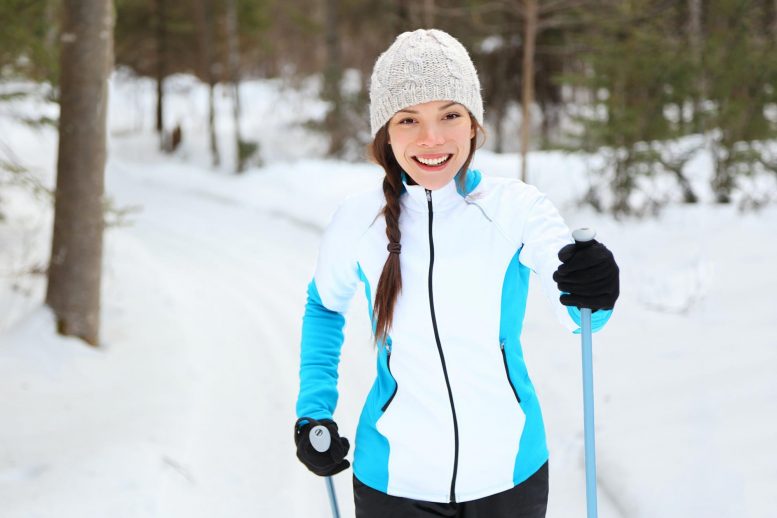
To help answer this question, researchers in Sweden recently published a study in Frontiers in Psychiatry to show that those who took part in the world’s largest long-distance cross-country ski race (Vasaloppet) between 1989 and 2010 had a “significantly lower risk” of developing anxiety compared to non-skiers during the same period.
The study is based on data from almost 400,000 people in one of the largest ever population-wide epidemiology studies across both sexes.
Surprising Finding Among Female Skiers
“We found that the group with a more physically active lifestyle had an almost 60% lower risk of developing anxiety disorders over a follow-up period of up to 21 years,” said the first author of the paper, Martine Svensson, and her colleague and principal investigator, Tomas Deierborg, of the Department of Experimental Medical Science at Lund University, Sweden.
“This association between a physically active lifestyle and a lower risk of anxiety was seen in both men and women.”
However, the authors found a noticeable difference in exercise performance levels and the risk of developing anxiety between male and female skiers.
While a male skier’s physical performance did not appear to affect the risk of developing anxiety, the highest performing group of female skiers had almost the double risk of developing anxiety disorders compared to the group which was physically active at a lower performance level.
“Importantly,” they said, “the total risk of getting anxiety among high-performing women was still lower compared to the more physically inactive women in the general population”.
These findings cover relatively uncharted territory for scientific research, according to the researchers, as most previous studies focused on depression or mental illness as opposed to specifically diagnosed anxiety disorders.
Furthermore, some of the largest studies looking at this topic only included men, were much smaller in sample size, and had either limited or no follow-up data to track the long-term effects of physical activity on mental health.
Next Steps for Research
The surprising discovery of an association between physical performance and the risk for anxiety disorders in women also emphasized the scientific importance of these findings for follow-up research.
“Our results suggest that the relation between symptoms of anxiety and exercise behavior may not be linear,” Svensson said.
“Exercise behaviors and anxiety symptoms are likely to be affected by genetics, psychological factors, and personality traits, confounders that were not possible to investigate in our cohort. Studies investigating the driving factors behind these differences between men and women when it comes to extreme exercise behaviors and how it affects the development of anxiety are needed.”
They added that randomized intervention trials, as well as long-term objective measurements of physical activity in prospective studies, are also needed to assess the validity and causality of the association they reported.
But does this mean that skiing in particular can play an important role in keeping anxiety at bay, as opposed to any other form of exercise? Not so, Svensson and Deierborg said, given that previous studies have also shown the benefits of keeping fit on our mental health.
“We think this cohort of cross-country skiers is a good proxy for an active lifestyle, but there could also be a component of being more outdoors among skiers,” they said.
“Studies focusing on specific sports may find slightly different results and magnitudes of the associations, but this is most likely due to other important factors that affect mental health and which you cannot easily control in research analysis.”
Reference: “Physical Activity Is Associated With Lower Long-Term Incidence of Anxiety in a Population-Based, Large-Scale Study” by Martina Svensson, Lena Brundin, Sophie Erhardt, Ulf Hållmarker, Stefan James and Tomas Deierborg, 10 September 2021, Frontiers in Psychiatry.
DOI: 10.3389/fpsyt.2021.714014
Never miss a breakthrough: Join the SciTechDaily newsletter.
Follow us on Google and Google News.