

Close Menu
    Facebook X (Twitter) Instagram
    SciTechDaily
    • Biology
    • Chemistry
    • Earth
    • Health
    • Physics
    • Science
    • Space
    • Technology
    Facebook X (Twitter) Pinterest YouTube RSS
    SciTechDaily
    Home»Science»New Species of Ancient Beaver Named After Buc-ee’s
    Science

    New Species of Ancient Beaver Named After Buc-ee’s

    By University of Texas at AustinMarch 29, 2023No Comments5 Mins Read
    Facebook Twitter Pinterest Telegram LinkedIn WhatsApp Email Reddit
    Share
    Facebook Twitter LinkedIn Pinterest Telegram Email Reddit
    Buc ee’s Travel Center
    Researchers at the University of Texas at Austin have discovered a new species of ancient beaver in their fossil collections and named it “Anchitheriomys buceei” after the popular Texas travel center chain, Buc-ee’s. The researchers published a paper in Palaeontologia Electronica, describing the new species and another smaller species of fossil beaver, and provided an overview of beaver occurrences in Texas from 15 to 22 million years ago based on bones and archival records in the UT collections.

    A Fossil Beaver Honored with a Modern Namesake

    A new species of ancient beaver that was rediscovered by researchers in The University of Texas at Austin’s fossil collections has been named after Buc-ee’s, a Texas-based chain of popular travel centers known for its cartoon beaver mascot.

    The beaver is called Anchitheriomys buceei, or “A. buceei” for short.

    Steve May, a research associate at the UT Jackson School of Geosciences, said that the beaver’s Texas connection and a chance encounter with a Buc-ee’s billboard are what inspired the name.
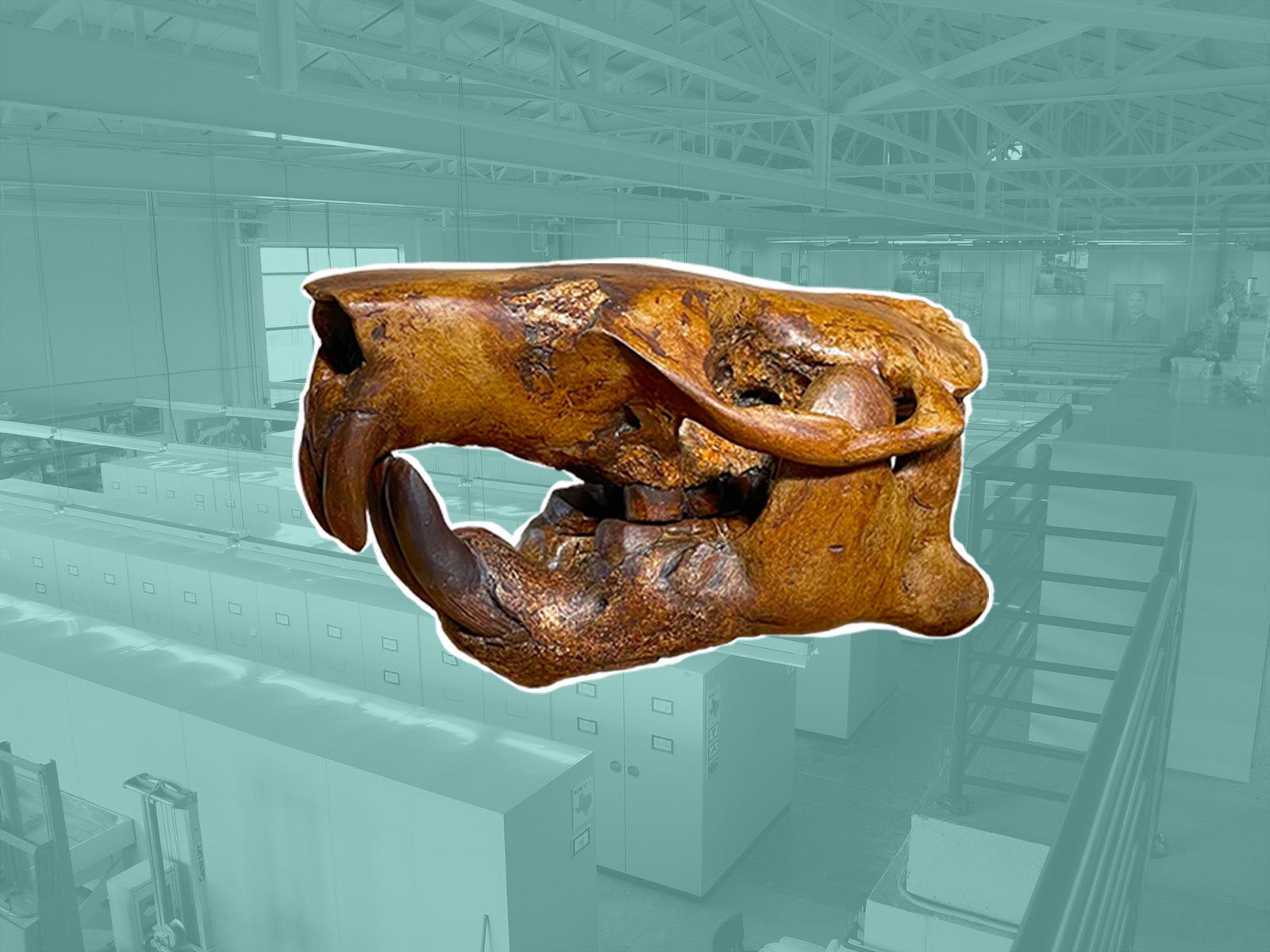
    Beaver Skull Reconstruction
    A reconstruction of a skull from Anchitheriomys buceei, a newly discovered species of ancient beaver. Credit: UT Austin Jackson School of Geosciences

    May is the lead author of the paper that describes A. buceei, along with another, much smaller, species of fossil beaver. Published in the journal Palaeontologia Electronica, the paper provides an overview of beaver occurrences along the Texas Gulf Coast from 15 million to 22 million years ago based on bones and archival records in the UT collections.

    While driving down a highway in 2020, May spotted a Buc-ee’s billboard that said “This is Beaver Country.” The phrase brought to mind the Texas beaver fossils he had been studying at UT’s Texas Vertebrate Paleontology Collections.

    “I thought, ‘Yeah, it is beaver country, and it has been for millions of years,’” May said.
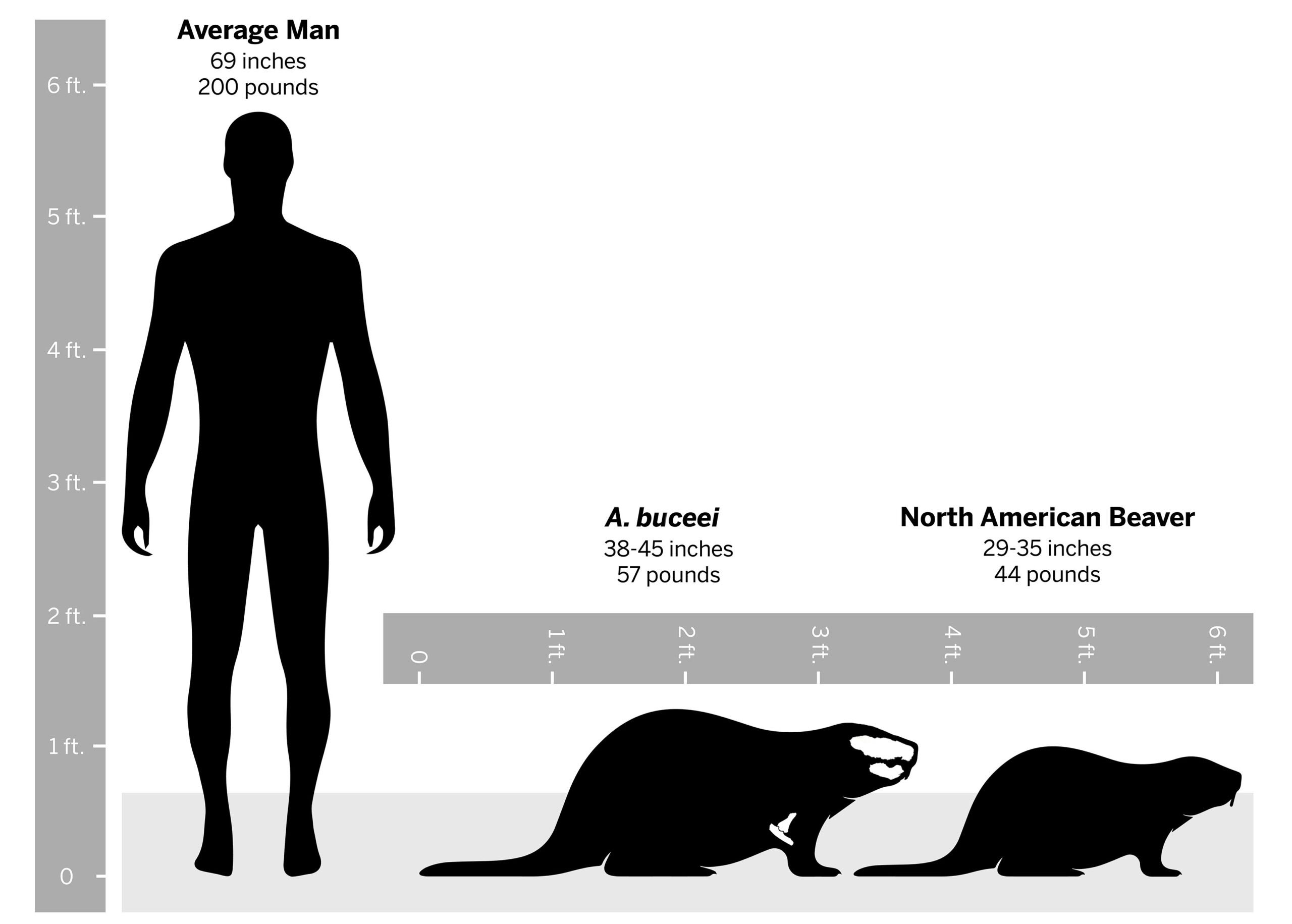
    Anchitheriomys buceei Size Comparison
    A graphic comparing the size of Anchitheriomys buceei with an average North American Beaver and an average man in the United States. Outlined in white are fossil bones in the UT collections, including a partial skull and jaw, and portions of the radius and ulna that make up the elbow. Credit: UT Austin Jackson School of Geosciences/ National Center for Health Statistics/ USDA Forest Service

    A. buceei lived in Texas about 15 million years ago. To the casual observer, it probably wouldn’t have looked much different from beavers living in Texas today, according to study co-author Matthew Brown, the director of the Jackson School’s vertebrate paleontology collections. However, one key difference is size. A. buceei was bigger – about 30% larger than modern beavers – though still much smaller than the bear-size beavers that lived in North America during the last Ice Age.

    The UT collections includes A. buceei fossils from six Texas sites. But most of what researchers know about the new fossil beaver comes from a unique partial skull from Burkeville, Texas. The fossil is a fusion of bone and brain cast that was created when sediment naturally seeped into the beaver’s brain cavity eons ago, creating a rock replica of the brain as the specimen fossilized.
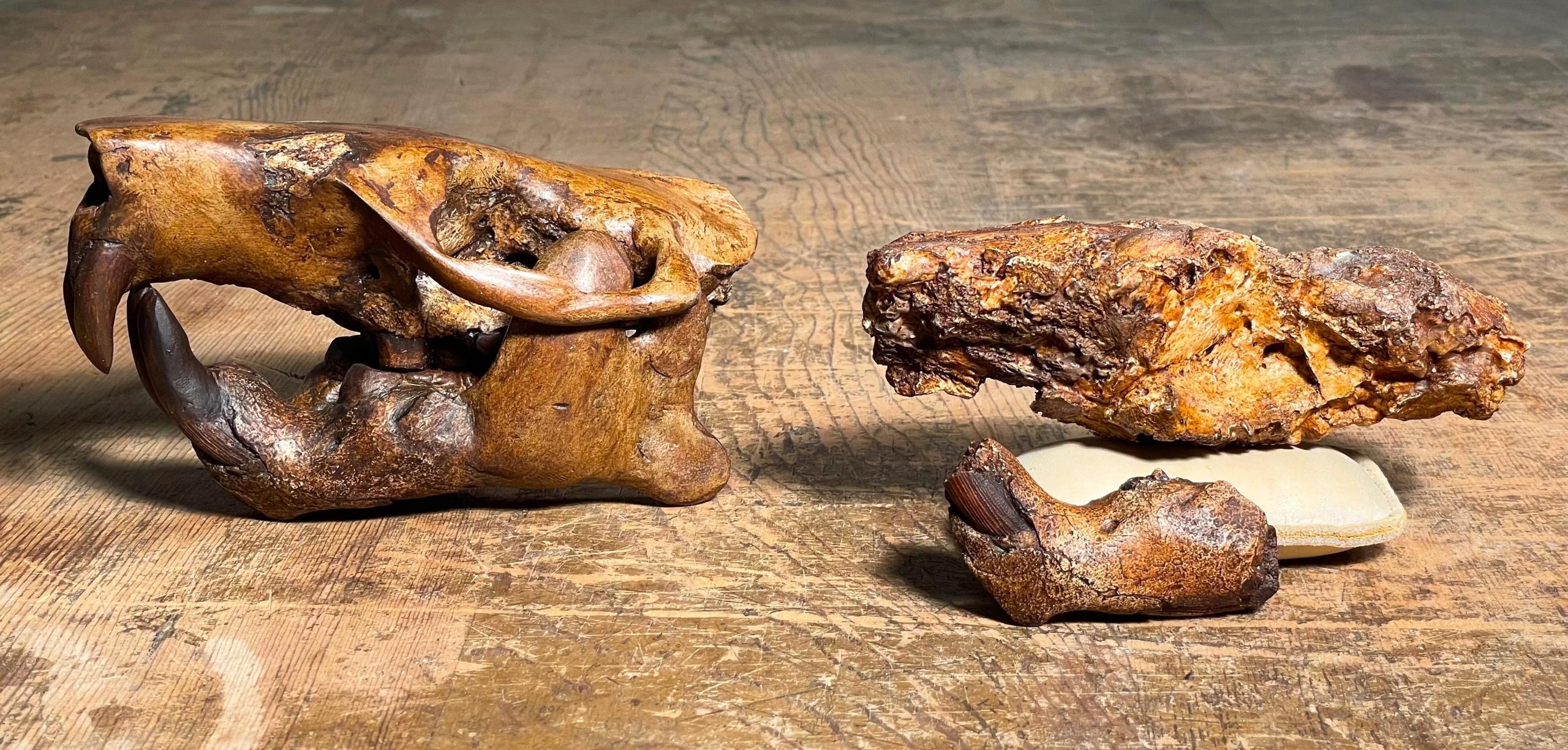
    Beaver Fossil and Skull Reconstruction
    A partial skull fossil from the ancient beaver Anchitheriomys buceei (on right) alongside a skull reconstruction. Credit: UT Austin Jackson School of Geosciences / Matthew Brown

    High-resolution X-ray images of the skull obtained at UT Austin’s Computed Tomography Lab brought small anatomical details of the skull into clear view. These details helped May and Brown confirm that the skull belonged to a new species. But they weren’t the first to suspect it.

    The skull was originally collected by a team of Texas paleontologists in 1941. One of them, Curtis Hesse, a museum curator at Texas A&M University, said in notes that he intended to name it a new species. However, Hesse died in 1945 before he could complete his study and publish his findings. Eighty years later, May and Brown, with the help of new technology and a better understanding of the fossil record of beavers, picked up where Hesse left off.

    Matthew Brown and Steve May
    Matthew Brown (left) and Steve May with beaver skulls new and old in the vertebrate paleontology collections at the Jackson School of Geosciences. Brown, the director of the collections, holds a skull from a modern North American Beaver. May, a research associate, holds a skull from Anchitheriomys buceei, a new species of ancient beaver that he discovered in the collections and named. Credit: UT Austin Jackson School of Geosciences

    “New discoveries in the field capture lots of attention, but equally as valuable are the discoveries made in existing museum collections,” Brown said. “We know that these opportunities are littered throughout the drawers in these cabinets.”

    After hearing about the ancient beaver named after his business, the founder and CEO of Buc-ee’s, Arch “Beaver” Aplin III, said that Buc-ee’s has a longer history in Texas than he initially thought.

    “Buc-ee’s was founded in 1982, but we may need to rethink our beginnings,” he said.

    Reference: “Anchitheriomys buceei (Rodentia, Castoridae) from the Miocene of Texas and a review of the Miocene beavers from the Texas Coastal Plain, USA” by Steven R. May and Matthew A. Brown, March 2023, Palaeontologia Electronica.
    DOI: 10.26879/1236

    The study was funded by the UT Jackson School of Geosciences and the Texas Historical Foundation.

    Never miss a breakthrough: Join the SciTechDaily newsletter.
    Follow us on Google and Google News.

    New Species Paleontology Popular University of Texas at Austin
    Share. Facebook Twitter Pinterest LinkedIn Email Reddit

    Related Articles

    Unraveling a Mystery: Bird Brains Left Other Dinosaurs Behind

    New Species of Ancient Shark Discovered

    Giant Sea Lizard Grew Up to 26 Feet Long – Shows Diversity of Life Before Asteroid Hit

    “Monkeydactyl” – Strange New Jurassic Flying Reptile Reveals the Oldest Opposable Thumbs

    Mysterious Prehistoric “Sea Dragon” Discovered on English Channel Coast Is Identified As New Species

    Dinosaurs Once Crossed Oceans: First Duckbill Dinosaur Fossil Discovered in Africa

    Evolved to Strike Terror: Paleontologists Identify New Species of Mosasaur

    Famous ‘Jurassic Park’ Dinosaur Was a Lot Bigger and More Powerful Than Scientists, or Movie Makers, Thought

    “Seriously Strange” New Extinct Family of Giant Wombat Relatives Discovered in Australian Desert

    Leave A Reply Cancel Reply

    • Facebook
    • Twitter
    • Pinterest
    • YouTube

    Don't Miss a Discovery

    Subscribe for the Latest in Science & Tech!

    Trending News

    Scientists May Have Found the Key to Jupiter and Saturn’s Moon Mystery

    Scientists Uncover Brain Changes That Link Pain to Depression

    Saunas May Do More Than Raise Body Temperature – They Activate Your Immune System

    Exercise in a Pill? Metformin Shows Surprising Effects in Cancer Patients

    Hidden Oceans of Magma Could Be Protecting Alien Life

    New Study Challenges Alzheimer’s Theories: It’s Not Just About Plaques

    Artificial Sweeteners May Harm Future Generations, Study Suggests

    Splashdown! NASA Artemis II Returns From Record-Breaking Moon Mission

    Follow SciTechDaily
    • Facebook
    • Twitter
    • YouTube
    • Pinterest
    • Newsletter
    • RSS
    SciTech News
    • Biology News
    • Chemistry News
    • Earth News
    • Health News
    • Physics News
    • Science News
    • Space News
    • Technology News
    Recent Posts
    • Ancient DNA Reveals Irish Goats Have a 3,000-Year-Old Lineage Still Alive Today
    • Historians Reveal Secrets of the Strange Hat Wars That Shook Early Modern England
    • “A Plague Is Upon Us”: The Mass Death That Changed an Ancient City Forever
    • This Strange Material Can Turn Superconductivity on and off Like a Switch
    • Scientists Discover Game-Changing New Way To Treat High Cholesterol
    Copyright © 1998 - 2026 SciTechDaily. All Rights Reserved.
    • Science News
    • About
    • Contact
    • Editorial Board
    • Privacy Policy
    • Terms of Use

    Type above and press Enter to search. Press Esc to cancel.