
Close Menu
    Facebook X (Twitter) Instagram
    SciTechDaily
    • Biology
    • Chemistry
    • Earth
    • Health
    • Physics
    • Science
    • Space
    • Technology
    Facebook X (Twitter) Pinterest YouTube RSS
    SciTechDaily
    Home»Biology»New Species of Humongous Prehistoric Crocodile “River Boss” Discovered in Australia
    Biology

    New Species of Humongous Prehistoric Crocodile “River Boss” Discovered in Australia

    By University of QueenslandJune 16, 2021No Comments3 Mins Read
    Facebook Twitter Pinterest Telegram LinkedIn WhatsApp Email Reddit
    Share
    Facebook Twitter LinkedIn Pinterest Telegram Email Reddit
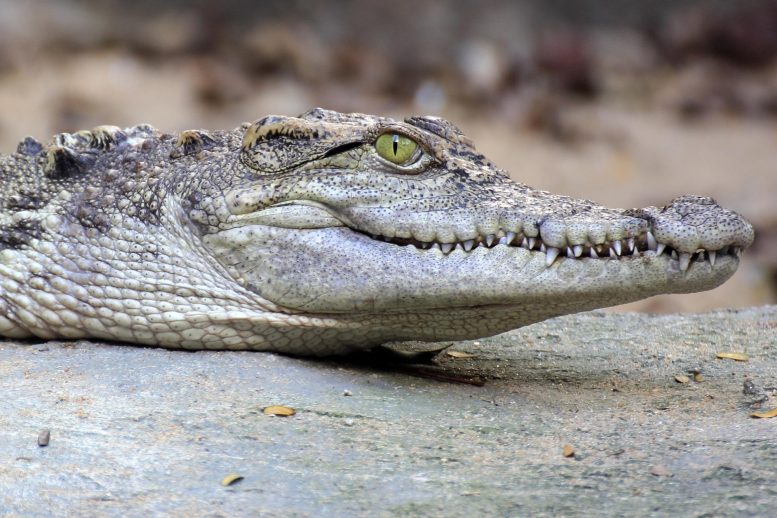
    Crocodile Close Up
    A newly identified species of large prehistoric crocodile that once roamed the waterways of southeast Queensland, Australia, has been documented.

    University of Queensland researchers have identified Gunggamarandu maunala, a massive prehistoric croc and the first tomistomine found in Australia, from a 19th-century skull fossil.

    A new species of large prehistoric croc that roamed south-east Queensland’s waterways millions of years ago has been documented by University of Queensland researchers.

    PhD candidate Jorgo Ristevski, from UQ’s School of Biological Sciences, led the team that named the species Gunggamarandu maunala after analyzing a partial skull unearthed in the Darling Downs in the nineteenth century.

    “This is one of the largest crocs to have ever inhabited Australia,” Mr. Ristevski said.

    “At the moment it’s difficult to estimate the exact overall size of Gunggamarandu since all we have is the back of the skull – but it was big. We estimate the skull would have been at least 80 centimeters long, and based on comparisons with living crocs, this indicates a total body length of around seven meters.

    “This suggests Gunggamarandu maunala was on par with the largest Indo-Pacific crocs – a Crocodylus porosus) – recorded.
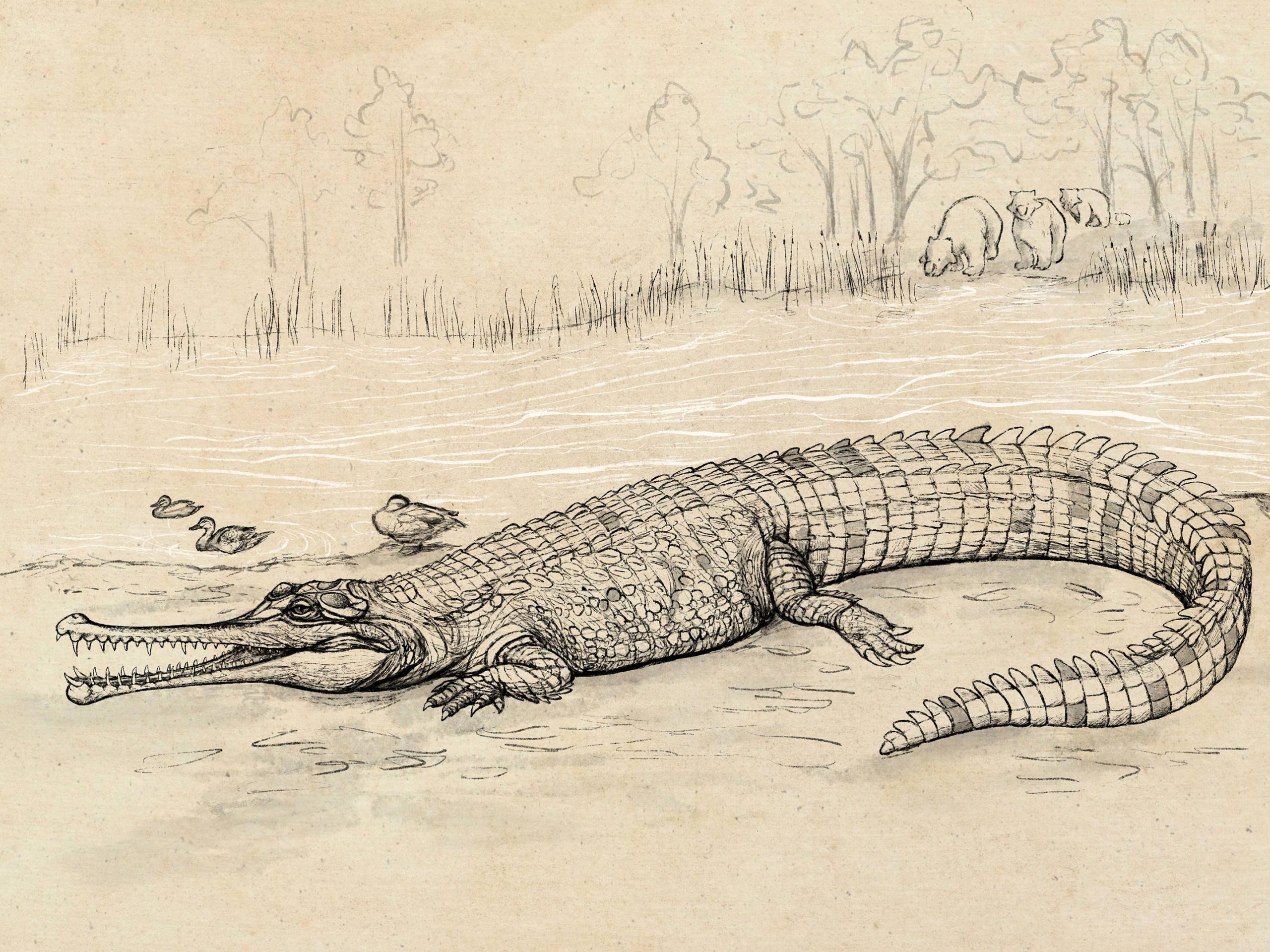
    Gunggamarandu maunala
    Artistic representation of Gunggamarandu maunala. Credit: Eleanor Pease

    “We also had the skull CT-scanned, and from that we were able to digitally reconstruct the brain cavity, which helped us unravel additional details about its anatomy.

    “The exact age of the fossil is uncertain, but it’s probably between two and five million years old.”

    Gunggamarandu belonged to a group of crocodylians called tomistomines or ‘false gharials’.
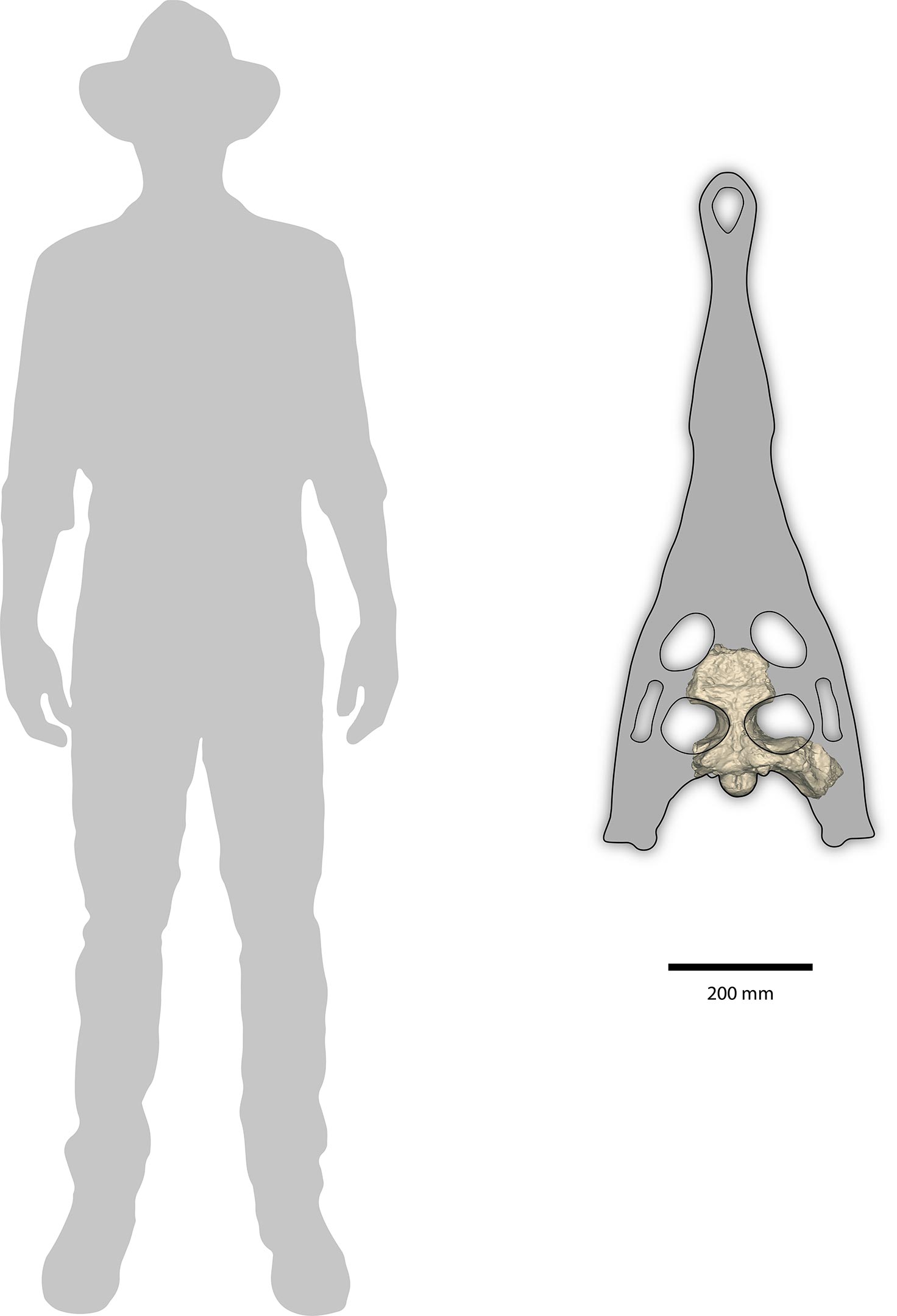
    Gunggamarandu maunala Skull Scale
    Hypothetical outline of the skull of Gunggamarandu maunala, with the fossil skull piece depicted in its corresponding position, compared with a 1.8m tall human. Credit: Jorgo Ristevski

    “Today, there’s only one living species of tomistomine, Tomistoma schlegelii, which is restricted to the Malay Peninsula and parts of Indonesia,” Mr. Ristevski said.

    “With the exception of Antarctica, Australia was the only other continent without fossil evidence of tomistomines.

    “But with the discovery of Gunggamarandu we can add Australia to the ‘once inhabited by tomistomines’ list.”

    A Century-Old Mystery Resolved

    Despite its discovery, the fossil skull of Gunggamarandu maunala remained a scientific mystery for more than a century.

    The specimen piqued the interest of then-young graduate student Dr. Steve Salisbury in the 1990s, but a formal study was not done until Mr. Ristevski began his examination.

    “I knew it was unusual, and potentially very significant, but I didn’t have the time to study it in any detail,” Dr. Salisbury said.

    “The name of the new species honors the First Nations peoples of the Darling Downs area, incorporating words from the languages of the Barunggam and Waka Waka nations.

    “The genus name, Gunggamarandu, means ‘river boss’, while the species name, maunala, means ‘hole head’.

    “The latter is in reference to the large, hole-like openings located on top of the animal’s skull that served as a place for muscle attachment.”

    Reference: “First record of a tomistomine crocodylian from Australia” by Jorgo Ristevski, Gilbert J. Price, Vera Weisbecker and Steven W. Salisbury, 9 June 2021, Scientific Reports.
    DOI: 10.1002/spp2.1296

    Never miss a breakthrough: Join the SciTechDaily newsletter.
    Follow us on Google and Google News.

    Crocodiles Evolution New Species Paleontology Popular University of Queensland
    Share. Facebook Twitter Pinterest LinkedIn Email Reddit

    Related Articles

    52-Million-Year-Old Bat Skeleton Unveils New Species and Clues to Evolution of Flying Mammals

    Tyrannosaurus Skeletal Remains Reveal T. rex May Have Been 3 Distinct Species

    New Species of Beetle Discovered in Dinosaur Ancestor’s 230 Million-Year-Old Poop

    New Species of Bizarre, Extinct Lizard – So Strange It Was Misidentified as a Hummingbird-Sized Dinosaur

    Ancient DNA Reveals New Spot in the Tree of Life for Extinct “Horned” Crocodile

    Paleontologists Discover Two Unusual New Species of Ancient, Burrowing Mammal Ancestors

    Snakefly Mystery Deepens After Surprising Fossil Discovery

    Discovery of New Seal Species Rewrites Evolutionary History

    Map of Life Will Need to Be Redrawn and Textbooks Updated After Highly Surprising Discovery on Christmas Island

    Leave A Reply Cancel Reply

    • Facebook
    • Twitter
    • Pinterest
    • YouTube

    Don't Miss a Discovery

    Subscribe for the Latest in Science & Tech!

    Trending News

    Scientists Discover Game-Changing New Way To Treat High Cholesterol

    This Small Change to Your Exercise Routine Could Be the Secret to Living Longer

    Scientists Discover 430,000-Year-Old Wooden Tools, Rewriting Human History

    AI Could Detect Early Signs of Alzheimer’s in Under a Minute – Far Before Traditional Tests

    What if Dark Matter Has Two Forms? Bold New Hypothesis Could Explain a Cosmic Mystery

    This Metal Melts in Your Hand – and Scientists Just Discovered Something Strange

    Beef vs. Chicken: Surprising Results From New Prediabetes Study

    Alzheimer’s Breakthrough: Scientists Discover Key Protein May Prevent Toxic Protein Clumps in the Brain

    Follow SciTechDaily
    • Facebook
    • Twitter
    • YouTube
    • Pinterest
    • Newsletter
    • RSS
    SciTech News
    • Biology News
    • Chemistry News
    • Earth News
    • Health News
    • Physics News
    • Science News
    • Space News
    • Technology News
    Recent Posts
    • Researchers Discover Unknown Beetle Species Just Steps From Their Lab
    • Jellyfish Caught Feasting on Exploding Sea Worms for the First Time
    • Ancient “Spaghetti” in Dogs’ Hearts Reveals Heartworm’s Shocking Origins
    • Milk Nanoparticles Could Revolutionize Treatment for Deadly Bile Duct Cancer
    • Largest-Ever Study Finds Medicinal Cannabis Ineffective for Anxiety, Depression, PTSD
    Copyright © 1998 - 2026 SciTechDaily. All Rights Reserved.
    • Science News
    • About
    • Contact
    • Editorial Board
    • Privacy Policy
    • Terms of Use

    Type above and press Enter to search. Press Esc to cancel.