

Close Menu
    Facebook X (Twitter) Instagram
    SciTechDaily
    • Biology
    • Chemistry
    • Earth
    • Health
    • Physics
    • Science
    • Space
    • Technology
    Facebook X (Twitter) Pinterest YouTube RSS
    SciTechDaily
    Home»Chemistry»Engineers Build Chemically Driven Wheels That “Morph” Into Gears to Perform Mechanical Work
    Chemistry

    Engineers Build Chemically Driven Wheels That “Morph” Into Gears to Perform Mechanical Work

    By University of PittsburghDecember 21, 20202 Comments5 Mins Read
    Facebook Twitter Pinterest Telegram LinkedIn WhatsApp Email Reddit
    Share
    Facebook Twitter LinkedIn Pinterest Telegram Email Reddit
    Gears Concept Art
    A catalytic reaction transforms a 2D sheet into a 3D gear, potentially paving the way for self-powered machines with no need for external energy sources.

    Shifting Gears Toward Chemical Machines

    The gear is one of the oldest mechanical tools in human history1 and led to machines ranging from early irrigation systems and clocks, to modern engines and robotics. For the first time, researchers at the University of Pittsburgh Swanson School of Engineering have utilized a catalytic reaction that causes a two-dimensional, chemically-coated sheet to spontaneously “morph” into a three-dimensional gear that performs sustained work.

    The findings indicate the potential to develop chemically driven machines that do not rely on external power, but simply require the addition of reactants to the surrounding solution. Published on December 18, 2020, in the Cell Press journal Matter, the research was developed by Anna C. Balazs, Distinguished Professor of Chemical and Petroleum Engineering and the John A. Swanson Chair of Engineering. Lead author is Abhrajit Laskar and co-author is Oleg E. Shklyaev, both post-doctoral associates.
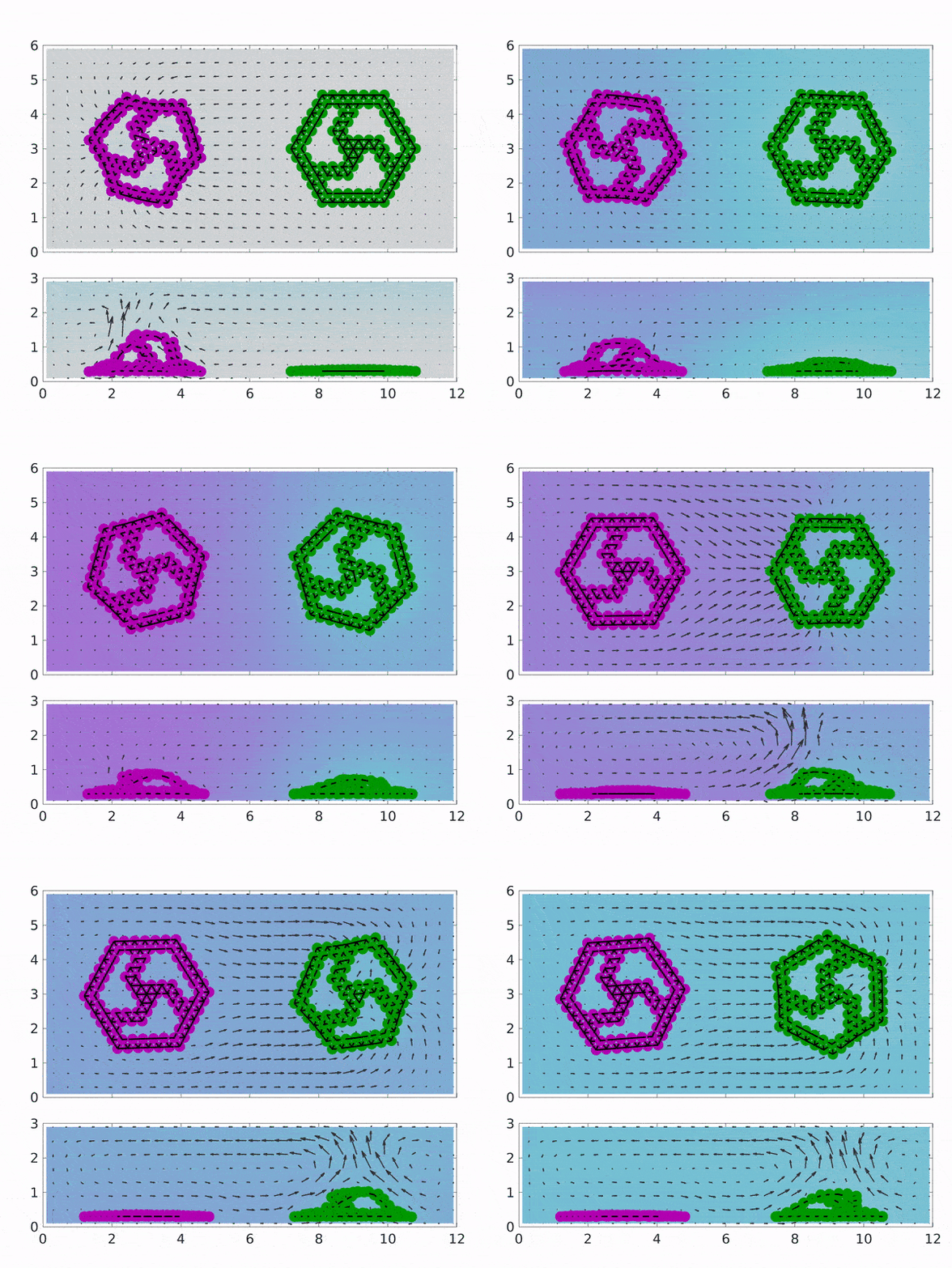
    Spatio-Temporal Control of Rotors
    Animation from simulation demonstrating spatio-temporal control of rotors via a cascade reaction. GOx-coated rotor (magenta) lies on the left side of the chamber, while CAT-coated rotor (green) lies on the right side. Background color map indicates spatial distribution of H2O2 in the solution at y = 3mm for side views and at z = 0.4 mm for top views. Introduction of D-glucose in the solution activates the GOx-coated rotor, which morphs into a 3D structure and starts rotating spontaneously. CAT-coated rotor stays flat and stationary. H2O2 is produced by the first reaction, constituting the first step of the cascade reaction. In the presence of H2O2, CAT-coated rotor becomes active and starts rotating, while the GOx-coated rotor becomes flat and stationary as glucose in the solution is depleted. With time, H2O2 in the solution is also depleted and consequently, the motion of the CAT-coated rotor stops and sheet becomes flat. Credit: A. Laskar

    “Gears help give machines mechanical life; however, they require some sort of external power, such as steam or electricity, to perform a task. This limits the potential of future machines operating in resource-poor or remote environments,” Balazs explains. “Abhrajit’s computational modeling has shown that chemo-mechanical transduction (conversion of chemical energy into motion) at active sheets presents a novel way to replicate the behavior of gears in environments without access to traditional power sources.”

    In the simulations, catalysts are placed at various points on a two-dimensional sheet resembling a wheel with spokes, with heavier nodes on the sheet’s circumference. The flexible sheet, approximately a millimeter in length, is then placed in a fluid-filled microchamber. A reactant is added to the chamber that activates the catalysts on the flat “wheel”, thereby causing the fluid to spontaneously flow. The inward fluid flow drives the lighter sections of the sheet to pop up, forming an active rotor that catches the flow and rotates.
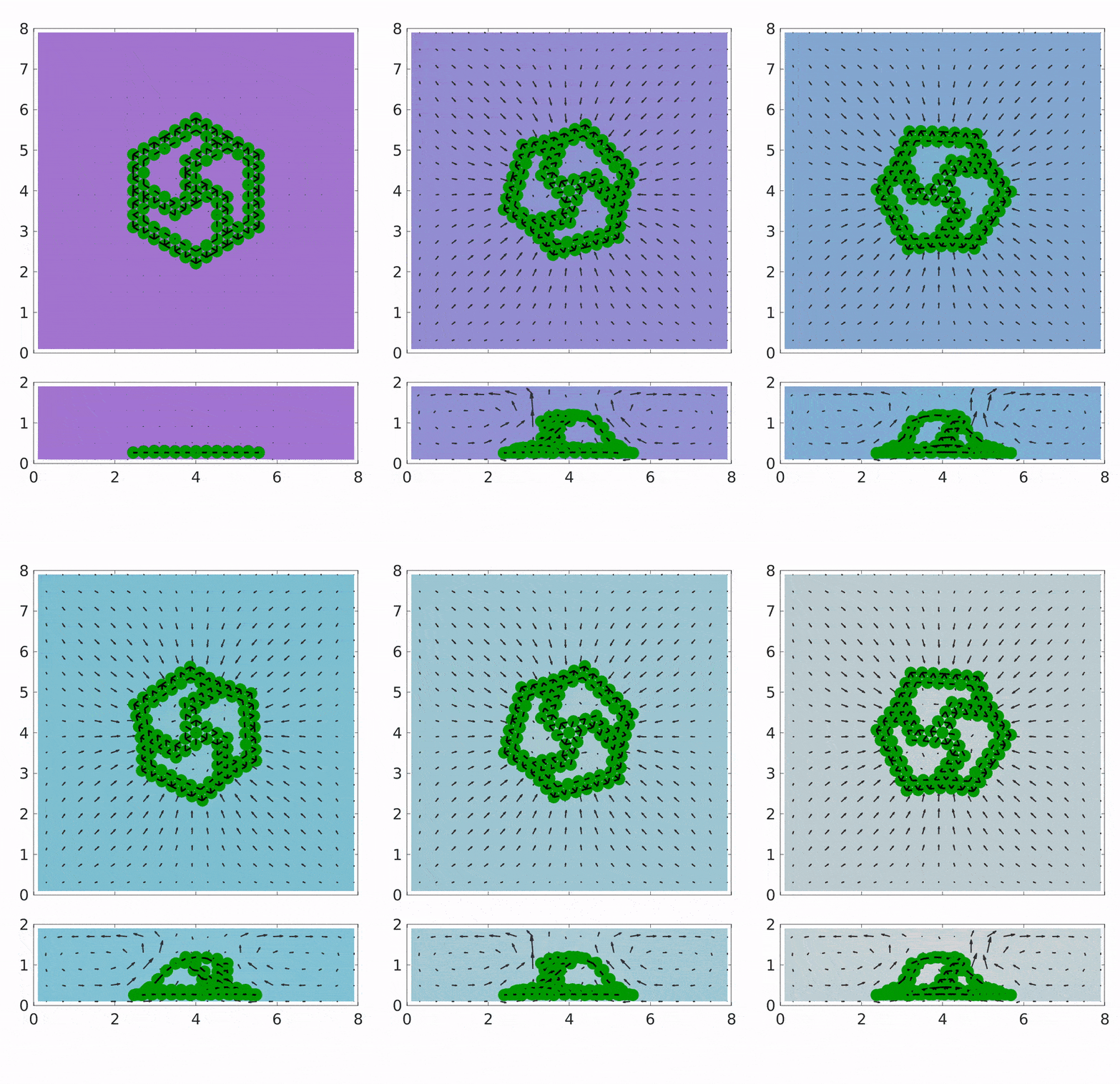
    Gearing Up Chemical Machine
    Animation from simulation demonstrating the dynamics of a CAT-coated flexible sheet in H2O2 solution. CAT immobilized on the sheet decomposes H2O2 in the host solution to lighter products (water and oxygen), thereby producing spontaneous fluid flows. These fluid flows at the bottom of the fluidic domain drive the 2D flexible sheet to pop up at the center (lighter than the edge nodes), forming an ideal 3D structure (see side view), which catches the flow and rotates in the clockwise direction. Credit: A. Laskar

    “What is really distinctive about this research is the coupling of deformation and propulsion to modify the object’s shape to create movement,” Laskar says. “Deformation of the object is key; we see in nature that organisms use chemical energy to change their shape and move. For our chemical sheet to move, it also has to spontaneously morph into a new shape, which allows it to catch the fluid flow and perform its function.”

    Additionally, Laskar and Shklyaev found that not all the gear parts needed to be chemically active for motion to occur; in fact, asymmetry is crucial to create movement. By determining the design rules for the placement, Laskar and Shklyaev could direct the rotation to be clockwise or counterclockwise. This added “program” enabled the control of independent rotors to move sequentially or in a cascade effect, with active and passive gear systems. This more complex action is controlled by the internal structure of the spokes, and the placement within the fluid domain.
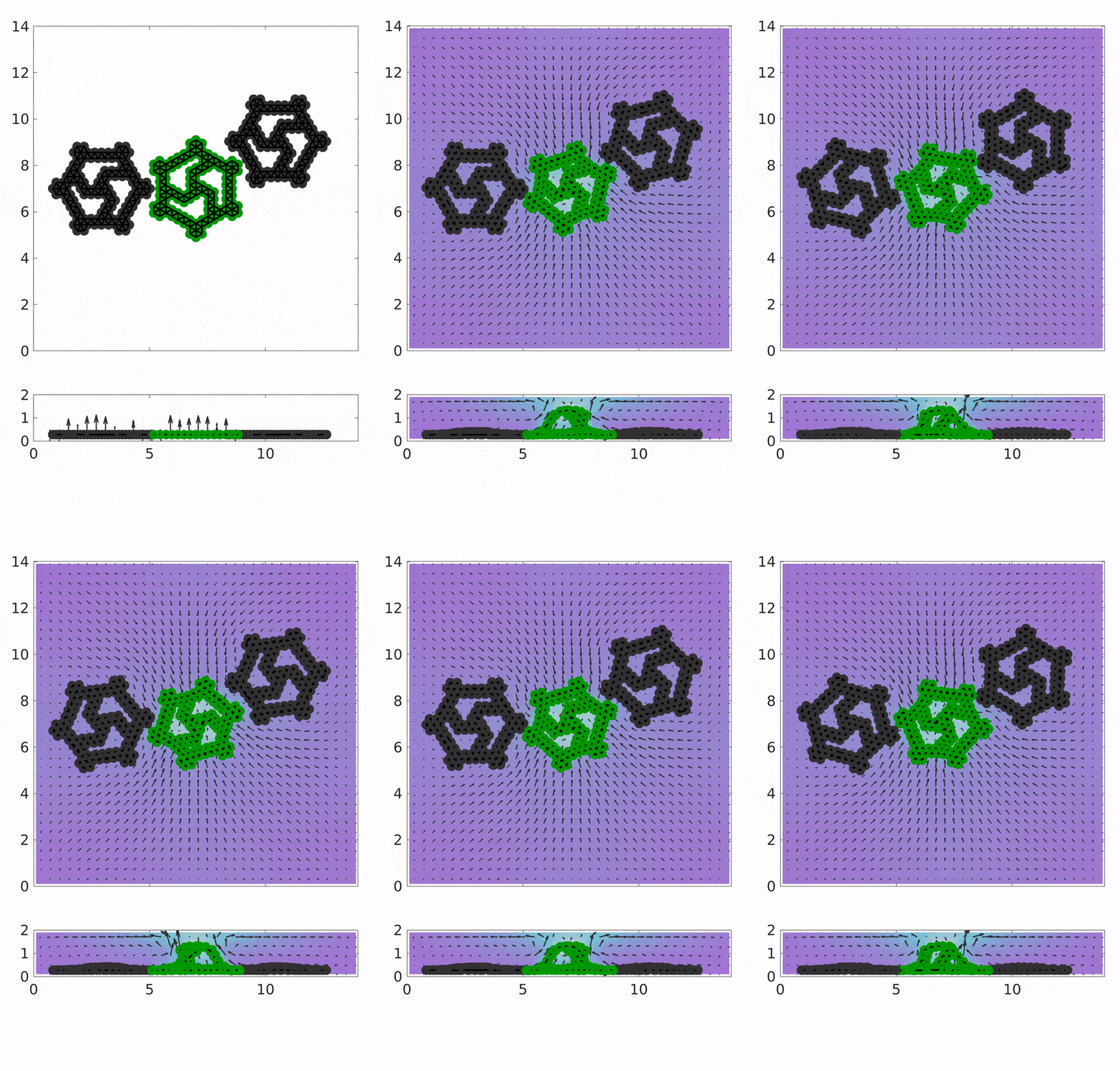
    Multiple Gear Motion
    Transmission of rotational motion from an active gear to two passive gears. In a fluidic chamber, an active gear can rotate multiple passive gears, which are placed to break the symmetry of the flow field. Credit: A. Laskar

    “Because a gear is a central component to any machine, you need to start with the basics, and what Abhrajit has created is like an internal combustion engine at the millimeter scale,” Shklyaev says. “While this won’t power your car, it does present the potential to build the basic mechanisms for driving small-scale chemical machines and soft robots.” 

    In the future, Balazs will investigate how the relative spatial organization of multiple gears can lead to greater functionality and potentially designing a system that appears to act as if it were making decisions.

    “The more remote a machine is from human control, the more you need the machine itself to provide control in order to complete a given task,” Balazs said. “The chemo-mechanical nature of our devices allows that to happen without any external power source.”

    These self-morphing gears are the latest evolution of chemo-mechanical processes developed by Balazs, Laskar, and Shklyaev. Other advances include creating crab-like sheets that mimic feed, flight, and fight responses; and sheets resembling a “flying carpet” that wrap, flap, and creep. 

    Reference: “Self-Morphing, Chemically Driven Gears and Machines” by Abhrajit Laskar, Oleg E. Shklyaev and Anna C. Balazs, 18 December 2020, Matter.
    DOI: 10.1016/j.matt.2020.11.014

    Never miss a breakthrough: Join the SciTechDaily newsletter.
    Follow us on Google and Google News.

    Chemical Engineering Materials Science Polymers University of Pittsburgh
    Share. Facebook Twitter Pinterest LinkedIn Email Reddit

    Related Articles

    New Polymer Discovery Challenges Conventional Wisdom

    Scientists 3D-Print Foam That Repairs Itself

    Scientists Astonished by Strange Material That Can Be Made Like Plastic but Conducts Like Metal

    Polymer-Eating Enzymes Make “Biodegradable” Plastics Truly Compostable

    Green Chemistry Creates Coatings From Nature: Turning Biomass Into High-Quality Coatings

    Scientists to Communicate Polymers More Easily With New Notation System

    Storing Secret Messages in Light-Sensitive Polymers

    Converting Sunlight into Ionic Electricity for Direct Solar Desalination

    MIT Researchers Develop New Strategy for Stronger Polymers

    2 Comments

    1. Davis on December 22, 2020 12:56 am

      Though I am not a mechanical engineer, I am involved with maintenance, repairs of the cars at the best auto care online where vehicle owners could get appropriate service.

      Reply
    2. Davis on December 22, 2020 12:57 am

      Though I am not a mechanical engineer, I am involved with maintenance, repairs of the cars at the this website where vehicle owners could get appropriate service.

      Reply
    Leave A Reply Cancel Reply

    • Facebook
    • Twitter
    • Pinterest
    • YouTube

    Don't Miss a Discovery

    Subscribe for the Latest in Science & Tech!

    Trending News

    The Universe Is Expanding Too Fast and Scientists Can’t Explain Why

    “Like Liquid Metal”: Scientists Create Strange Shape-Shifting Material

    Early Warning Signals of Esophageal Cancer May Be Hiding in Plain Sight

    Common Blood Pressure Drug Shows Surprising Power Against Deadly Antibiotic-Resistant Superbug

    Scientists Uncover Dangerous Connection Between Serotonin and Heart Valve Disease

    Scientists Discover a “Protector” Protein That Could Help Reverse Hair Loss

    Bone-Strengthening Discovery Could Reverse Osteoporosis

    Scientists Uncover Hidden Trigger Behind Stem Cell Aging

    Follow SciTechDaily
    • Facebook
    • Twitter
    • YouTube
    • Pinterest
    • Newsletter
    • RSS
    SciTech News
    • Biology News
    • Chemistry News
    • Earth News
    • Health News
    • Physics News
    • Science News
    • Space News
    • Technology News
    Recent Posts
    • Scientists Overcome Major Quantum Bottleneck, Potentially Transforming Teleportation and Computing
    • Quantum Physics’ Strangest Problem May Hold the Key to Time Itself
    • Scientists Create “Liquid Gears” That Spin Without Touching
    • The Simple Habit That Could Help Prevent Cancer
    • Forgotten Medicinal Plant Shows Promise in Fighting Dangerous Superbugs
    Copyright © 1998 - 2026 SciTechDaily. All Rights Reserved.
    • Science News
    • About
    • Contact
    • Editorial Board
    • Privacy Policy
    • Terms of Use

    Type above and press Enter to search. Press Esc to cancel.