
A recent study conducted by Karolinska Institutet published in the journal Circulation suggests that individuals with a family history of cardiovascular disease might benefit from increasing their intake of oily fish.
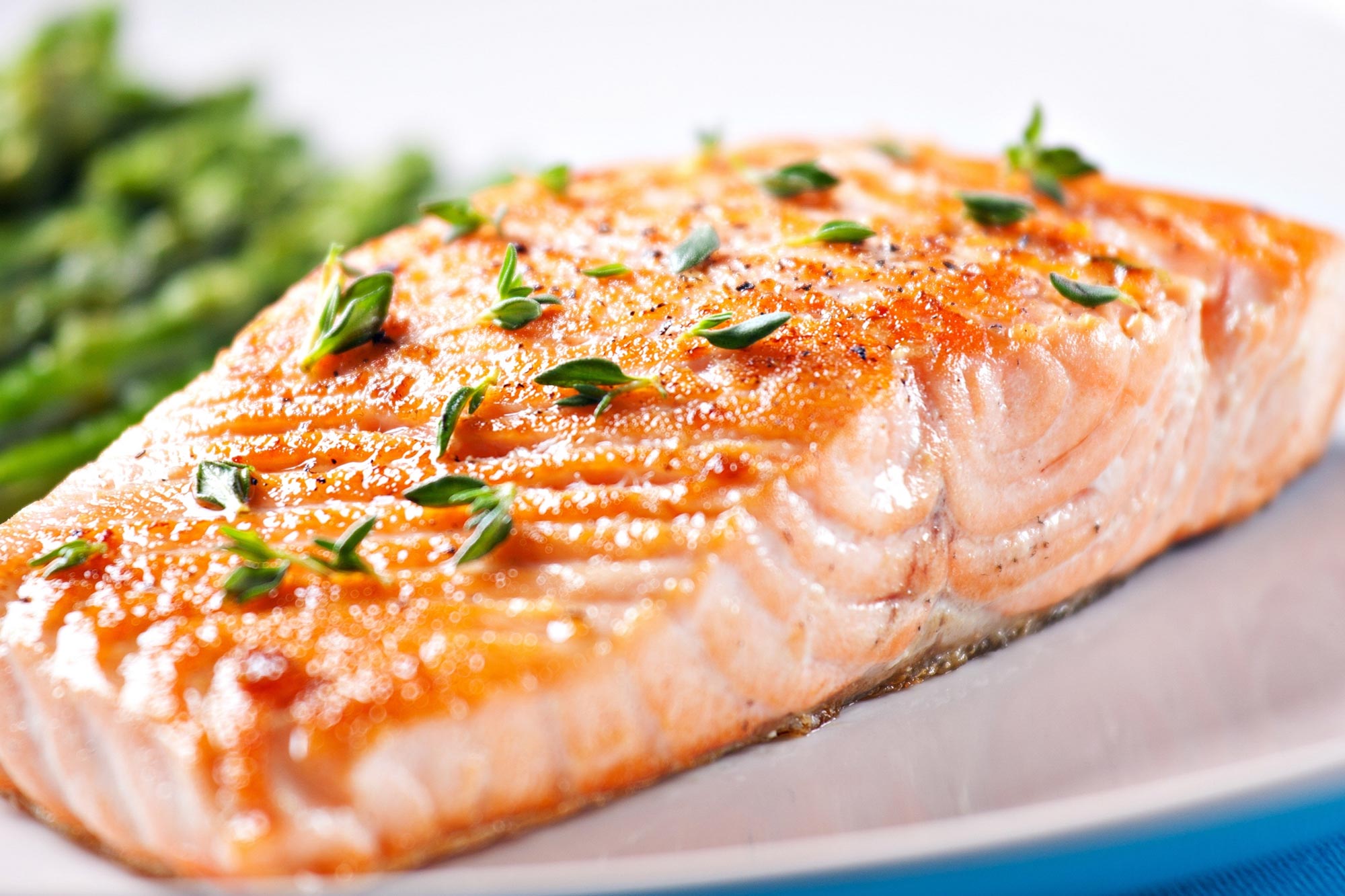
Oily fish, like salmon, mackerel, herring, and sardines, are rich in omega-3 fatty acids, specifically eicosapentaenoic acid (EPA) and docosahexaenoic acid (DHA). These essential fatty acids, vital for various bodily functions, cannot be synthesized by the body and must be acquired through diet. Research consistently highlights the importance of omega-3 in everyone’s diet.
Study Focus on Cardiovascular Disease and Diet
Now a large international study shows that it is likely to be particularly important for people with a family history of cardiovascular disease. The cardiovascular diseases that researchers have looked at are fatal and non-fatal coronary heart disease such as unstable angina, heart attack and cardiac arrest, and cerebral infarction (stroke).
“Cardiovascular disease is to some extent hereditary, as shown by twin studies, but it has been difficult to identify the controlling genes. A strong hypothesis is therefore that it is a combination of genetics and environment,” says Karin Leander, senior lecturer and associate professor of epidemiology at the Institute of Environmental Medicine, Unit for Cardiovascular and Nutritional Epidemiology, Karolinska Institutet, and research leader of the study.
Therefore, she and her research colleagues examined the effect of the interaction between family history and dietary intake. In the study, they pooled data from over 40,000 people without cardiovascular disease.
Findings of the Study
During the follow-up period, nearly 8,000 of these suffered from cardiovascular disease. In their analysis, the researchers were able to show that those who had both cardiovascular disease in a close relative such as a parent or sibling, and also low levels of the omega-3 fatty acids EPA/DHA, had an increased risk of cardiovascular disease of over 40 percent. The elevated risk for those who ‘only’ had cardiovascular disease in the immediate family was 25 percent.
“The study suggests that those with a family history of cardiovascular disease have more to gain from eating more oily fish than others,” says Karin Leander.
Objective Measurements and New Knowledge
The levels of EPA/DHA were measured in all study participants. Since these fatty acids cannot be produced in the body, the levels are a reliable measure of the dietary intake of oily fish, according to Karin Leander.
“The fact that the measurements of fatty acids in blood and tissue are objective, as opposed to self-reported data on eating habits, is an important advantage,” she says.
So, despite being an observational study in an area where there are already plenty of randomized clinical trials, these findings represent completely new knowledge, according to Karin Leander.
“We are the first to study the effect of the combination of family history and fatty fish intake using fatty acid measurements,” she says.
Reference: “Role of Polyunsaturated Fat in Modifying Cardiovascular Risk Associated With Family History of Cardiovascular Disease: Pooled De Novo Results From 15 Observational Studies” by F. Laguzzi, A. Åkesson, M. Marklund, F. Qian, B. Gigante, T.M. Bartz, J.K. Bassett, A. Birukov, H. Campos, Y. Hirakawa, F. Imamura, S. Jäger, M. Lankinen, R.A. Murphy, M. Senn, T. Tanaka, N. Tintle, J.K. Virtanen, K. Yamagishi, M. Allison, I.A. Brouwer, U. De Faire, G. Eiriksdottir, L. Ferrucci, N.G. Forouhi, J.M. Geleijnse, A.M Hodge, H. Kimura, M. Laakso, U. Risérus, A.C. van Westing, S. Bandinelli, A. Baylin, G.G. Giles, V. Gudnason, H. Iso, R.N. Lemaitre, T. Ninomiya, W.S. Post, B.M. Psaty, J.T. Salonen, M.B. Schulze, M.Y. Tsai, M. Uusitupa, N.J. Wareham, S.W. Oh, A.C. Wood, W.S. Harris, D. Siscovick, D. Mozaffarian, K. Leander and Fatty Acids and Outcomes Research Consortium (FORCE), 4 December 2023, Circulation.
DOI: 10.1161/CIRCULATIONAHA.123.065530
The study was conducted by the Fatty Acids and Outcomes Research Consortium (FORCE), a network of over 100 researchers and experts worldwide. The study includes data from 15 studies conducted in 10 different countries.
The researchers declare that there is no conflict of interest. The research was funded by the Swedish Research Council and the Swedish Heart-Lung Foundation.
Never miss a breakthrough: Join the SciTechDaily newsletter.
Follow us on Google and Google News.
3 Comments
Hi I have a few questions about my account and the amount is there so you ☺️
Sweden is #2 in most exported Salmon sales, only Norway exports more. So, really not sure about the “no conflict of interest” claim. Over 6 grams of saturated fat per piece of salmon. Even compared to a chicken breast the salmon is very high in saturated fat.
NEW study???????
I first read this in 1950!
Millenial “scientists” are such a waste of space >_<