
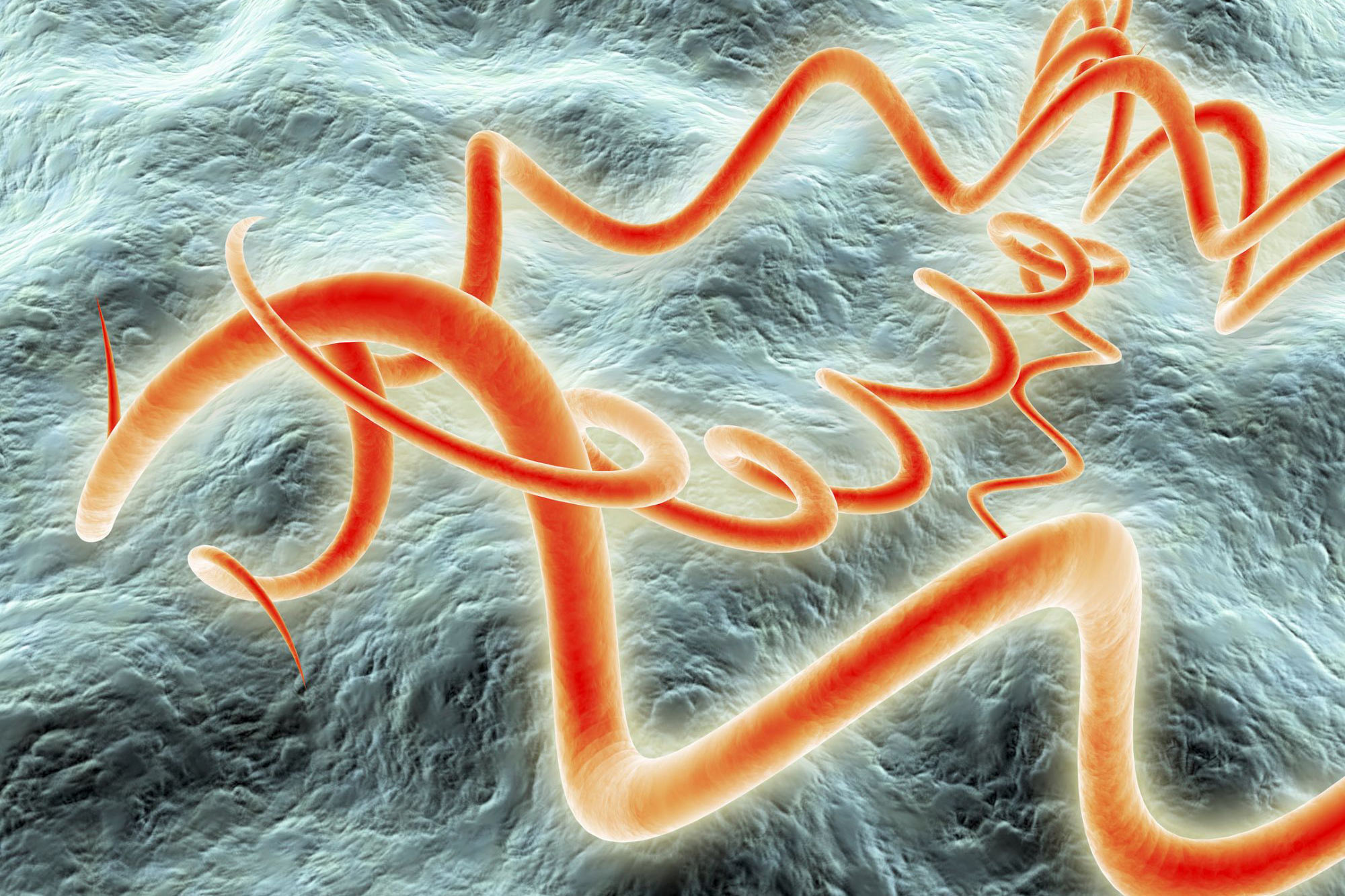
Syphilis originated in the Americas before Columbus’s arrival, and European colonialism facilitated its global spread and dominance.
In the spring of 1495, Charles VIII of France’s Italian campaign was abruptly disrupted by the outbreak of a mysterious and deadly disease. This illness, which spread rapidly across Europe, claimed many lives and left survivors with lasting physical and mental impairments. Historians now consider this epidemic to be the first recorded instance of syphilis.
The origins of syphilis have been the focus of a long-standing debate. The late 15th-century outbreak closely followed the return of Columbus and his crew from their early expeditions to the Americas. This timing has led some to speculate that contact with new lands and peoples may have triggered the emergence of the disease.
While many infectious diseases traveled westward from Europe to the Americas during the colonial era, devastating indigenous populations, syphilis is one of the few diseases thought to have possibly made the reverse journey.
This hypothesis, known as the “Columbian theory,” has gained considerable support over time but remains a subject of ongoing controversy.

Its simple narrative starts to unravel when experts turn their attention to lesions seen in bones from Medieval Europe. Both long-term sufferers and those born with an infection can develop changes in their bones or teeth, and over the past several decades, a number of such skeletons have been found in Europe that predate 1492.
Many now believe the history of syphilis in Europe began long before Columbus, and the late 15th-century pandemic happened for reasons independent of new contacts. But neither theory has been confirmed.
Analyzing five ancient pathogen genomes
Pathogen DNA retrieved from archaeological bone has the potential to tip the scales in support of one theory over another. It has already told us volumes about the deep history of plague, tuberculosis, leprosy, and smallpox, though unthreading the history of syphilis has proven more challenging.
“Several genomes from the syphilis family have been reconstructed from archaeological bone, but these haven’t been able to address core questions related to the pre- or post-Columbian theories surrounding syphilis,” says Kirsten Bos, group leader for molecular paleopathology at the Max Planck Institute for Evolutionary Anthropology.
A new study led by Bos and Johannes Krause, director of the Department of Archaeogenetics at the Max Planck Institute for Evolutionary Anthropology in Leipzig, has taken a critical step toward resolving this debate. Working with scientists and archaeologists from several countries in the Americas, the study focused on archaeological bone from these regions, where infections that left lesion patterns similar to syphilis are apparent from deep time periods.

“We’ve known for some time that syphilis-like infections occurred in the Americas for millennia, but from the lesions alone it’s impossible to fully characterize the disease,” comments Casey Kirkpatrick, a postdoctoral researcher and paleopathologist who contributed to the current study.
Bone pathology also cannot tell us whether the disease originated in the Americas, or if it came from Asia deep in our past and merely accompanied groups during the early peopling events of the Americas some 15,000 years ago.
Using state-of-the-art techniques, the team was able to recover and analyze five ancient genomes of the syphilis disease family from Mexico, Chile, Peru, and Argentina. Computational microbiologist and postdoctoral researcher Lesley Sitter undertook the task of putting together the ancient molecular puzzles and adds “while preservation posed some analytical challenges, we were able to confidently determine the relationships between these extinct forms and the strains that impact global health today.”
Syphilis family of diseases in the Americas pre-dates “Columbus”
Syphilis is part of a small family of diseases that also includes yaws and bejel, both classified as neglected tropical diseases that are found in equatorial regions across the globe. Postdoctoral researcher Rodrigo Barquera has worked previously with archaeological bone from colonial Mexico, and has confirmed the presence of both syphilis and yaws in Mexico City by the 17th century.
Drawing upon the latest ancient genomic data, it is now clear that the Americas were a hub for ancient diversity within this disease group before the arrival of Columbus. “We see extinct sister lineages for all known forms of this disease family, which means syphilis, yaws, and bejel are the modern legacies of pathogens that once circulated in the Americas”, asserts Barquera.
“The data clearly support a root in the Americas for syphilis and its known relatives, and their introduction to Europe starting in the late 15th century is most consistent with the data”, adds Bos. Subsequent to this, an explosion in cases of syphilis and yaws seems to have occurred around AD 1,500.
This is likely behind the breadth and intensity of the 16th-century outbreak in Europe, whose global spread was facilitated by human trafficking networks and European expansions across the Americas and Africa in the decades and centuries that followed.
“While Indigenous American groups harbored early forms of these diseases, Europeans were instrumental in spreading them around the world,” she concludes.
With support for an American origin of syphilis, how does the current narrative square up with the evidence of syphilis-like bone lesions that many claim to have identified in pre-1492 Europe? “The search will continue to define these earlier forms, and ancient DNA will surely be a valuable resource,” comments Krause. “Who knows what older related diseases made it around the world in humans or other animals before the syphilis family appeared.”
Reference: “Ancient genomes reveal a deep history of treponemal disease in the Americas” by Rodrigo Barquera, T. Lesley Sitter, Casey L. Kirkpatrick, Darío A. Ramirez, Arthur Kocher, Maria A. Spyrou, Lourdes R. Couoh, Jorge A. Talavera-González, Mario Castro, Tanya von Hunnius, Evelyn K. Guevara, W. Derek Hamilton, Patrick Roberts, Erin Scott, Mariana Fabra, Gabriela V. Da Peña, Aryel Pacheco, Mónica Rodriguez, Eugenio Aspillaga, Anthi Tiliakou, Elizabeth A. Nelson, Karen L. Giffin, Raffaela A. Bianco, Adam B. Rohrlach, María de los Ángeles García Martínez, Fabiola A. Ballesteros Solís, Antti Sajantila, Shelley R. Saunders, Rodrigo Nores, Alexander Herbig, Johannes Krause and Kirsten I. Bos, 18 December 2024, Nature.
DOI: 10.1038/s41586-024-08515-5
Never miss a breakthrough: Join the SciTechDaily newsletter.
Follow us on Google and Google News.
2 Comments
Thanks, Obama.
Relevance!? Barack Obama was born in US 1961, long after Europeans had spread the disease.