
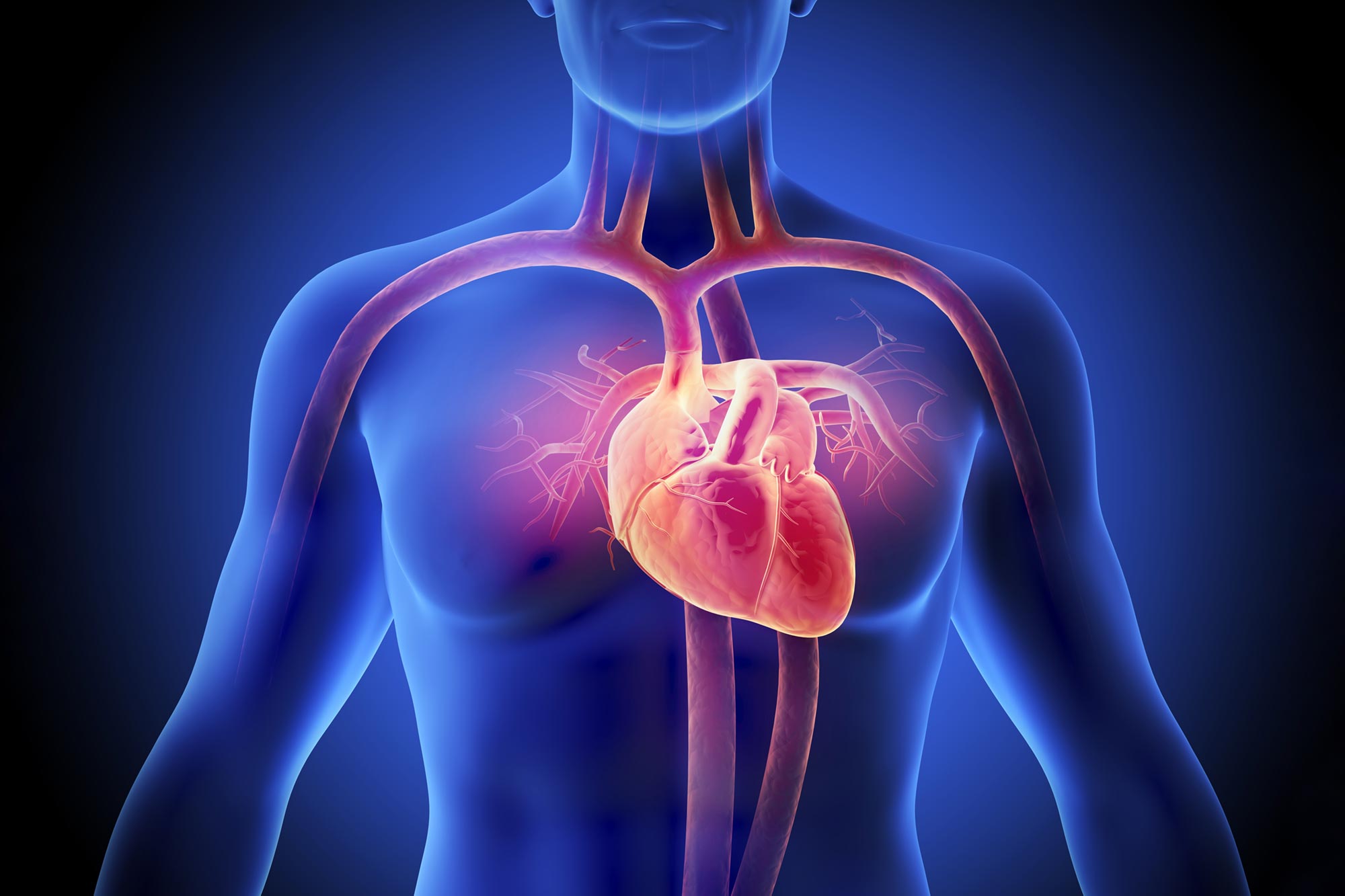
Researchers have uncovered molecular clues linking diabetes to heart disease.
Researchers at the University of Sydney have uncovered new evidence showing how type 2 diabetes directly changes the heart, affecting both its physical structure and the way it generates energy. The findings help explain why people living with diabetes face a much higher risk of developing heart failure.
The study, published in EMBO Molecular Medicine, was led by Dr. Benjamin Hunter and Associate Professor Sean Lal from the School of Medical Sciences. The research team examined donated human heart tissue from patients receiving heart transplants in Sydney. Their analysis revealed that diabetes triggers specific molecular changes within heart cells and alters the structure of heart muscle. These effects were most evident in people with ischemic cardiomyopathy, which is the leading cause of heart failure.
Diabetes and Heart Disease: A Molecular Link
“We’ve long seen a correlation between heart disease and type 2 diabetes,” said Dr. Hunter, “but this is the first research to jointly look at diabetes and ischaemic heart disease and uncover a unique molecular profile in people with both conditions.
“Our findings show that diabetes alters how the heart produces energy, maintains its structure under stress, and contracts to pump blood. Using advanced microscopy techniques, we were able to see direct changes to the heart muscle as a result of this, in the form of a build-up of fibrous tissue.”
Heart disease remains the number one cause of death in Australia, while more than 1.2 million Australians are currently living with type 2 diabetes.
Associate Professor Lal said: “Our research links heart disease and diabetes in ways that have never been demonstrated in humans, offering new insights into potential treatment strategies that could one day benefit millions of people in Australia and globally.”
Getting to the heart of the problem
To better understand how diabetes affects the heart, the researchers compared tissue samples from transplant recipients with those from healthy donors.
Their findings showed that diabetes does more than simply coexist with heart disease. It actively contributes to the progression of heart failure by interfering with essential biological processes and altering heart muscle structure at a microscopic scale.
“The metabolic effect of diabetes in the heart is not fully understood in humans,” said Dr. Hunter.
“Under healthy conditions, the heart primarily uses fats but also glucose and ketones as fuel for energy. It has previously been described that glucose uptake is increased in heart failure, however, diabetes reduces the insulin sensitivity of glucose transporters – proteins that move glucose in and out of cells – in heart muscle cells.
“We observed that diabetes worsens the molecular characteristics of heart failure in patients with advanced heart disease and increases the stress on mitochondria – the powerhouse of the cell which produces energy.”
The researchers also observed reduced production of structural proteins critical for heart muscle contraction and calcium handling in people with diabetes and ischemic heart disease, along with a build-up of tough, fibrous heart tissue that further affects the heart’s ability to pump blood.
Confirming Structural and Genetic Changes
“RNA sequencing confirmed that many of these protein changes were also reflected at the gene transcription level, particularly in pathways related to energy metabolism and tissue structure, which reinforces our other observations,” said Dr. Hunter.
“And once we had these clues at the molecular level, we were able to confirm these structural changes using confocal microscopy.”
Associate Professor Lal said the discovery of mitochondrial dysfunction and fibrotic pathways could help guide future therapies.
“Now that we’ve linked diabetes and heart disease at the molecular level and observed how it changes energy production in the heart while also changing its structure, we can begin to explore new treatment avenues,” said Associate Professor Lal.
“Our findings could also be used to inform diagnosis criteria and disease management strategies across cardiology and endocrinology, improving care for millions of patients.”
Reference: “Left ventricular myocardial molecular profile of human diabetic ischaemic cardiomyopathy” by Benjamin Hunter, Yunwei Zhang, Dylan Harney, Holly McEwen, Yen Chin Koay, Michael Pan, Cassandra Malecki, Jasmine Khor, Robert D Hume, Giovanni Guglielmi, Alicia Walker, Shashwati Dutta, Vijay Rajagopal, Anthony Don, Mark Larance, John F O’Sullivan, Jean Y H Yang and Sean Lal, 4 August 2025, EMBO Molecular Medicine.
DOI: 10.1038/s44321-025-00281-9
Funding: R.T. Hall Trust, National Health and Medical Research Council, National Heart Foundation of Australia
Never miss a breakthrough: Join the SciTechDaily newsletter.
Follow us on Google and Google News.
3 Comments
But was any small fiber neuropathy observed since confocal microscopy was used? And how does DM2 might contribute to electrical signal disturbance.
For nonphysical nonwire values of what I imagined at first might be atrial star ganglia.
Is this study only in regard to DM2? It sounds like it is insulin sensitivity, or lack thereof, that causes issues but interested nonetheless how/ if it also has effects for those with DM1.