
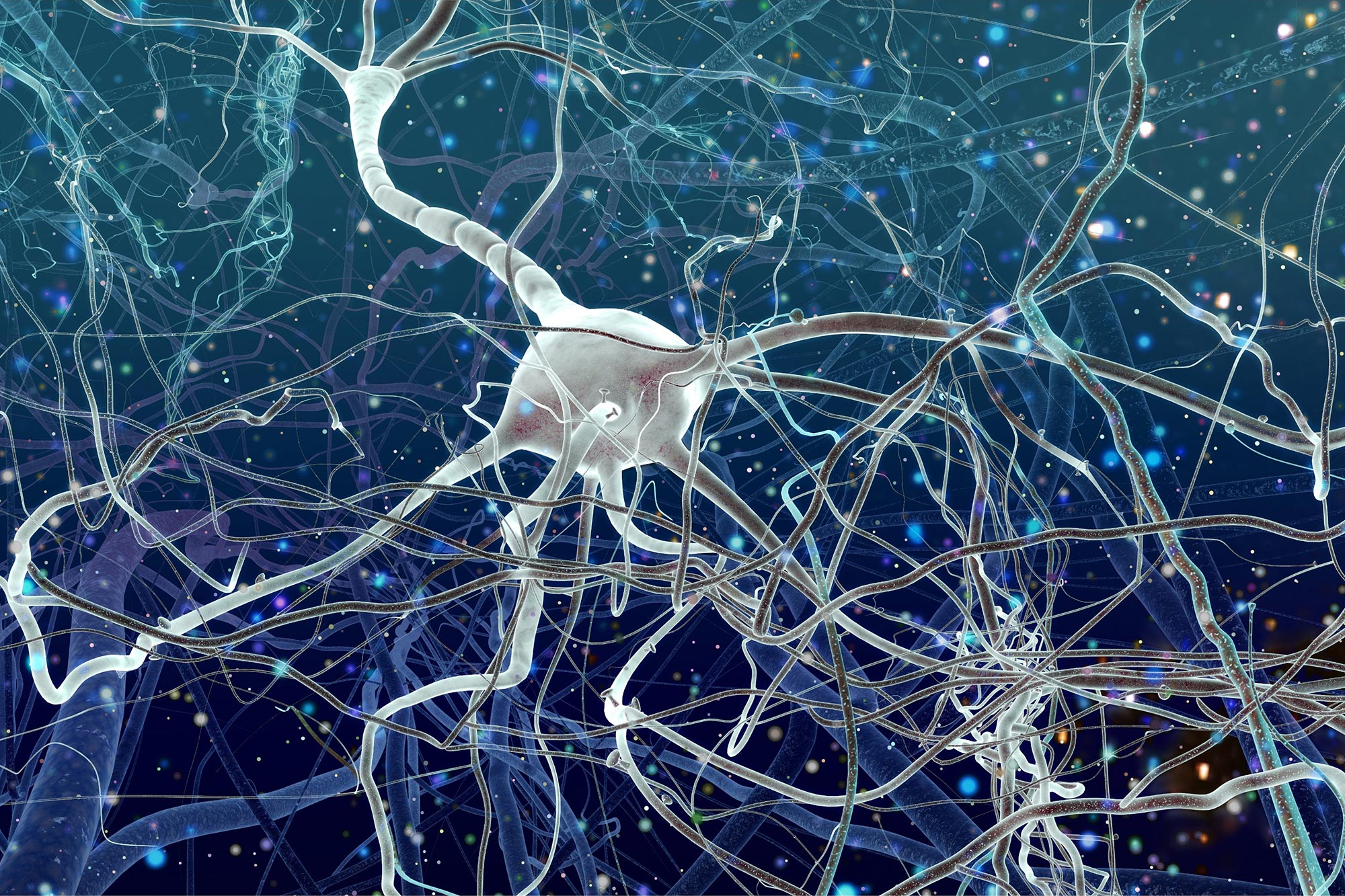
A recent study on Huntington’s disease demonstrates its effect on brain vasculature, offering potential for early diagnosis and new treatment strategies targeting brain metabolism and blood flow.
Research indicates that Huntington’s disease impacts not only the brain’s nerve cells but also has extensive effects on microscopic blood vessels.
These vascular changes were also observed in the pre-symptomatic stages of the disease, highlighting the potential of this research in predicting brain health and assessing the benefits of lifestyle modifications or treatments.
Huntington’s disease is an inherited genetic condition leading to dementia, with a progressive decline in a person’s movement, memory, and cognition. There is currently no cure.
The study, published in Brain Communications, is by Juliane Bjerkan, Gemma Lancaster, Peter McClintock, and Aneta Stefanovska from Lancaster University, Jan Kobal, Sanja Šešok, and Bernard Meglič from the University Medical Centre in Ljubljana, Karol Budohoski from the Cambridge University Hospitals NHS Trust, and Peter Kirkpatrick from Cambridge University.
Neurovascular Research in Huntington’s Disease
The team investigated changes in the coordination between neuronal activity and the brain’s oxygenation in Huntington’s disease. The vasculature and brain work together to ensure that the brain receives sufficient energy. In fact, the brain needs as much as 20% of the body’s energy consumption despite only weighing approximately 2% of the body’s weight.
The “neurovascular unit” consists of vasculature connected via brain cells called astrocytes to neurons and ensures that this cooperation is successful.
To assess the function of these neurovascular units, the researchers combined non-invasive measurement techniques and novel analysis methods developed by Lancaster’s Nonlinear and Biomedical Physics group.
Methods of Measuring Brain Health
Probes emitting infrared light were placed on the heads of participants in the study. The infrared light penetrated the skull harmlessly and enabled researchers to measure the brain’s blood oxygenation.
Electrodes, which can measure electrical activity from neurons, were also placed on the heads of participants. The researchers then studied the many rhythms related to the functioning of the brain and the cardiovascular system using mathematical techniques. These rhythms included the heart and respiration rates, related to the transport of nutrients and oxygen, as well as slower rhythms associated with local control of blood flow. Brain activity manifests in faster rhythms.
Efficient functioning of the brain depends on how well all these rhythms are orchestrated. To assess the efficiency of the neurovascular unit, both the strength and the coordination of these rhythms were assessed by computing their “power” and “phase coherence”.
Professor Aneta Stefanovska of Lancaster University said: “We are hopeful that the method described could be used to monitor the disease progression and to evaluate the effect of potential treatments or lifestyle changes in Huntington’s disease and other neurodegenerative diseases. We also hope that our study will stimulate new treatments of Huntington’s disease targeting the vasculature and brain metabolism.”
Reference: “The phase coherence of the neurovascular unit is reduced in Huntington’s disease” by Juliane Bjerkan, Jan Kobal, Gemma Lancaster, Sanja Šešok, Bernard Meglič, Peter V E McClintock, Karol P Budohoski, Peter J Kirkpatrick and Aneta Stefanovska, 10 June 2024, Brain Communications.
DOI: 10.1093/braincomms/fcae166
Never miss a breakthrough: Join the SciTechDaily newsletter.
Follow us on Google and Google News.