
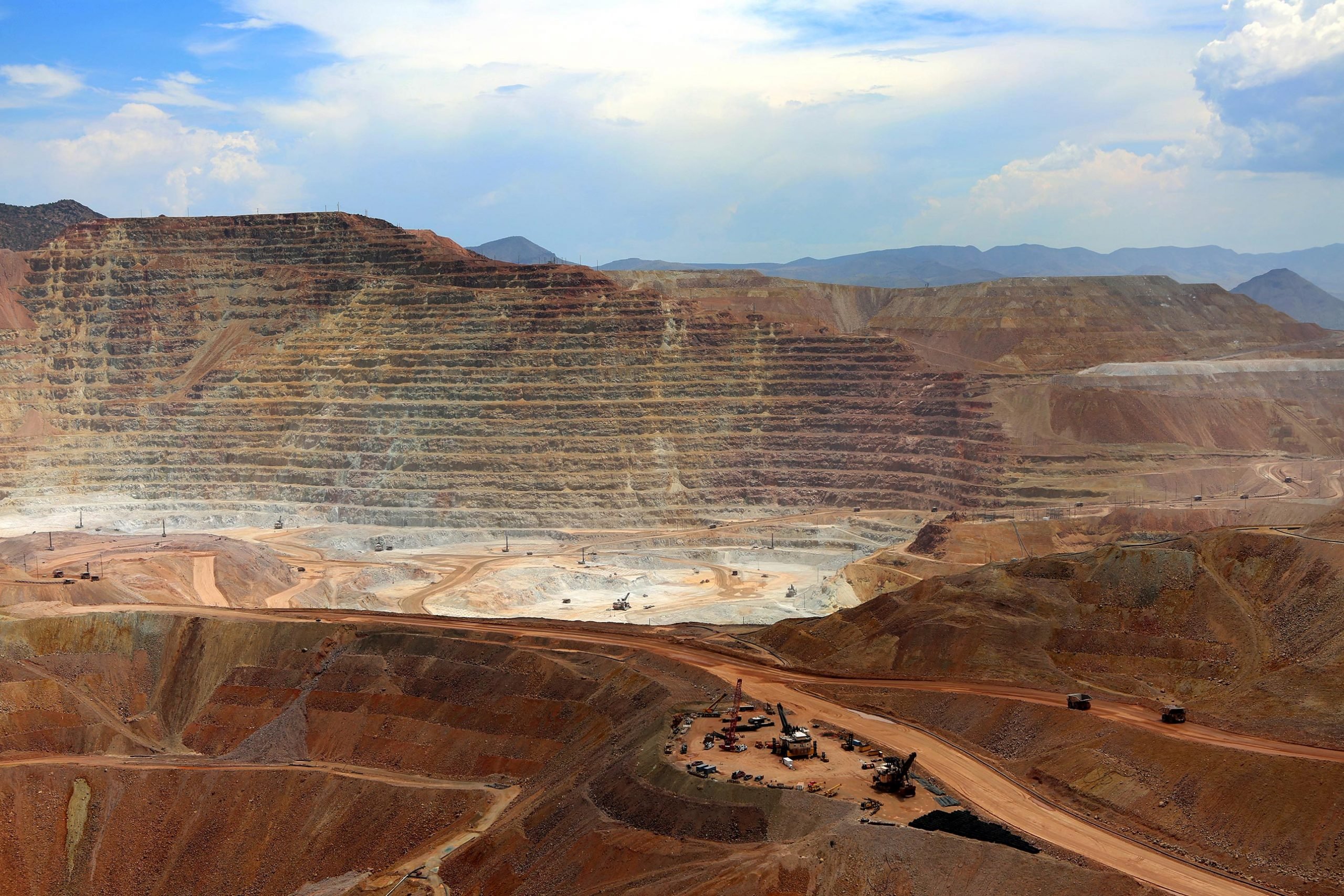
The production of rare earth metals is a global $4 billion annual market that continues to grow as new electronics, computerized engines for aircraft, warships, electric automobiles, magnets, and other critical products are developed that need rare earth metals to perform. The value of products that require rare earth metals to function is valued at more than $4 trillion per year.
The current challenge is that just one country, China, owns the market for extracting and purifying this critical resource despite the fact that other global countries, including the U.S., are rich in such metals. The detrimental environmental impact of the current acid-based separation and purification of rare earth metals prohibits most companies across the globe from entering the market.
New environmentally friendly technologies promise to be “game changers” in this field and enable the U.S. to create a more stable and reliable domestic source of these essential metals. Purdue University-patented extraction and purifying processes using ligand-assisted chromatography are shown to remove and purify such metals from coal ash, recycled magnets, and raw ore safely, efficiently, and with virtually no detrimental environmental impact.

“It’s a supply chain challenge with wide implications on the U.S. economy and national security. We have a critically needed product and one dominant source for this product. This new patented process promises to enable U.S. independence from the China near monopoly,” said Dan Hasler, founder of Hasler Ventures. “This technology has been researched and developed at Purdue University for more than a decade and has proven to be versatile and robust.”
Hasler Ventures has secured rights from the Purdue Research Foundation that grant the company first rights to commercialize the technology’s intellectual property.
The technology – developed and patented from the laboratory of Nien-Hwa Linda Wang, Purdue’s Maxine Spencer Nichols Professor of Chemical Engineering – has successfully shown to separate rare earth metals without the devastating environmental effects of conventional acid-based methods with high yield and purity.
One part of this technology was published on March 31, 2020, in the Royal Society of Chemistry publication Green Chemistry. The funding source for this research includes the Department of Defense.
“About 60% of rare earth metals are used in magnets that are needed in almost everyone’s daily lives. These metals are used in electronics, airplanes, hybrid cars, and even windmills,” Wang said. “We currently have one dominant foreign source for these metals and if the supply were to be limited for any reason, it would be devastating to people’s lives. It’s not that the resource isn’t available in the U.S., but that we need a better, cleaner way to process these rare earth metals.”
According to Wang, after China reduced the export quotas for rare earth metals in 2010, the costs of rare earth magnets for one wind turbine increased from $80,000 to $500,000. After China relaxed the export restrictions 18 months later, the prices returned to lower levels than in 2010.
“Conventional methods for producing high-purity rare earth elements employ two-phase liquid–liquid extraction methods, which require thousands of mixer-settler units in series or in parallel and generate large amounts of toxic waste,” Wang said. “We use a two-zone ligand-assisted displacement chromatography system with a new zone-splitting method that is producing high-purity (>99%) metals with high yields (>99%).”
Wang’s ligand-assisted method has the potential for efficient and environmentally friendly purification of rare earth metals from all sources of recyclates, such as waste magnets and ore-based sources, and helps transform rare earth processing to a circular, sustainable process.
“We continue to work diligently in the lab to learn how to adapt the ligand-assisted system to many variations we see in source material and are excited to collaborate with and assess the suitability of potential partners’ source material be it recycled magnets and batteries, coal ash or domestically mined ore.
Joe Pekny, a Purdue professor of chemical engineering said Wang’s innovation enables the U.S. to reenter the rare earth metals market in a significant way and sustainable way.
“What’s exciting is that the U.S. has the rare earth metals to meet the growing demands of the U.S. market and other markets around the globe and reduces our dependence on foreign sources,” Pekny said. “Linda’s method replaces a very inefficient process and replaces it with an earth-friendly, safe extraction process.”
Reference: “Two-zone ligand-assisted displacement chromatography for producing high-purity praseodymium, neodymium, and dysprosium with high yield and high productivity from crude mixtures derived from waste magnets” by Yi Ding, David Harvey and Nien-Hwa Linda Wang, 31 March 2020, Green Chemistry.
DOI: 10.1039/D0GC00495B
Never miss a breakthrough: Join the SciTechDaily newsletter.
Follow us on Google and Google News.
1 Comment
Pure Energy Minerals are in the process of building (in partnership with Schlumberger) a high-yield Lithium processing plant that takes 90% of the environmentally-unfriendly aspects out of the process. It promises to be a game-changing development in Lithium extraction and purification.