
Close Menu
    Facebook X (Twitter) Instagram
    SciTechDaily
    • Biology
    • Chemistry
    • Earth
    • Health
    • Physics
    • Science
    • Space
    • Technology
    Facebook X (Twitter) Pinterest YouTube RSS
    SciTechDaily
    Home»Technology»A*STAR Researchers Develop High-Capacity Method to Purify Monoclonal Antibodies
    Technology

    A*STAR Researchers Develop High-Capacity Method to Purify Monoclonal Antibodies

    By A*STAR ResearchAugust 13, 2014No Comments3 Mins Read
    Facebook Twitter Pinterest Telegram LinkedIn WhatsApp Email Reddit
    Share
    Facebook Twitter LinkedIn Pinterest Telegram Email Reddit
    Magnetic Nanoparticles Break the Capacity Barrier for Antibody Purification
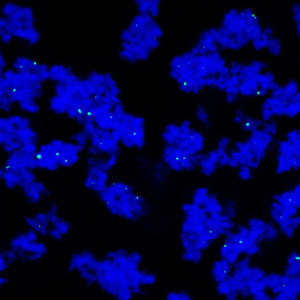
    A novel separation technique uses starch-coated magnetic nanoparticles (green) and polyethylene glycol to purify monoclonal antibodies (blue). Credit: 2013 Elsevier

    Researchers from A*STAR have developed a high-capacity method to purify monoclonal antibodies that uses magnetic nanoparticles.

    Monoclonal antibodies represent the largest and fastest-growing segment of international biopharma. While these therapeutic agents are a boon for global healthcare, productivity constraints pose a serious challenge for manufacturers seeking to make sufficient amounts for therapeutic applications. Now, A*STAR researchers have developed a high-capacity method to purify monoclonal antibodies that uses magnetic nanoparticles and also introduces new operating conditions.

    At present, therapeutic antibodies are generally purified by a technique known as protein A affinity chromatography. The process yields a high purification factor — typically 99 percent — but it is slow, thereby creating a severe productivity bottleneck. The process is largely hindered by the low capacity of protein A, which binds monoclonal antibodies at an average rate of 50 grams per liter of protein A chromatography media. The overall purification process requires unpurified antibodies to pass through columns packed with the media in multiple cycles that can take up to a week.

    A research team led by Pete Gagnon and co-workers from the A*STAR Bioprocessing Technology Institute in Singapore have developed an alternative method with 1,000 times the capacity of protein A. The technique involves the use of polyethylene glycol, which causes the antibodies to be deposited on the surface of starch-coated magnetic nanoparticles. The particles are collected in a magnetic field, undeposited contaminants are washed away and the purified antibodies recovered by removing the polyethylene glycol.

    “The high capacity of our nanoparticle method makes it much faster than column chromatography,” explains Gagnon. “Instead of the pharmaceutical industry norm of five to eight cycles, the new process requires only one cycle, which takes just a few hours.” This reduction dramatically increases the productivity of the new approach over traditional methods.

    The new method also required the research team to develop new operating conditions. Polyethylene glycol has been used for decades to process antibodies, but it has never achieved the level of purity needed for clinical therapeutics. The team discovered that by elevating the salt concentration, they could reduce contaminant levels from about 250,000 parts per million to 500: the same level achieved by protein A. A single follow-on polishing step using a multimodal chromatography column further purified the antibodies to clinical quality standards.

    Gagnon notes the high potential for adoption of the new technology by industry. In addition to solving the long-standing problem of productivity for monoclonal antibodies, the nanoparticle approach can be applied to many other therapeutic proteins and also to viral vaccines.

    The A*STAR-affiliated researchers contributing to this research are from the Bioprocessing Technology Institute.

    Reference: “High productivity purification of immunoglobulin G monoclonal antibodies on starch-coated magnetic nanoparticles by steric exclusion of polyethylene glycol” by Pete Gagnon, Phyllicia Toh and Jeremy Lee, 25 November 2013, Journal of Chromatography A.
    DOI: 10.1016/j.chroma.2013.11.039

    Never miss a breakthrough: Join the SciTechDaily newsletter.
    Follow us on Google and Google News.

    A*STAR Research Antibodies Bionanotechnology Biotechnology Nanotechnology
    Share. Facebook Twitter Pinterest LinkedIn Email Reddit

    Related Articles

    World-First Antibody-Drug Delivery System Developed Using Supercharged Man-Made Crystals

    New Method Developed for 3D Printing Living Microbes To Enhance Biomaterials

    Researchers Design World’s Fastest Information-Fueled Engine

    New Method of 3D-Printing Soft Materials Could Jump-Start Creation of Tiny Medical Devices for the Body

    Iron Nanorobots Go Undercover to Track Living Cells Inside the Body

    Fully Autonomous Cancer-Fighting Nanorobots Seek and Destroy Tumors

    Single-Stranded DNA and RNA Origami That Can Autonomously Fold Into Defined Structures

    Programmable Biofilm-Based Materials That Self-Assemble

    Scientists Develop Artificial Cilia

    Leave A Reply Cancel Reply

    • Facebook
    • Twitter
    • Pinterest
    • YouTube

    Don't Miss a Discovery

    Subscribe for the Latest in Science & Tech!

    Trending News

    Just a Few Breathless Minutes a Day Could Slash Your Risk of 8 Major Diseases

    This Simple Habit Could Cut Your Risk of Dementia by 30%

    Scientists Debunk Rattlesnake Myth That Fooled Hikers and Doctors for Decades

    Scientists Discover Plants Can “Count” – and May Be Smarter Than We Thought

    New Research Reveals Ancient Mars May Have Been Warm, Wet – and Possibly Alive

    This Surprising Daily Habit Could Cut Dementia Risk by 35%

    Just 10 Minutes a Day: Scientists Say This Ancient Chinese Practice Shows Powerful Blood Pressure Benefits

    Scientists Say This Popular Food Could Help Your Body Get Rid of Microplastics

    Follow SciTechDaily
    • Facebook
    • Twitter
    • YouTube
    • Pinterest
    • Newsletter
    • RSS
    SciTech News
    • Biology News
    • Chemistry News
    • Earth News
    • Health News
    • Physics News
    • Science News
    • Space News
    • Technology News
    Recent Posts
    • NASA’s Artemis II Cleared for Moon Flight As Orion Prepares for Critical Engine Burn
    • NASA Artemis II Crew Scrambles To Fix Unexpected Toilet Failure in Space
    • Surviving Burns May Have Changed Human Evolution
    • Scientists Discover Hidden “Footprint of Death” That Could Transform How We Fight Disease
    • Blood-Sucking Parasites Could Revolutionize Treatment for Autoimmune Diseases
    Copyright © 1998 - 2026 SciTechDaily. All Rights Reserved.
    • Science News
    • About
    • Contact
    • Editorial Board
    • Privacy Policy
    • Terms of Use

    Type above and press Enter to search. Press Esc to cancel.