
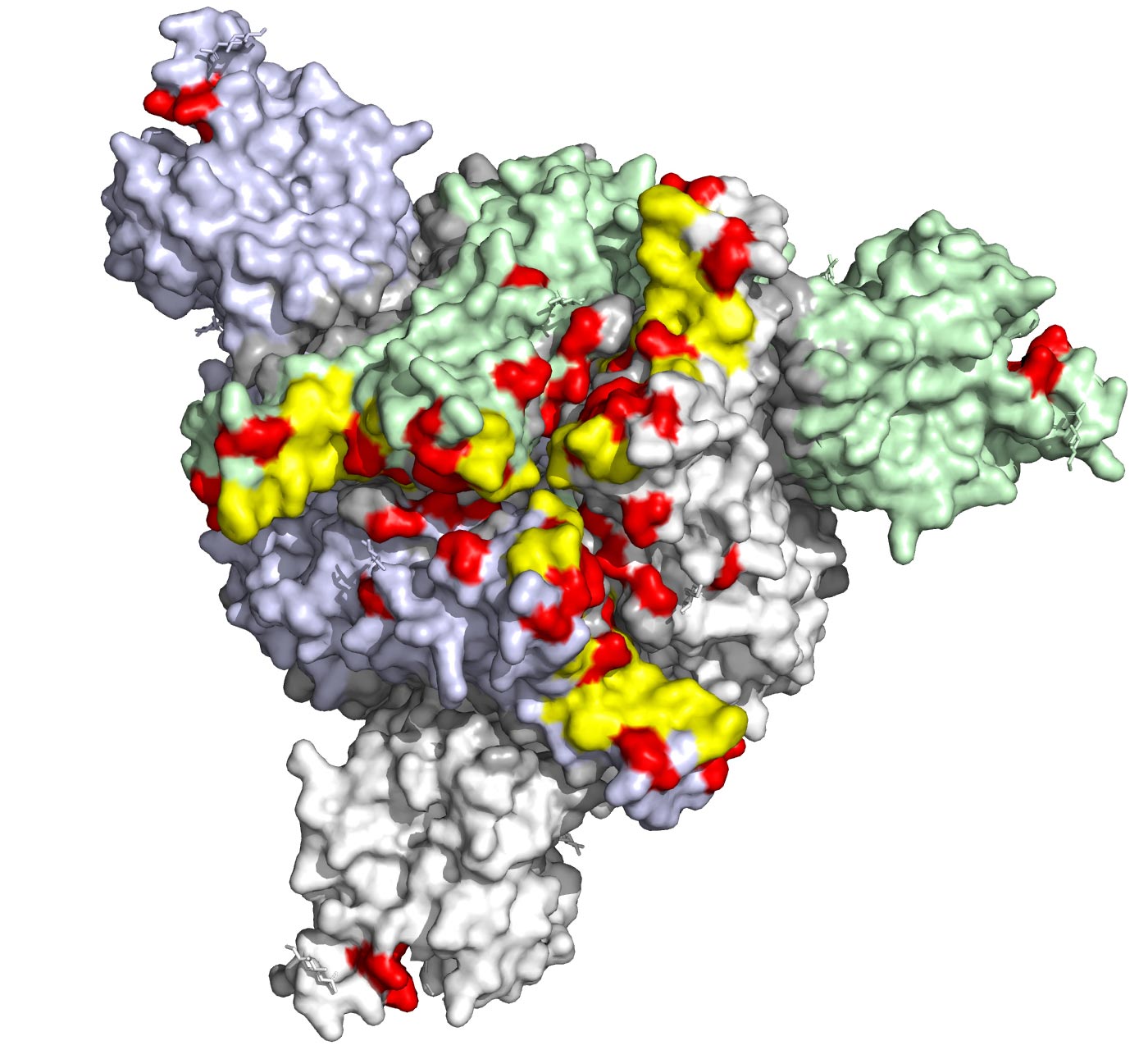
Omicron, emerging swiftly as a dominant variant, is less susceptible to both monoclonal antibodies and antibodies generated from previous infections or initial vaccine doses. Studies confirm that booster vaccinations can restore effective antibody levels, critical for combatting this variant’s spread and impact.
The Omicron variant was detected for the first time in South Africa in November 2021 and has since spread to many countries. It is expected to become the dominant variant within a few weeks or months.
Initial epidemiological studies show that the Omicron variant is more transmissible than the currently dominant virus (the Delta variant). It is capable of spreading to individuals who have received two vaccine doses and to previously infected individuals.
Scientists from the Institut Pasteur and the Vaccine Research Institute, in collaboration with KU Leuven (Leuven, Belgium), Orléans Regional Hospital, Hôpital Européen Georges Pompidou (AP-HP), Inserm and the CNRS, studied the sensitivity of the Omicron variant to monoclonal antibodies used in clinical practice to prevent severe forms of the disease in people at risk, as well as to antibodies in the blood of individuals previously infected with SARS-CoV-2 or vaccinated.
They compared this sensitivity with that of the Delta variant. The scientists demonstrated that Omicron is much less sensitive to neutralizing antibodies than Delta. The scientists then analyzed the blood of people who had received two doses of the Pfizer or AstraZeneca vaccine. Five months after vaccination, the antibodies in the blood were no longer capable of neutralizing Omicron. This loss of efficacy was also observed in individuals who had been infected with SARS-CoV-2 within the past 12 months.
Administering a booster dose of the Pfizer vaccine or a single vaccine dose in previously infected individuals led to a significant increase in antibody levels that was sufficient to neutralize Omicron. Omicron is therefore much less sensitive to the anti-SARS-CoV-2 antibodies currently used in clinical practice or obtained after two vaccine doses.
Comparative Analysis of Omicron and Delta Sensitivity
Initial epidemiological studies demonstrate that the Omicron variant is more transmissible than the Delta variant. The Omicron variant’s biological characteristics are still relatively unknown. It has more than 32 mutations in the spike protein compared with the first SARS-CoV-2 and was designated as a variant of concern by WHO on November 26, 2021.
In South Africa, the Omicron variant replaced the other viruses within a few weeks and led to a sharp increase in the number of cases diagnosed. Analyses in various countries indicate that the doubling time for cases is approximately 2 to 4 days. Omicron has been detected in dozens of countries, including France, and became dominant by the end of 2021.
Collaborative Research on Omicron’s Antibody Sensitivity
In a new study supported by the European Union’s Health Emergency Preparedness and Response Authority (HERA), scientists from the Institut Pasteur and the Vaccine Research Institute, in collaboration with KU Leuven (Leuven, Belgium), Orléans Regional Hospital, Hôpital Européen Georges Pompidou (AP-HP) and Inserm, studied the sensitivity of Omicron to antibodies compared with the currently dominant Delta variant. The aim of the study was to characterize the efficacy of therapeutic antibodies, as well as antibodies developed by individuals previously infected with SARS-CoV-2 or vaccinated, in neutralizing this new variant.
The scientists from KU Leuven isolated the Omicron variant of SARS-CoV-2 from a nasal sample of a 32-year-old woman who developed moderate COVID-19 a few days after returning from Egypt. The isolated virus was immediately sent to scientists at the Institut Pasteur, where therapeutic monoclonal antibodies and serum samples from people who had been vaccinated or previously exposed to SARS-CoV-2 were used to study the sensitivity of the Omicron variant.
Challenges in Neutralizing Omicron with Current Antibodies
The scientists used rapid neutralization assays, developed by the Institut Pasteur’s Virus and Immunity Unit, on the isolated sample of the Omicron virus. This collaborative multidisciplinary effort also involved the Institut Pasteur’s virologists and specialists in the analysis of viral evolution and protein structure, together with teams from Orléans Regional Hospital and Hôpital Européen Georges Pompidou in Paris.
The scientists began by testing nine monoclonal antibodies used in clinical practice or currently in preclinical development. Six antibodies lost all antiviral activity, and the other three were 3 to 80 times less effective against Omicron than against Delta. The antibodies Bamlanivimab/Etesevimab (a combination developed by Lilly), Casirivimab/Imdevimab (a combination developed by Roche and known as Ronapreve) and Regdanvimab (developed by Celtrion) no longer had any antiviral effect against Omicron. The Tixagevimab/Cilgavimab combination (developed by AstraZeneca under the name Evusheld) was 80 times less effective against Omicron than against Delta.
“We demonstrated that this highly transmissible variant has acquired significant resistance to antibodies. Most of the therapeutic monoclonal antibodies currently available against SARS-CoV-2 are inactive,” comments Olivier Schwartz, co-last author of the study and Head of the Virus and Immunity Unit at the Institut Pasteur.
Impact on Vaccine Efficacy and Continued Research
The scientists observed that the blood of patients previously infected with COVID-19, collected up to 12 months after symptoms, and that of individuals who had received two doses of the Pfizer or AstraZeneca vaccine, taken five months after vaccination, barely neutralized the Omicron variant. But the sera of individuals who had received a booster dose of Pfizer, analyzed one month after vaccination, remained effective against Omicron. Five to 31 times more antibodies were nevertheless required to neutralize Omicron, compared with Delta, in cell culture assays. These results help shed light on the continued efficacy of vaccines in protecting against severe forms of disease.
“We now need to study the length of protection of the booster dose. The vaccines probably become less effective in offering protection against contracting the virus, but they should continue to protect against severe forms,” explains Olivier Schwartz.
“This study shows that the Omicron variant hampers the effectiveness of vaccines and monoclonal antibodies, but it also demonstrates the ability of European scientists to work together to identify challenges and potential solutions. While KU Leuven was able to describe the first case of Omicron infection in Europe using the Belgian genome surveillance system, our collaboration with the Institut Pasteur in Paris enabled us to carry out this study in record time. There is still a great deal of work to do, but thanks to the support of the European Union’s Health Emergency Preparedness and Response Authority (HERA), we have clearly now reached a point where scientists from the best centers can work in synergy and move towards a better understanding and more effective management of the pandemic,” comments Emmanuel André, co-last author of the study, a Professor of Medicine at KU Leuven (Katholieke Universiteit Leuven) and Head of the National Reference Laboratory and the genome surveillance network for COVID-19 in Belgium.
The scientists concluded that the many mutations in the spike protein of the Omicron variant enabled it to largely evade the immune response. Ongoing research is being conducted to determine why this variant is more transmissible from one individual to the next and to analyze the long-term effectiveness of a booster dose.
Reference: “Considerable escape of SARS-CoV-2 Omicron to antibody neutralization” by Delphine Planas, Nell Saunders, Piet Maes, Florence Guivel-Benhassine, Cyril Planchais, Julian Buchrieser, William-Henry Bolland, Françoise Porrot, Isabelle Staropoli, Frederic Lemoine, Hélène Péré, David Veyer, Julien Puech, Julien Rodary, Guy Baela, Simon Dellicour, Joren Raymenants, Sarah Gorissen, Caspar Geenen, Bert Vanmechelen, Tony Wawina-Bokalanga, Joan Martí-Carrerasi, Lize Cuypers, Aymeric Sève, Laurent Hocqueloux, Thierry Prazuck, Félix Rey, Etienne Simon-Lorrière, Timothée Bruel, Hugo Mouquet, Emmanuel André and Olivier Schwartz, 23 December 2021, Nature.
DOI: 10.1038/d41586-021-03827-2
bioRxiv
Never miss a breakthrough: Join the SciTechDaily newsletter.
Follow us on Google and Google News.
2 Comments
Interesting.
Question: Is the Variant found in France ( 12 cases reported) with 46 mutations on the Spike Protien a Variant of Concern ?
Suggest that the Institute which invented Vaccines in the first place, explore the suggested option below:
There was an article around 30th November 2021 about a molecule derived from a poisonous plant,Which Blocks ALL SRAS – COV – 2 Variants.
The Plant based anti viral agent called Thapsigargin (TG) is derived from a group of Poisonous plants known as :”Dedaly Carrots” and appears to be effective against All Variants of SARS – COV -2 in the laboratory.
Combine this with the ancient method of Homeopathy used widely in this part of the world , which is basically using highly diluted molecules to cure ailmemts —-as medicine, and this poison could become the elixir of life for humanity.
Of course the Scientists have to carry out the necessary experiments in the lab and also in the field to get the right composition of the neutraliing agent for this Omicron and other Variants of Concern of these Covid 19 Viruses which may emerge in the future.
Inspired by Lord Shiva who inhaled , drank the poison let loose on humanity in ancient times.
Views expressed are ersonal and not binding on anyone.
I recommend everyone to read Real Anthony Fauci by Bobby Kennedy Jr. On chapther 3 he explains how Ivermectin could have saved 80 percent of deaths Worldwide. This book have opened my eyes. I now know that, 90% of all medicine is not for anything else than profit for them. Low profit and effective medicines are bashed and marketed as ineffective because they go against their narrative and profit plans. One of them is wonder drug Ivermectin. I see that everyday people search for it but can’t find a place to obtain. You can get yours by visiting ivmcures.com