
Close Menu
    Facebook X (Twitter) Instagram
    SciTechDaily
    • Biology
    • Chemistry
    • Earth
    • Health
    • Physics
    • Science
    • Space
    • Technology
    Facebook X (Twitter) Pinterest YouTube RSS
    SciTechDaily
    Home»Health»New Tool Monitors Real Time Mutations in Flu – Could Help Stop Replication of Viruses
    Health

    New Tool Monitors Real Time Mutations in Flu – Could Help Stop Replication of Viruses

    By Rutgers UniversityFebruary 29, 2020No Comments3 Mins Read
    Facebook Twitter Pinterest Telegram LinkedIn WhatsApp Email Reddit
    Share
    Facebook Twitter LinkedIn Pinterest Telegram Email Reddit
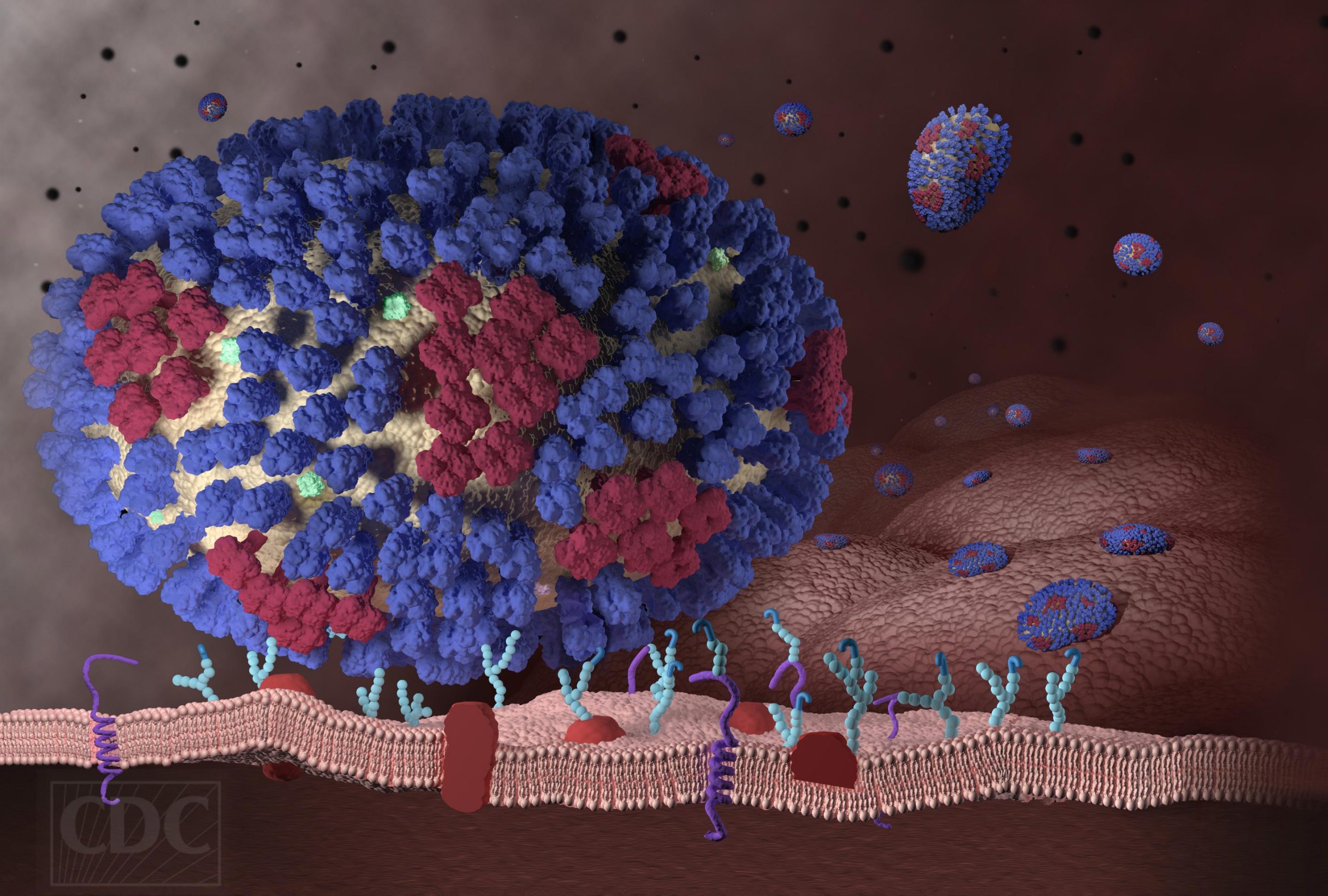
    Influenza Virus
    An influenza virus binds to receptors on a respiratory tract cell, allowing the virus to enter and infect the cell. Credit: U.S. Centers for Disease Control and Prevention

    Gold-based tool could help virologists stop replication of viruses.

    A Rutgers-led team has developed a tool to monitor influenza A virus mutations in real time, which could help virologists learn how to stop viruses from replicating.

    The gold nanoparticle-based probe measures viral RNA in live influenza A cells, according to a study in The Journal of Physical Chemistry C. It is the first time in virology that experts have used imaging tools with gold nanoparticles to monitor mutations in influenza, with unparalleled sensitivity.

    “Our probe will provide important insight on the cellular features that lead a cell to produce abnormally high numbers of viral offspring and on possible conditions that favor stopping viral replication,” said senior author Laura Fabris, an associate professor in the Department of Materials Science and Engineering in the School of Engineering at Rutgers University-New Brunswick.

    Viral infections are a leading cause of illness and deaths. The new coronavirus, for example, has led to more than 85,000 confirmed cases globally, including more than 2,900 deaths as of February 29, 2020, according to a World Health Organization report.

    Influenza A, a highly contagious virus that arises every year, is concerning due to the unpredictable effectiveness of its vaccine. Influenza A mutates rapidly, growing resistant to drugs and vaccines as it replicates.

    The new study highlights a promising new tool for virologists to study the behavior of influenza A, as well as any other RNA viruses, in host cells and to identify the external conditions or cell properties affecting them. Until now, studying mutations in cells has required destroying them to extract their contents. The new tool enables analysis without killing cells, allowing researchers to get snapshots of viral replication as it occurs. Next steps include studying multiple segments of viral RNA and monitoring the influenza A virus in animals.

    Reference: “SERS Nanoprobe for Intracellular Monitoring of Viral Mutations” by Kholud Dardir, Hao Wang, Brigitte E. Martin, Maria Atzampou, Christopher B. Brooke and Laura Fabris, 16 January 2020, The Journal of Physical Chemistry C.
    DOI: 10.1021/acs.jpcc.9b09253

    The lead author is Kholud Dardir, who earned a doctorate at Rutgers. Rutgers co-authors include senior postdoctoral associate Hao Wang and Maria Atzampou, a doctoral student. Researchers at the University of Illinois at Urbana Champaign contributed to the study.

    Never miss a breakthrough: Join the SciTechDaily newsletter.
    Follow us on Google and Google News.

    Influenza Nanoparticles Popular Public Health Rutgers University Virology
    Share. Facebook Twitter Pinterest LinkedIn Email Reddit

    Related Articles

    This Plant-Based Gum Neutralizes 95% of Flu and Herpes Viruses – And Could Curb the Next Pandemic

    The Bird Flu Virus Is Mutating Fast – And Scientists Say Our Vaccines May Not Be Enough

    Did COVID Lockdowns Drive a Flu Strain to Extinction?

    Unlocking Lifetime Flu Protection: Duke’s Innovative Vaccine Strategy

    WHO Warning: Ongoing Bird Flu Outbreaks in Animals Pose Risk to Humans

    Long-Lasting Disinfectant Protects Against Viruses for Up to 7 Days – Promises To Help Fight Pandemics

    New COVID-19 Vaccine: Nanoparticle Immunization Technology Could Protect Against Many Strains of Coronaviruses

    Ultrapotent COVID-19 Vaccine Designed via Computer: Innovative Nanoparticle Vaccine Spurs Extremely High Levels of Protective Antibodies

    Decoy Nanoparticles Protect Against COVID-19 by Adsorbing Both Viruses and Inflammatory Cytokines

    Leave A Reply Cancel Reply

    • Facebook
    • Twitter
    • Pinterest
    • YouTube

    Don't Miss a Discovery

    Subscribe for the Latest in Science & Tech!

    Trending News

    On the Brink of Extinction, These Giant Sea Turtles Are Doing Something Unexpected

    Coffee May Be Changing Your Gut in Ways Scientists Are Only Beginning To Understand

    Scientists Uncover Why a Common Nutrient Can Be Dangerous for Blood Vessels

    Mysterious Radio Signals From 5,000 Light-Years Away Lead Scientists to a Surprising Discovery

    New FDA-Approved Pill Lowers High Blood Pressure and May Slow Kidney Disease

    Scientists Just Challenged a Decades-Old Belief About How Cells Work

    Scientists Uncover a Natural Molecule That Makes Muscles Stronger and More Resistant to Fatigue

    Scientists Find That Mice, Not Deer, Hold a Major Clue to Lyme Disease Risk

    Follow SciTechDaily
    • Facebook
    • Twitter
    • YouTube
    • Pinterest
    • Newsletter
    • RSS
    SciTech News
    • Biology News
    • Chemistry News
    • Earth News
    • Health News
    • Physics News
    • Science News
    • Space News
    • Technology News
    Recent Posts
    • Scientists Shine New Light on One of the Greatest Mysteries in Modern Physics
    • NASA’s Voyager 1 Just Made History One Light-Day From Earth
    • Earth’s Soil Is Worth $325 Trillion – so Why Is Nobody Protecting It?
    • A Tiny Twist Reveals a Hidden Atomic Grid That Changes How Electricity Behaves
    • A Single Fluorescent Dye Can Now Reveal 14 Different Structures Inside Living Cells
    Copyright © 1998 - 2026 SciTechDaily. All Rights Reserved.
    • Science News
    • About
    • Contact
    • Editorial Board
    • Privacy Policy
    • Terms of Use

    Type above and press Enter to search. Press Esc to cancel.