
Close Menu
    Facebook X (Twitter) Instagram
    SciTechDaily
    • Biology
    • Chemistry
    • Earth
    • Health
    • Physics
    • Science
    • Space
    • Technology
    Facebook X (Twitter) Pinterest YouTube RSS
    SciTechDaily
    Home»Health»New U.S. Research Confirms COVID-19 Complications: Lung, Kidney and Cardiovascular Issues
    Health

    New U.S. Research Confirms COVID-19 Complications: Lung, Kidney and Cardiovascular Issues

    By Canadian Medical Association JournalDecember 7, 2020No Comments2 Mins Read
    Facebook Twitter Pinterest Telegram LinkedIn WhatsApp Email Reddit
    Share
    Facebook Twitter LinkedIn Pinterest Telegram Email Reddit
    Health Issues
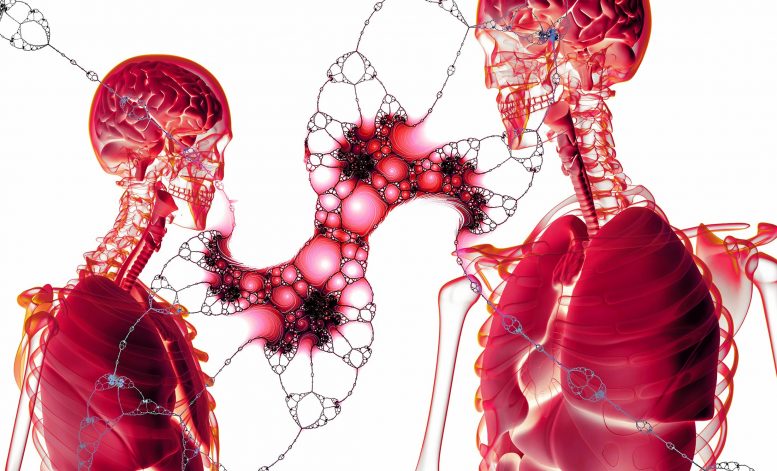
    A comprehensive examination of COVID-19 patients in the United States affirms numerous complications associated with the disease.

    A large study of patients in the United States who contracted coronavirus disease 2019 (COVID-19) confirms many complications of the disease, according to new research in CMAJ (Canadian Medical Association Journal).

    “Understanding the full range of associated conditions can aid in prognosis, guide treatment decisions, and better inform patients as to their actual risks for the variety of COVID-19 complications reported in the literature and media,” writes Dr. William Murk, Jacobs School of Medicine & Biological Sciences, University at Buffalo, Buffalo, New York, with coauthors from Aetion, Inc., HealthVerity, Inc. and the University of Toronto.

    Using de-identified outpatient and inpatient medical claims from a United States health database, researchers identified 70,288 patients who had a COVID-19-related health visit between March 1 and April 30, 2020. More than half of all patients were admitted to the hospital, and approximately 5% were admitted to the intensive care unit. The median age was 65 years, and 55.8% were female. The authors looked at all possible diagnostic codes and identified those that increased in frequency after the onset of COVID-19.

    The most common complications associated with COVID-19 were pneumonia, respiratory failure, kidney failure, and sepsis or systemic inflammation, consistent with other studies. The absolute risk of someone with COVID-19 having these serious conditions was 27.6% for pneumonia, 22.6% for respiratory failure, 11.8% for kidney failure, and 10.4% for sepsis or systemic inflammation.

    The researchers also found associations with a range of other lung and cardiovascular conditions, such as collapsed lung, blood clotting disorders, and heart inflammation, although the risk of these was relatively low. Contrary to the results of other studies, COVID-19 did not appear to be associated with a higher risk of stroke.

    “This study provides estimates of absolute risk and relative odds for all identified diagnoses related to COVID-19, which are needed to help providers, patients, and policy-makers understand the likelihood of complications,” write the authors.

    Reference: “Diagnosis-wide analysis of COVID-19 complications: an exposure-crossover study” by William Murk, Monica Gierada, Michael Fralick, Andrew Weckstein, Reyna Klesh and Jeremy A. Rassen, 7 December 2020, CMAJ (Canadian Medical Association Journal).
    DOI: 10.1503/cmaj.201686

    Never miss a breakthrough: Join the SciTechDaily newsletter.
    Follow us on Google and Google News.

    Canadian Medical Association Journal COVID-19 Infectious Diseases Public Health
    Share. Facebook Twitter Pinterest LinkedIn Email Reddit

    Related Articles

    COVID-19 VOCs – Especially Delta Variant – More Virulent Than Original Strain

    Children Less Infectious Than Adults With COVID-19 – Daycare & In-Person School May Be Relatively Safe

    Researchers Eliminate SARS-CoV-2 and Bacteria From N95 Masks With Low-Cost Moist Heat Treatment

    Hunt for an Effective Treatment for COVID-19 Leads to Llamas & Their Special Antibodies

    New Model to Track COVID-19’s Spread – Very Accurately Forecasts the Timing, Intensity and Geographic Distribution of Outbreak

    New Clues on How to Treat COVID-19 From T Cell Counts and Cytokine Storms

    Key Insights on How Coronavirus Spreads From Chinese Megacity of Shenzhen

    Study Unveils COVID-19 Transmission Patterns and Safety-Conscious Reopening Plans

    Serious Potential Adverse Effects of Chloroquine and Hydroxychloroquine for Treating COVID-19

    Leave A Reply Cancel Reply

    • Facebook
    • Twitter
    • Pinterest
    • YouTube

    Don't Miss a Discovery

    Subscribe for the Latest in Science & Tech!

    Trending News

    Millions Take These IBS Drugs, But a New Study Finds Serious Risks

    Scientists Unlock Hidden Secrets of 2,300-Year-Old Mummies Using Cutting-Edge CT Scanner

    Bread Might Be Making You Gain Weight Even Without Eating More Calories

    Scientists Discover Massive Magma Reservoir Beneath Tuscany

    Europe’s Most Active Volcano Just Got Stranger – Here’s Why Scientists Are Rethinking It

    Alzheimer’s Symptoms May Start Outside the Brain, Study Finds

    Millions Take This Popular Supplement – Scientists Discover a Concerning Link to Heart Failure

    The Universe Is Expanding Too Fast and Scientists Can’t Explain Why

    Follow SciTechDaily
    • Facebook
    • Twitter
    • YouTube
    • Pinterest
    • Newsletter
    • RSS
    SciTech News
    • Biology News
    • Chemistry News
    • Earth News
    • Health News
    • Physics News
    • Science News
    • Space News
    • Technology News
    Recent Posts
    • Scientists Say a Hidden Structure May Exist Inside Earth’s Core
    • Doctors Surprised by the Power of a Simple Drug Against Colon Cancer
    • Why Popular Diabetes Drugs Like Ozempic Don’t Work for Everyone: The “Genetic Glitch”
    • Scientists Create Improved Insulin Cells That Reverse Diabetes in Mice
    • Scientists Stunned After Finding Plant Thought Extinct for 60 Years
    Copyright © 1998 - 2026 SciTechDaily. All Rights Reserved.
    • Science News
    • About
    • Contact
    • Editorial Board
    • Privacy Policy
    • Terms of Use

    Type above and press Enter to search. Press Esc to cancel.