
Close Menu
    Facebook X (Twitter) Instagram
    SciTechDaily
    • Biology
    • Chemistry
    • Earth
    • Health
    • Physics
    • Science
    • Space
    • Technology
    Facebook X (Twitter) Pinterest YouTube RSS
    SciTechDaily
    Home»Space»New WISE Atlas of Entire Infrared Sky Contains Over 18,000 Images
    Space

    New WISE Atlas of Entire Infrared Sky Contains Over 18,000 Images

    By Whitney Clavin, Jet Propulsion LaboratoryMarch 15, 2012No Comments4 Mins Read
    Facebook Twitter Pinterest Telegram LinkedIn WhatsApp Email Reddit
    Share
    Facebook Twitter LinkedIn Pinterest Telegram Email Reddit
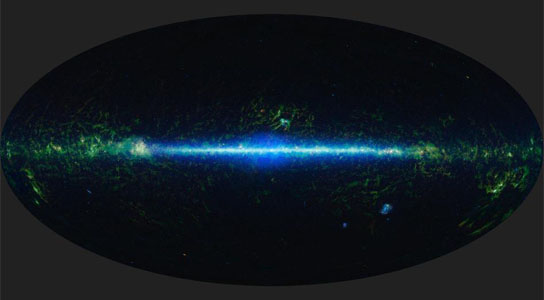
    mosaic of the images covering the entire sky as observed by the Wide-field Infrared Survey Explorer
    This is a mosaic of the images covering the entire sky as observed by the Wide-field Infrared Survey Explorer (WISE), part of its All-Sky Data Release. Credit: NASA/JPL-Caltech/UCLA

    After more than 2.7 million images taken at four infrared wavelengths of light and more than 15 trillion bytes of returned data from the WISE mission, NASA unveiled a new atlas of the entire infrared sky with over 18,000 images and a catalog listing the infrared properties of more than 560 million individual objects found in the images.

    NASA unveiled a new atlas and catalog of the entire infrared sky today showing more than a half billion stars, galaxies and other objects captured by the Wide-field Infrared Survey Explorer (WISE) mission.

    “Today, WISE delivers the fruit of 14 years of effort to the astronomical community,” said Edward Wright, WISE principal investigator at the University of California, Los Angeles (UCLA), who first began working on the mission with other team members in 1998.

    WISE launched December 14, 2009, and mapped the entire sky in 2010 with vastly better sensitivity than its predecessors. It collected more than 2.7 million images taken at four infrared wavelengths of light, capturing everything from nearby asteroids to distant galaxies. Since then, the team has been processing more than 15 trillion bytes of returned data. A preliminary release of WISE data, covering the first half of the sky surveyed, was made last April.
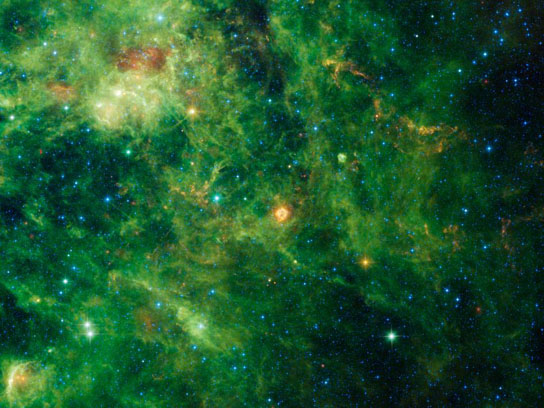
    supergiant star supernova
    Over 11,000 years ago, a massive, supergiant star came to the end of its life. The star’s core collapsed to form an incredibly dense ball of neutrons, and its exterior was blasted away in an immense release of energy astronomers call a supernova. Credit: NASA/JPL-Caltech/UCLA

    The WISE catalog of the entire sky meets the mission’s fundamental objective. The individual WISE exposures have been combined into an atlas of more than 18,000 images covering the sky and a catalog listing the infrared properties of more than 560 million individual objects found in the images. Most of the objects are stars and galaxies, with roughly equal numbers of each. Many of them have never been seen before.

    WISE observations have led to numerous discoveries, including the elusive, coolest class of stars. Astronomers hunted for these failed stars, called “Y-dwarfs,” for more than a decade. Because they have been cooling since their formation, they don’t shine in visible light and could not be spotted until WISE mapped the sky with its infrared vision.

    WISE also took a poll of near-Earth asteroids, finding there are significantly fewer mid-size objects than previously thought. It also determined NASA has found more than 90 percent of the largest near-Earth asteroids.

    Other discoveries were unexpected. WISE found the first known “Trojan” asteroid to share the same orbital path around the sun as Earth. One of the images released today shows a surprising view of an “echo” of infrared light surrounding an exploded star. The echo was etched in the clouds of gas and dust when the flash of light from the supernova explosion heated surrounding clouds. At least 100 papers on the results from the WISE survey already have been published. More discoveries are expected now that astronomers have access to the whole sky as seen by the spacecraft.

    “With the release of the all-sky catalog and atlas, WISE joins the pantheon of great sky surveys that have led to many remarkable discoveries about the universe,” said Roc Cutri, who leads the WISE data processing and archiving effort at the Infrared and Processing Analysis Center at the California Institute of Technology in Pasadena. “It will be exciting and rewarding to see the innovative ways the science and educational communities will use WISE in their studies now that they have the data at their fingertips.”

    Never miss a breakthrough: Join the SciTechDaily newsletter.
    Follow us on Google and Google News.

    Asteroid Catalog JPL Popular Stars WISE
    Share. Facebook Twitter Pinterest LinkedIn Email Reddit

    Related Articles

    WISE Spacecraft Will Be Reactivated to Hunt for Asteroids

    NASA’s WISE Mission Identifies 28 New Asteroid Families

    NASA’s WISE Uncovers New Clues on Jovian Trojans

    NASA’s WISE Discovers Millions of Black Holes

    Mysterious Disappearance of Dust Ring Leaves Astronomers Searching for Solutions

    NEOWISE Data Reveals Potentially Hazardous Asteroids

    Black Hole Rips Apart a Helium Rich Star

    WISE Views Aging Star Erupting With Dust

    Dawn Images Shine New Light on Vesta

    Leave A Reply Cancel Reply

    • Facebook
    • Twitter
    • Pinterest
    • YouTube

    Don't Miss a Discovery

    Subscribe for the Latest in Science & Tech!

    Trending News

    AI Could Detect Early Signs of Alzheimer’s in Under a Minute – Far Before Traditional Tests

    What if Dark Matter Has Two Forms? Bold New Hypothesis Could Explain a Cosmic Mystery

    This Metal Melts in Your Hand – and Scientists Just Discovered Something Strange

    Beef vs. Chicken: Surprising Results From New Prediabetes Study

    Alzheimer’s Breakthrough: Scientists Discover Key Protein May Prevent Toxic Protein Clumps in the Brain

    Quantum Reality Gets Stranger: Physicists Put a Lump of Metal in Two Places at Once

    Scientists May Have Found the Key to Jupiter and Saturn’s Moon Mystery

    Scientists Uncover Brain Changes That Link Pain to Depression

    Follow SciTechDaily
    • Facebook
    • Twitter
    • YouTube
    • Pinterest
    • Newsletter
    • RSS
    SciTech News
    • Biology News
    • Chemistry News
    • Earth News
    • Health News
    • Physics News
    • Science News
    • Space News
    • Technology News
    Recent Posts
    • What if Your Memories Never Happened? Physicists Take a New Look at the Boltzmann Brain Paradox
    • Students Found an Ancient Star That Shouldn’t Be in the Milky Way
    • Astronomers Solve 50-Year Mystery and Reveal Hidden Culprit Behind Strange X-Ray Emissions
    • One of the Universe’s Largest Stars May Be Getting Ready To Explode
    • Scientists Discover Enzyme That Could Supercharge Ozempic-Like Weight Loss Drugs
    Copyright © 1998 - 2026 SciTechDaily. All Rights Reserved.
    • Science News
    • About
    • Contact
    • Editorial Board
    • Privacy Policy
    • Terms of Use

    Type above and press Enter to search. Press Esc to cancel.