

Newborns and individuals with Alzheimer’s disease have been found to share an unusual biological feature: both show high levels of a well-established Alzheimer’s biomarker.
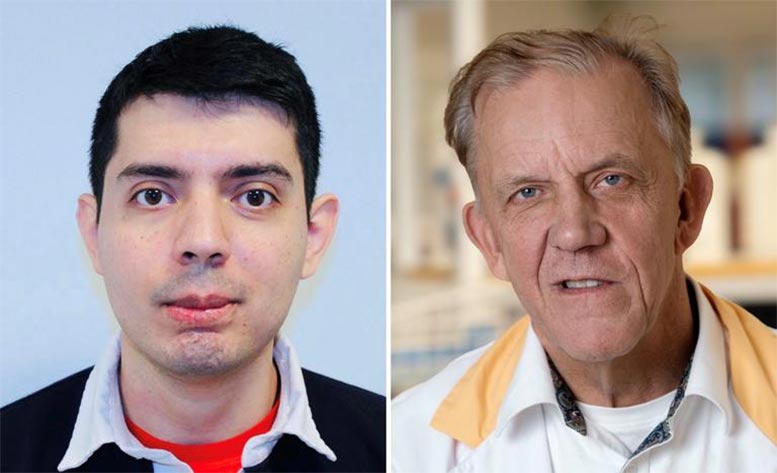
What do newborns and individuals with Alzheimer’s disease have in common? According to a recent study led by first author Fernando Gonzalez-Ortiz and senior author Professor Kaj Blennow at the University of Gothenburg, both groups show elevated levels of a specific protein in their blood: phosphorylated tau, specifically the variant known as p-tau217.
This protein is widely recognized as a biomarker for Alzheimer’s disease, where its increased presence in the blood is believed to result from the accumulation of beta-amyloid protein into amyloid plaques. However, since newborns do not exhibit these pathological changes, the elevated p-tau217 levels seen in infants likely stem from a completely different and entirely healthy developmental process.
In a large-scale international study involving researchers from Sweden, Spain, and Australia, blood samples from over 400 individuals were analyzed. These included healthy newborns, premature infants, young adults, older adults, and people diagnosed with Alzheimer’s disease. The results showed that newborns had the highest concentrations of p-tau217—levels that even surpassed those in Alzheimer’s patients. The highest levels were observed in premature infants, and these gradually declined during the first months of life, eventually reaching levels typical of adults.
First time in the blood of newborns
Earlier studies using animal models had suggested that phosphorylated tau might play a role in early brain development. This new research marks the first time that scientists have directly measured p-tau217 levels in the blood of human newborns, offering a clearer picture of its function during this critical period.
What makes these findings especially intriguing is the contrast in how p-tau217 behaves in different contexts. In Alzheimer’s disease, the protein is linked to the formation of toxic tau tangles, which are thought to damage brain cells and lead to cognitive decline. In newborns, however, the elevated levels of p-tau217 appear to serve a healthy purpose, supporting the growth of neurons and the formation of connections between them—key processes in shaping the developing brain.
The study also found that p-tau217 levels were strongly associated with gestational age. Premature infants had significantly higher levels of the protein, indicating it may play an important role in promoting rapid brain development in babies born before full term.
Potential roadmap for new treatments
What’s perhaps most compelling about these findings, published in the journal Brain Communications, is the hint that our brains may once have had built-in protection against the damaging effects of tau, so that newborns can tolerate, and even benefit from, high levels of phosphorylated tau without triggering the kinds of damage seen in Alzheimer’s.
“We believe that understanding how this natural protection works – and why we lose it as we age – could offer a roadmap for new treatments. If we can learn how the newborn brain keeps tau in check, we might one day mimic those processes to slow or stop Alzheimer’s in its tracks”, says Fernando Gonzalez-Ortiz.
So while an increase of p-tau217 is a danger signal in older brains, in newborns it might be a vital part of building one. The same molecule, two dramatically different roles – one building the brain, the other marking its decline.
Plasma p-tau217 has recently received FDA approval for use in diagnosing Alzheimer’s disease, making it an increasingly important tool in clinical settings. The authors emphasize the need to also understand the mechanism for the increase in p-tau217, especially for interpreting it as an outcome in clinical and epidemiological research and in drug development. This study indicates that amyloid plaques may not be the main driver of increases in p-tau217.
Reference: “The potential dual role of tau phosphorylation: plasma phosphorylated-tau217 in newborns and Alzheimer’s disease” by Fernando Gonzalez-Ortiz, Jakub Vávra, Emma Payne, Bjørn-Eivind Kirsebom, Ulrika Sjöbom, Cristiano Santos, Jordi Júlvez, Kaitlin Kramer, David Zalcberg, Laia Montoliu-Gaya, Michael Turton, Peter Harrison, Ann Hellström, Henrik Zetterberg, Tormod Fladby, Marc Suárez-Calvet, Robert D Sanders and Kaj Blennow, 7 June 2025, Brain Communications.
DOI: 10.1093/braincomms/fcaf221
Never miss a breakthrough: Join the SciTechDaily newsletter.
Follow us on Google and Google News.