
Close Menu
    Facebook X (Twitter) Instagram
    SciTechDaily
    • Biology
    • Chemistry
    • Earth
    • Health
    • Physics
    • Science
    • Space
    • Technology
    Facebook X (Twitter) Pinterest YouTube RSS
    SciTechDaily
    Home»Health»Newly Discovered Immune Cell Function Vital to Healing May Lead to Treatments for Cancer and Cardiovascular Diseases
    Health

    Newly Discovered Immune Cell Function Vital to Healing May Lead to Treatments for Cancer and Cardiovascular Diseases

    By Uppsala UniversityMay 1, 2021No Comments3 Mins Read
    Facebook Twitter Pinterest Telegram LinkedIn WhatsApp Email Reddit
    Share
    Facebook Twitter LinkedIn Pinterest Telegram Email Reddit
    Macrophages Blood Vessels Damaged Tissue
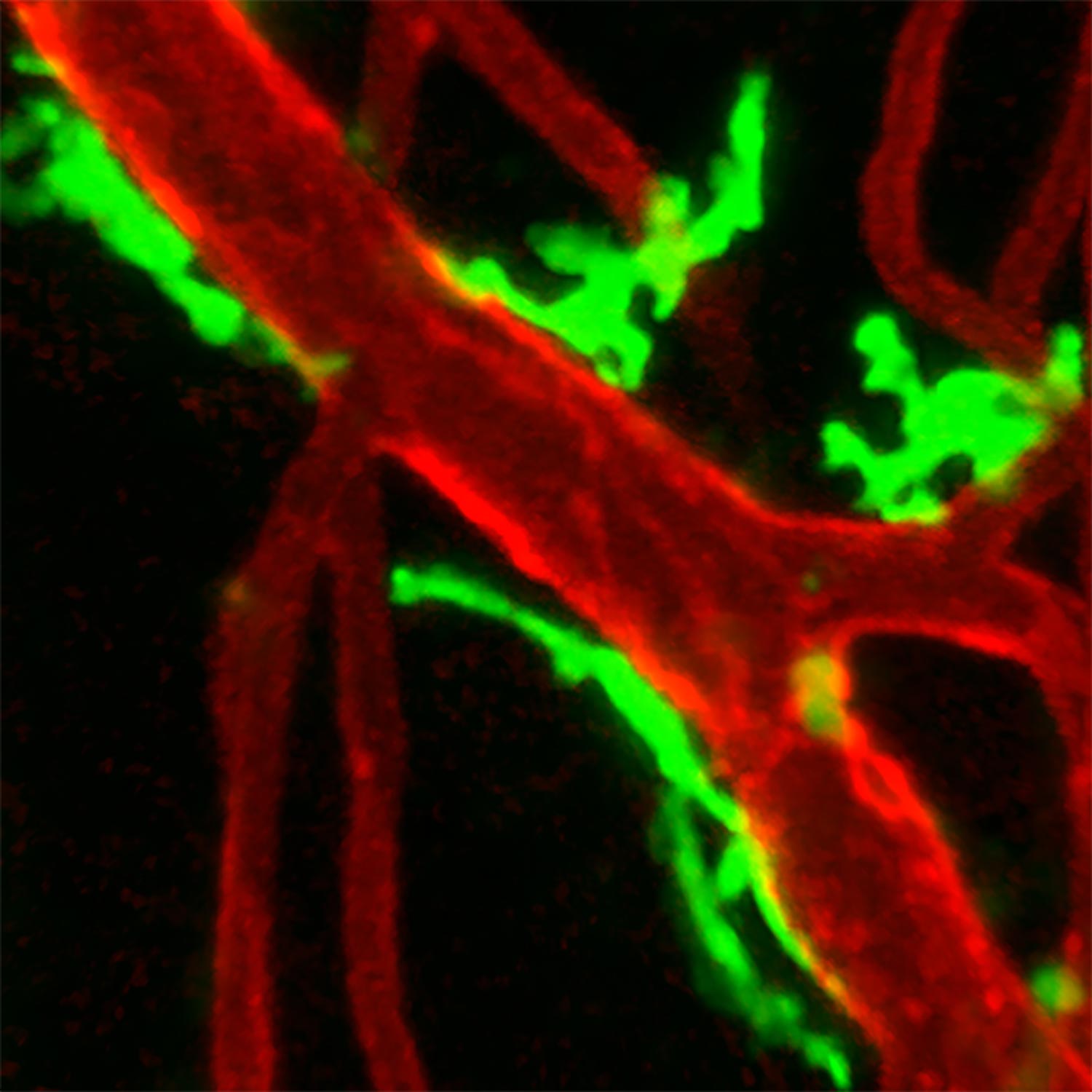
    Macrophages (green) accumulate around blood vessels in damaged tissue to regulate blood flow. Credit: David Ahl

    Macrophages help restore blood flow in damaged tissues, offering potential for new cardiovascular treatments.

    Cardiovascular disease, the most common cause of death, is the result of oxygen deprivation as blood perfusion to affected tissue is prevented. To halt the development of the disease and to promote healing, re-establishment of blood flow is crucial. Researchers at Uppsala University have now discovered that one of the most common immune cells in the human body, macrophages, play an important role in re-establishing and controlling blood flow, something that can be used to develop new drugs.

    The classic function of immune cells is to defend the body against attacks from microorganisms and tumor cells. Macrophages are immune cells specialized in killing and consuming microorganisms but they have also been shown to be involved in wound healing and building blood vessels.

    A new study published by researchers at Uppsala University demonstrates that macrophages accumulate around blood vessels in damaged tissue in mice, but also in humans after a myocardial infarction or peripheral ischemia. In mice, these macrophages could be seen to regulate blood flow, performing a necessary damage-control function. In healthy tissue, this task is carried out by blood vessel cells.

    This discovery led the research group to investigate whether their findings could be developed into a new treatment to increase blood flow to damaged leg muscles, thus stimulating healing and improving function. By increasing the local concentration of certain signal substances that bind to macrophages in the damaged muscle, the research group was able to demonstrate that more macrophages accumulated around the blood vessels, improving their ability to regulate blood flow. This in turn resulted in improved healing and that the mice were able to use the injured leg to a far greater extent.

    “This is an entirely new function for the cells in our immune system and might mean that in the future we can use immunotherapies to treat not only cancer but also cardiovascular diseases,” says Mia Phillipson, leader of the research group behind the discovery.

    Reference: “Perivascular Macrophages Regulate Blood Flow Following Tissue Damage” by Evelina Vågesjö, Kristel Parv, David Ahl, Cédric Seignez, Carmen Herrera Hidalgo, Antoine Giraud, Catarina Amoêdo-Leite, Olle Korsgren, Håkan Wallén, Greta Juusola, Harri H Hakovirta, Helene Rundqvist, Magnus Essand, Lena Holm, Randall Johnson, Charlotte Thålin, Petra Korpisalo, Gustaf Christoffersson and Mia Phillipson, 21 April 2021, Circulation Research.
    DOI: 10.1161/CIRCRESAHA.120.318380

    Never miss a breakthrough: Join the SciTechDaily newsletter.
    Follow us on Google and Google News.

    Cardiology Cell Biology Immunology Uppsala University
    Share. Facebook Twitter Pinterest LinkedIn Email Reddit

    Related Articles

    Every COVID-19 Case Seems Different – These Scientists Are Solving this Puzzle

    Sticky Webs of DNA Released From Immune Cells May Drive Lung Pathology in Severe COVID-19

    IBD Linked to an Immune Cell Run Amok – Helps Explain Why Autoimmune Diseases Are Often Chronic

    Research Shows Exposure to Common Cold Coronaviruses Can Teach the Immune System to Recognize SARS-CoV-2

    Neural Vulnerability in Huntington’s Disease Tied to Immune Response to Genetic Material

    Common Molecular Feature of Antibodies That Neutralize SARS-CoV-2 Discovered, Boosting COVID-19 Vaccine Prospects

    Scientists Uncover Immune Cells That May Help Those Suffering From Allergies and Asthma

    COVID-19 Treatment May Lie in Pangolin Genetics – May Possess Evolutionary Advantage Against Coronavirus

    Cancer Cells Can Become Invisible to the Immune System – Here’s How

    Leave A Reply Cancel Reply

    • Facebook
    • Twitter
    • Pinterest
    • YouTube

    Don't Miss a Discovery

    Subscribe for the Latest in Science & Tech!

    Trending News

    Breakthrough Bowel Cancer Trial Leaves Patients Cancer-Free for Nearly 3 Years

    Natural Compound Shows Powerful Potential Against Rheumatoid Arthritis

    100,000-Year-Old Neanderthal Fossils in Poland Reveal Unexpected Genetic Connections

    Simple “Gut Reset” May Prevent Weight Gain After Ozempic or Wegovy

    2.8 Days to Disaster: Scientists Warn Low Earth Orbit Could Suddenly Collapse

    Common Food Compound Shows Surprising Power Against Superbugs

    5 Simple Ways To Remember More and Forget Less

    The Atomic Gap That Could Cost the Semiconductor Industry Billions

    Follow SciTechDaily
    • Facebook
    • Twitter
    • YouTube
    • Pinterest
    • Newsletter
    • RSS
    SciTech News
    • Biology News
    • Chemistry News
    • Earth News
    • Health News
    • Physics News
    • Science News
    • Space News
    • Technology News
    Recent Posts
    • Scientists Print Artificial Neurons That Can Talk to the Brain
    • Bowel and Ovarian Cancers Are Dramatically Rising in Young Adults and Scientists Aren’t Sure Why
    • Alzheimer’s May Begin Decades Earlier Than You Think, New Mayo Clinic Study Finds
    • The Hidden Risk of Taking Breaks From Weight-Loss Drugs Like Ozempic
    • Total Solar Eclipse Made Cities Go Eerily Quiet Beneath the Surface
    Copyright © 1998 - 2026 SciTechDaily. All Rights Reserved.
    • Science News
    • About
    • Contact
    • Editorial Board
    • Privacy Policy
    • Terms of Use

    Type above and press Enter to search. Press Esc to cancel.