
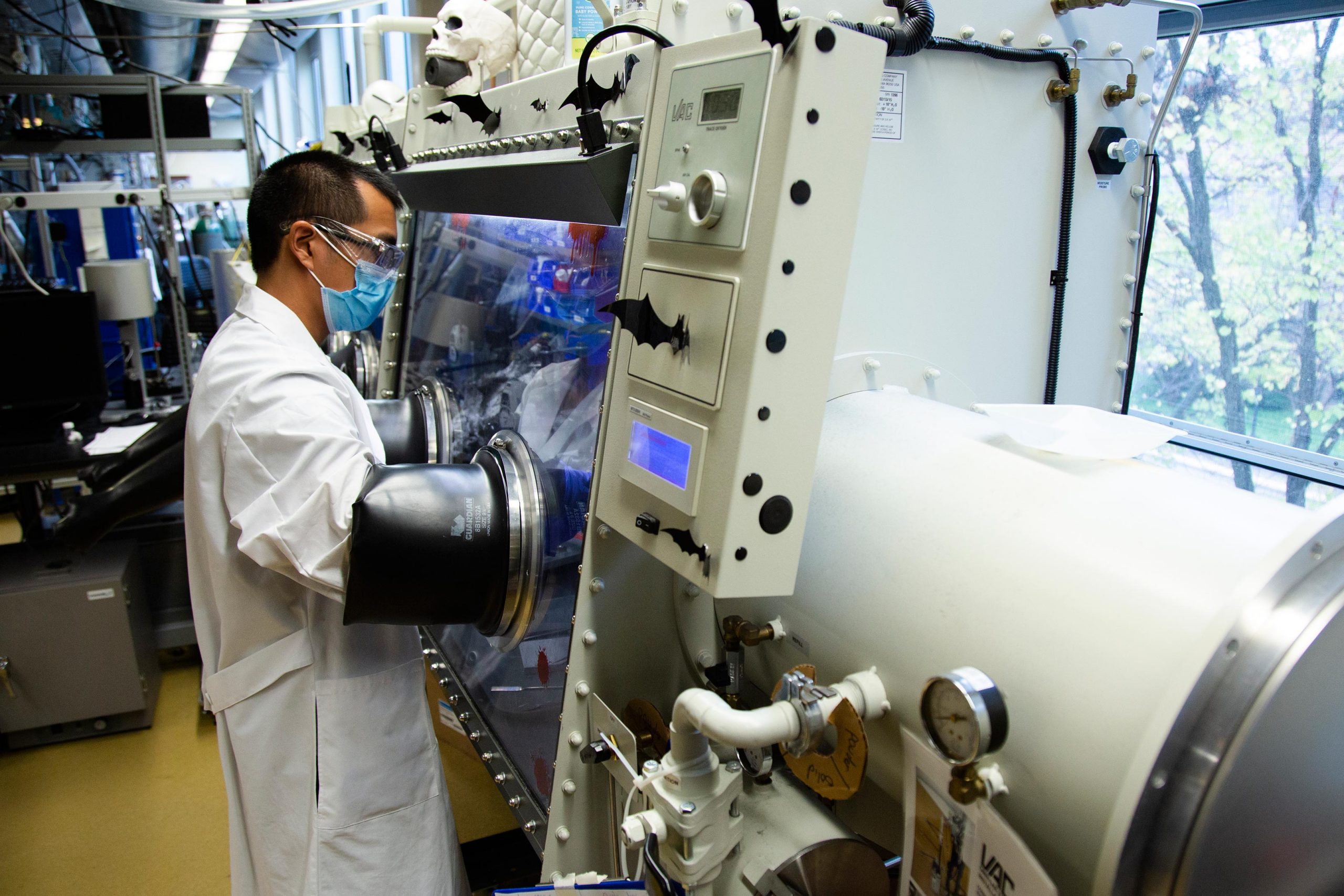
University of Michigan researchers lay out hurdles for tech that could double EV range.
The next generation of electric vehicle batteries, with greater range and improved safety, could be emerging in the form of lithium metal, solid-state technology.
But key questions about this promising power supply need to be answered before it can make the jump from the laboratory to manufacturing facilities, according to University of Michigan researchers. And with efforts to bring electric vehicles to a larger part of the population, they say, those questions need answering quickly.
Jeff Sakamoto and Neil Dasgupta, U-M associate professors of mechanical engineering, have been leading researchers on lithium metal, solid-state batteries over the past decade. In a perspective piece in the journal Joule, Sakamoto and Dasgupta lay out the main questions facing the technology. To develop the questions, they worked in close collaboration with leaders in the auto industry.
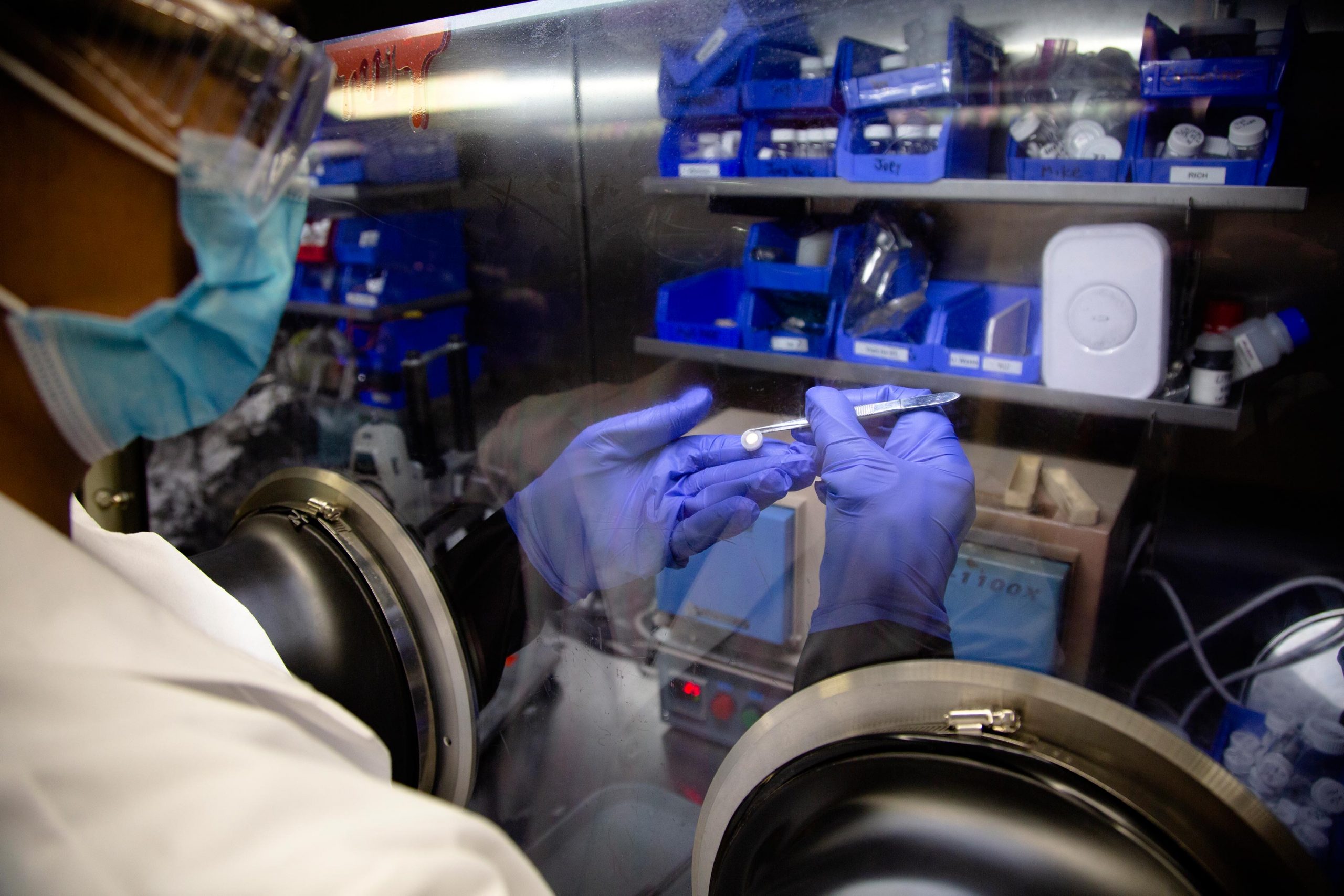
Major automakers are going all-in on electric vehicles this year, with many announcing plans to phase out internal-combustion engine cars in the coming years. Lithium-ion batteries enabled the earliest EVs and they remain the most common power supply for the latest models coming off assembly lines.
Those lithium-ion batteries are approaching their peak performance in terms of the EV range on a single charge. And they come with the need for a heavy and bulky battery management system–without which there is a risk of onboard fires. By utilizing lithium metal for the battery anode along with a ceramic for the electrolyte, researchers have demonstrated the potential for doubling the EV range for the same size battery while dramatically reducing the potential for fires.
“Tremendous progress in advancing lithium metal solid-state batteries was made over the last decade,” Sakamoto said. “However, several challenges remain on the path to commercializing the technology, especially for EVs.”

Key Technical and Environmental Hurdles Ahead
Questions that need to be answered to capitalize on that potential include:
How can we produce ceramics, which are brittle, in the massive, paper-thin sheets lithium metal batteries require?
Do lithium metal batteries’ use of ceramics, which require energy to heat them up to more than 2,000 degrees Fahrenheit (1,100 degrees Celsius) during manufacturing, offset their environmental benefits in electric vehicles?
Can both the ceramics and the process used to manufacture them be adapted to account for defects, such as cracking, in a way that does not force battery manufacturers and automakers to drastically revamp their operations?
A lithium metal solid-state battery would not require the heavy and bulky battery management system that lithium-ion batteries need to maintain durability and reduce the risk of fire. How will the reduction in mass and volume of the battery management system–or its removal altogether–affect performance and durability in a solid-state battery?
The lithium metal needs to be in constant contact with the ceramic electrolyte, meaning additional hardware is needed to apply pressure to maintain contact. What will the added hardware mean for battery pack performance?
Sakamoto, who has his own startup company focused on lithium metal solid-state batteries, says the technology is having a moment right now. But the enthusiasm driving the moment, he says, must not get ahead of itself.
Reference: “Transitioning solid-state batteries from lab to market: Linking electro-chemo-mechanics with practical considerations” by Michael J. Wang, Eric Kazyak, Neil P. Dasgupta and Jeff Sakamoto, 26 May 2021, Joule.
DOI: 10.1016/j.joule.2021.04.001
Rigorous testing and data analysis, along with transparency in research, are needed, according to the U-M team. That group includes Michael Wang, now a postdoctoral researcher at MIT, and Eric Kazyak, a research fellow in mechanical engineering at U-M.
Never miss a breakthrough: Join the SciTechDaily newsletter.
Follow us on Google and Google News.