
A New Study Helps Clarify the Evolutionary Origins of the “Platypus of Fungi”
Approximately 600 seemingly disparate fungi that never quite found a fit along the fungal family tree have been demonstrated to have a common ancestor. The research, which was led by the University of Alberta, used genome sequencing to give these peculiar creatures their own classification home.
“They don’t have any particular feature that you can see with the naked eye where you can say they belong to the same group. But when you go to the genome, suddenly this emerges,” says Toby Spribille, principal investigator on the project and associate professor in the Department of Biological Sciences.
“I like to think of these as the platypus and echidna of the fungal world.”
Spribille, Canada Research Chair in Symbiosis, is referring to Australia’s famed Linnaean classification system-defying monotremes — which produce milk and have nipples but lay eggs — that were the source of debate as to whether they were even real.
“Though nobody thought our fungi were fake, it’s similar because they all look totally different.”
Ancient Origins: 300 Million Years Ago
The scientists discovered that this new class of fungi, the Lichinomycetes, originated from a single source 300 million years ago, or 240 million years before the extinction of the dinosaurs, using DNA-based dating methods.
These “oddball” fungi were previously dispersed across seven different classes, according to David Díaz-Escandón, who conducted the study as part of his Ph.D. thesis. This high-level grouping, in animals, would be equivalent to the groups called mammals or reptiles.
He sequenced 30 genomes with a team of researchers from seven nations to get material from the fungi and discovered that all classes except one stemmed from a common origin.
“They were classified, but they were classified into such different parts of the fungal side of the tree of life that people never suspected they were related to each other,” says Díaz-Escandón.
Unifying Fungi Across Diverse Forms
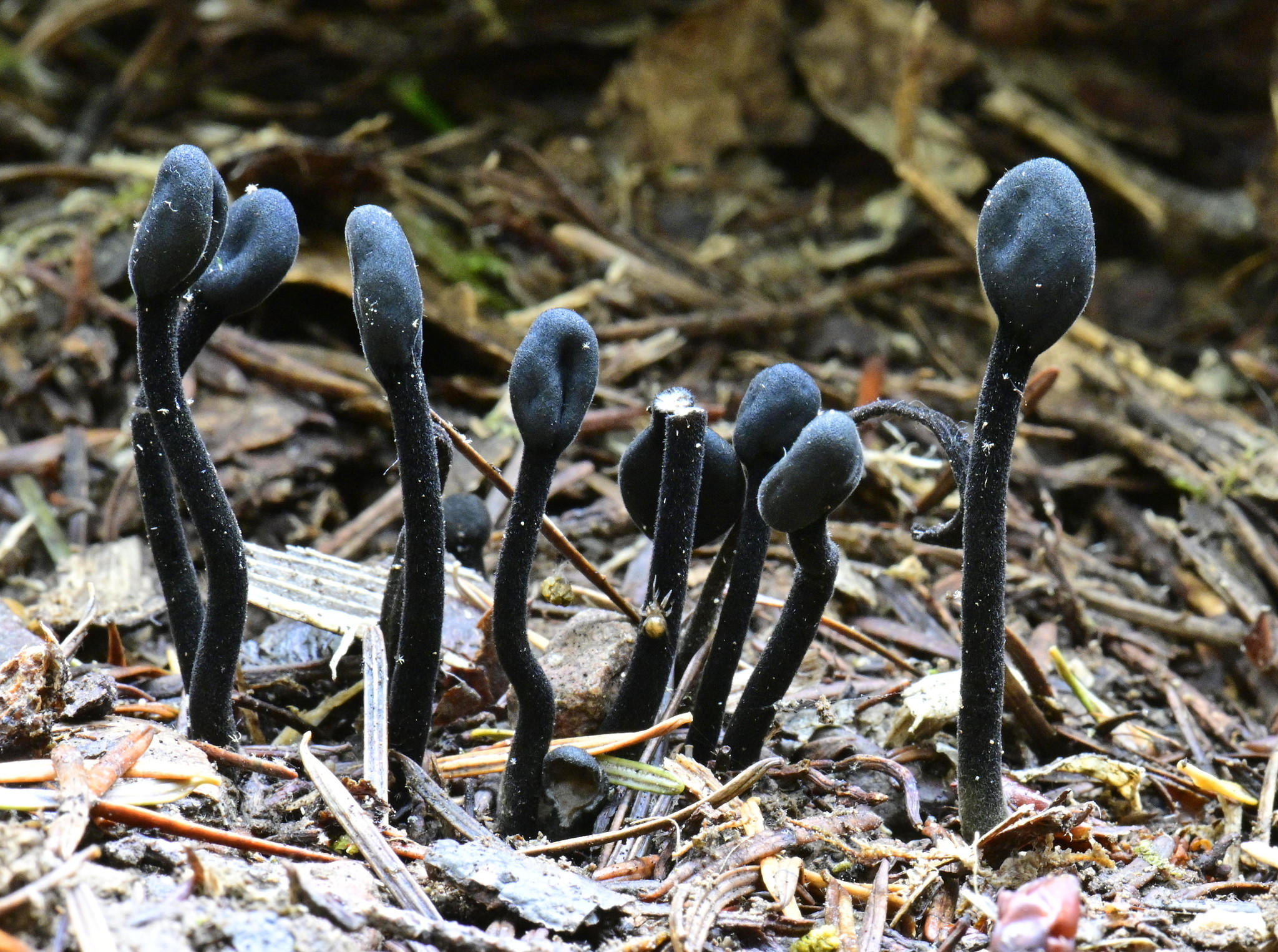
These fungi include forms as varied as earth tongues — eerie tongue-shaped fungi that shoot up vertically out of the ground — beetle gut microbes, and a fungus found in tree sap in northern Alberta. They also include some unusual lichens that survive in extreme habitats such as South America’s Atacama Desert, the driest non-polar desert in the world.
“What is really fascinating is that despite these fungi looking so different, they have a lot in common at the level of their genomes,” says Spribille. “Nobody saw this coming.”
Symbiosis and Small Genomes
Based on their genomes, which are small compared with those of other fungi, the team predicts that this group of fungi depends on other organisms for life.
“Their small genomes mean this class of fungi has lost much of their ability to integrate some complex carbohydrates,” said Spribille. “When we go back to look at each of these fungi, suddenly we see all of them are in a kind of symbiosis.”
He notes the new research will be important to the broader study of fungal evolution, specifically how fungi inherit important biotechnological features such as enzymes that break down plant matter.
The new group also could be a source of new information about past fungal extinctions.
“We think it’s likely that the diversity we see today is just the tip of the iceberg that survived. And we don’t have that many examples of this kind of thing in fungi.”
Reference: “Genome-level analyses resolve an ancient lineage of symbiotic ascomycetes” by David Díaz-Escandón, Gulnara Tagirdzhanova, Dan Vanderpool, Carmen C.G. Allen, André Aptroot, Oluna Češka, David L. Hawksworth, Alejandro Huereca, Kerry Knudsen, Jana Kocourková, Robert Lücking, Philipp Resl and Toby Spribille, 23 November 2022, Current Biology.
DOI: 10.1016/j.cub.2022.11.014
Never miss a breakthrough: Join the SciTechDaily newsletter.
Follow us on Google and Google News.
7 Comments
What is the nature of the symbiotic relationships to obtain carbs?
“which produce milk and have nipples but lay eggs”
Platypus and echidna secrete milk through pores, not nipples.
Nipples are pores! they’re just a very specific type.
The Fungus is among us!
But do they contain psilocybin??
Yes, all nipples are pores, but all pores are ni ot nipples!
Genomic similarities no more demonstrate biological evolution than mechanical similarities between cars demonstrate car evolution