
Human Bipedalism Likely Originated in Trees Rather Than on Open Ground
A new study involving researchers from University College London, the University of Kent, and Duke University suggests that human bipedalism – walking on two legs – may have originated in trees, rather than on the ground.
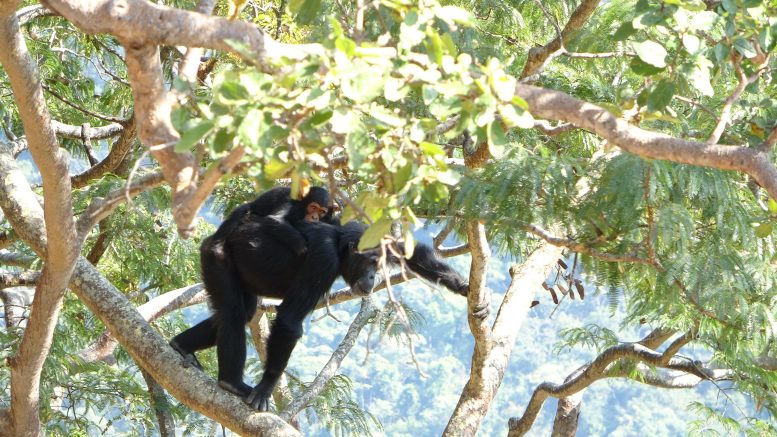
The study, published in the journal Science Advances, analyzed the behaviors of wild chimpanzees living in the Issa Valley of western Tanzania, an area similar to the habitat of early human ancestors and known as “savanna-mosaic” – a mix of dry open land with few trees and patches of dense forest. The researchers aimed to determine if the openness of this type of landscape could have led to bipedalism in early hominins.
The study is the first of its kind to explore if savanna-mosaic habitats would account for increased time spent on the ground by the Issa chimpanzees and compares their behavior to other studies on their solely forest-dwelling cousins in other parts of Africa.
Unexpected Findings in Issa Chimpanzees
Overall, the study found that the Issa chimpanzees spent as much time in the trees as other chimpanzees living in dense forests, despite their more open habitat, and were not more terrestrial (land-based) as expected.
Furthermore, although the researchers expected the Issa chimpanzees to walk upright more in open savanna vegetation, where they cannot easily travel via the tree canopy, more than 85% of occurrences of bipedalism took place in the trees.
The authors say that their findings contradict widely accepted theories that suggest that it was an open, dry savanna environment that encouraged our prehistoric human relatives to walk upright – and instead suggest that they may have evolved to walk on two feet to move around the trees.
Tree-Based Bipedalism Hypothesis
Study co-author Dr. Alex Piel (UCL Anthropology) said: “We naturally assumed that because Issa has fewer trees than typical tropical forests, where most chimpanzees live, we would see individuals more often on the ground than in the trees. Moreover, because so many of the traditional drivers of bipedalism (such as carrying objects or seeing over tall grass, for example) are associated with being on the ground, we thought we’d naturally see more bipedalism here as well. However, this is not what we found.
“Our study suggests that the retreat of forests in the late Miocene-Pliocene era around five million years ago and the more open savanna habitats were in fact not a catalyst for the evolution of bipedalism. Instead, trees probably remained essential to its evolution – with the search for food-producing trees a likely a driver of this trait.”
To establish their findings, the researchers recorded more than 13,700 instantaneous observations of positional behavior from 13 chimpanzee adults (six females and seven males), including almost 2,850 observations of individual locomotor events (e.g., climbing, walking, hanging, etc.), over the course of the 15-month study. They then used the relationship between tree/land-based behavior and vegetation (forest vs woodland) to investigate patterns of association. Similarly, they noted each instance of bipedalism and whether it was associated with being on the ground or in the trees.
The authors note that walking on two feet is a defining feature of humans when compared to other great apes, who “knuckle walk”. Yet, despite their study, researchers say why humans alone amongst the apes first began to walk on two feet still remains a mystery.
Study co-author Dr. Fiona Stewart (UCL Anthropology) said: “To date, the numerous hypotheses for the evolution of bipedalism share the idea that hominins (human ancestors) came down from the trees and walked upright on the ground, especially in more arid, open habitats that lacked tree cover. Our data do not support that at all.
“Unfortunately, the traditional idea of fewer trees equals more terrestriality (land-dwelling) just isn’t borne out with the Issa data. What we need to focus on now is how and why these chimpanzees spend so much time in the trees – and that is what we’ll focus on next on our way to piecing together this complex evolutionary puzzle.”
Reference: “Wild chimpanzee behavior suggests that a savanna-mosaic habitat did not support the emergence of hominin terrestrial bipedalism” by 14 December 2022, Science Advances.
DOI: 10.1126/sciadv.add9752
Never miss a breakthrough: Join the SciTechDaily newsletter.
Follow us on Google and Google News.
1 Comment
Orangutans also walk on trees.