
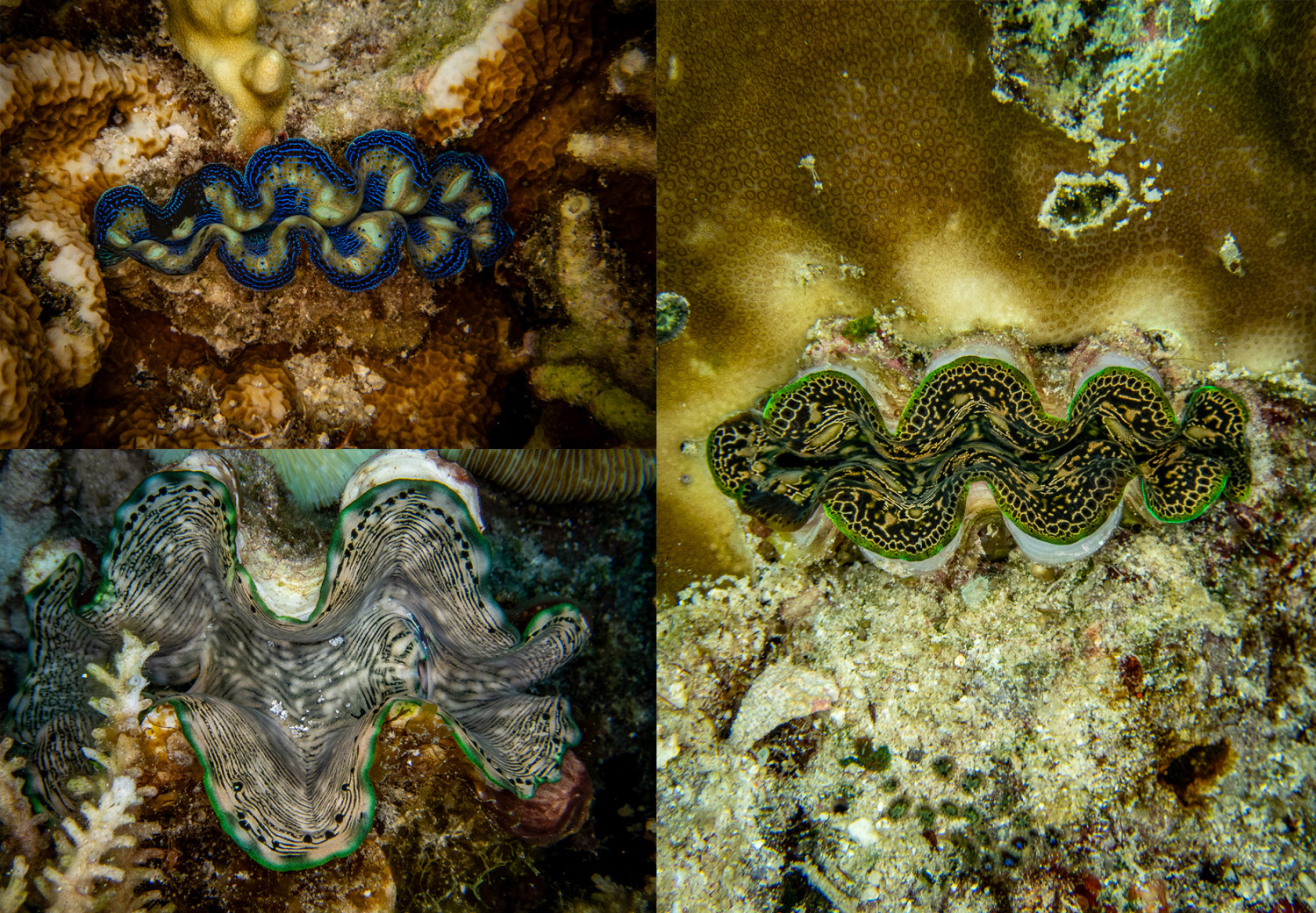
Giant clams are critically endangered, with populations down 80% due to overfishing and climate change. Conservationists are pushing for legal protections to prevent extinction, given the clams’ essential role in tropical ecosystems.
The giant clam, recognized for its vibrant, cape-like mantle, wavy shell, and remarkable size, faces the threat of extinction after its population has dropped by over 80% in the past century, according to a recent assessment by a biologist from the University of Colorado Boulder and colleagues.
The assessment, led by Ruiqi Li, a postdoctoral researcher at the CU Museum of Natural History, prompted the International Union for Conservation of Nature (IUCN) today to update the conservation status of this animal from “vulnerable” to “critically endangered,” the highest level before a species becomes extinct in the wild. It also adjusted the statuses of 11 other related species, all from the group of animals known as giant clams.

Overfishing and climate change are the major threats endangering these marine invertebrates, Li said.
“Along with coral reefs, these clams provide important habitats for other creatures living in the reefs,” Li said. “They are also important nutrient producers in shallow ocean water, which is generally deprived of food. If the giant clam becomes extinct, it will have significant ecological impacts on tropical oceans.”
The IUCN announcement comes as representatives from 175 countries meet in Colombia for the 2024 United Nations Biodiversity Conference (COP16). Countries are discussing ways to stop what is known as the “sixth mass extinction,” a rapid decline in biodiversity due to human activity. The fifth mass extinction, 66 million years ago, wiped out the dinosaurs. The World Wildlife Fund estimated this month that global marine wildlife has declined by 56% since 1970.
The Giant Clam: An Ecological Marvel
The giant clam, or Tridacna gigas, is the best-known species of giant clams. It is the world’s largest marine bivalve mollusk, a group of invertebrate animals with two-part shells. It can grow up to 4.5 feet in length and weigh more than 700 pounds. These clams live in the shallow water of the tropical Indo-Pacific Ocean, off the coasts of Malaysia, Australia, and Fiji.
Scientists are unsure how T. gigas grow so big. Similar to corals, these massive clams live in a mutually beneficial relationship with algae inside their bodies. While T. gigas provide shelter for the algae, the algae produce additional nutrients that help feed the clams.
The last time scientists assessed the T. gigas population was in 1996, when the IUCN listed the species as “vulnerable” on its Red List of Threatened Species, the global reference for assessing extinction risks for wildlife. The previous Red List version also failed to include many other giant clam species due to a lack of research.
“This is a major issue in the conservation world. People, even scientists, tend to pay more attention to mammals and birds, because they are big, cute, and familiar. So there’s a good chance you can find these animals on the Red List. But marine invertebrates are very neglected,” Li said.

Working with the Senckenberg Natural History Museum in Germany, Li and his collaborator, Neo Mei Lin from the National University of Singapore, collected data from previous research and biodiversity databases on all 12 giant clam species for a reassessment.
The team found that T. gigas has already become locally extinct in many regions where it used to exist, such as near Taiwan, and its overall population has declined by 84% over the past century.
In addition to updating the status of T. gigas, IUCN also upgraded other giant clam species, including Tridacna mbalavuana, or the tevoro clam, from “vulnerable” to “endangered,” as well as Hippopus hippopus, or horse’s hoof clam, from “least concern” to “vulnerable.”
Li said many giant clam species have beautiful mantles—the exposed flesh that lines the shell. Even among individuals of the same species, the mantles’ color patterns vary widely, from turquoise with yellow spots to emerald green with black specks. Some resemble ink flowing through a sky-blue river.
Human Impact: Overharvesting and Climate Change
In many parts of the world, fishers harvest giant clams for food or their shells for decoration.
Climate change also poses a major threat to giant clams. When the ocean water becomes too warm, the clams expel the algae living in their tissues, similar to what happens to corals during coral bleaching. Without the algae, giant clams can starve.
The Red List update also includes some recently discovered species under the “data deficiency” category. Li said that adding these species could pave the way for future research by highlighting what is missing.
“Invertebrates, like insects and mollusks, account for more than 95% of total animal biodiversity in the world, but people are not paying enough attention to them. There’re still a lot of undiscovered or undescribed species out there,” Li said.
While the IUCN Red List has no legal implications, efforts to protect giant clams are growing. In July, the National Oceanic and Atmospheric Administration (NOAA) proposed listing 10 giant clam species —including T. gigas—under the Endangered Species Act. If approved, these giant clams will receive legal protection in the U.S., barring harvesting and trade of wild individuals. Li has submitted his assessment to NOAA in support of this effort.
“As a biologist, I’m working on translating findings from my research into policy changes, but not enough biologists are doing this. I hope to encourage more biologists to devote time into population assessment and conservation,” Li said.
Never miss a breakthrough: Join the SciTechDaily newsletter.
Follow us on Google and Google News.
1 Comment
“…, with populations down 80% due to overfishing and climate change.”
Which of the two is the greater threat? That is where the effort should be concentrated.
However, to put this into perspective, the average global air temperature may have increased by as much as 1.5 deg C in the last century. However, water has a much higher specific heat capacity, which means for the same amount of heat energy, water warms much less than air. Thus, water generally hasn’t warmed as much as the air. Most of the heat absorbed by water comes from sunlight. Because sunlight doesn’t appear to be increasing, these molluscs have probably always experienced episodes of elevated temperatures in shallow water.
It may be necessary to use the phrase “global warming” to get published these days. However, please be sure that the claim makes sense — for your own reputation.