
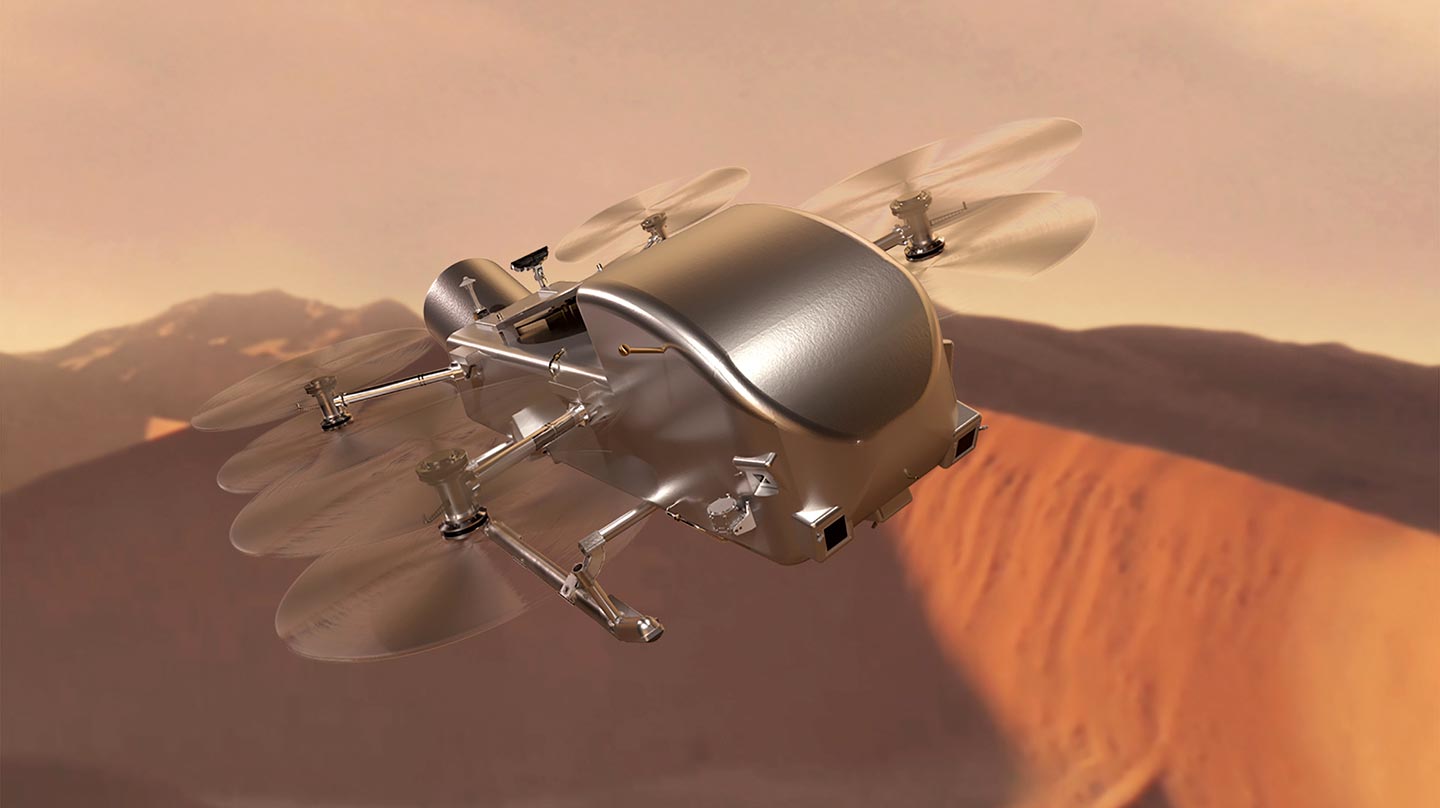
NASA’s Dragonfly mission is progressing to build a nuclear-powered drone for Saturn’s moon Titan, targeting a 2028 launch. The mission, involving extensive collaboration and technical advancements, aims to explore Titan’s organic materials and their potential link to life.
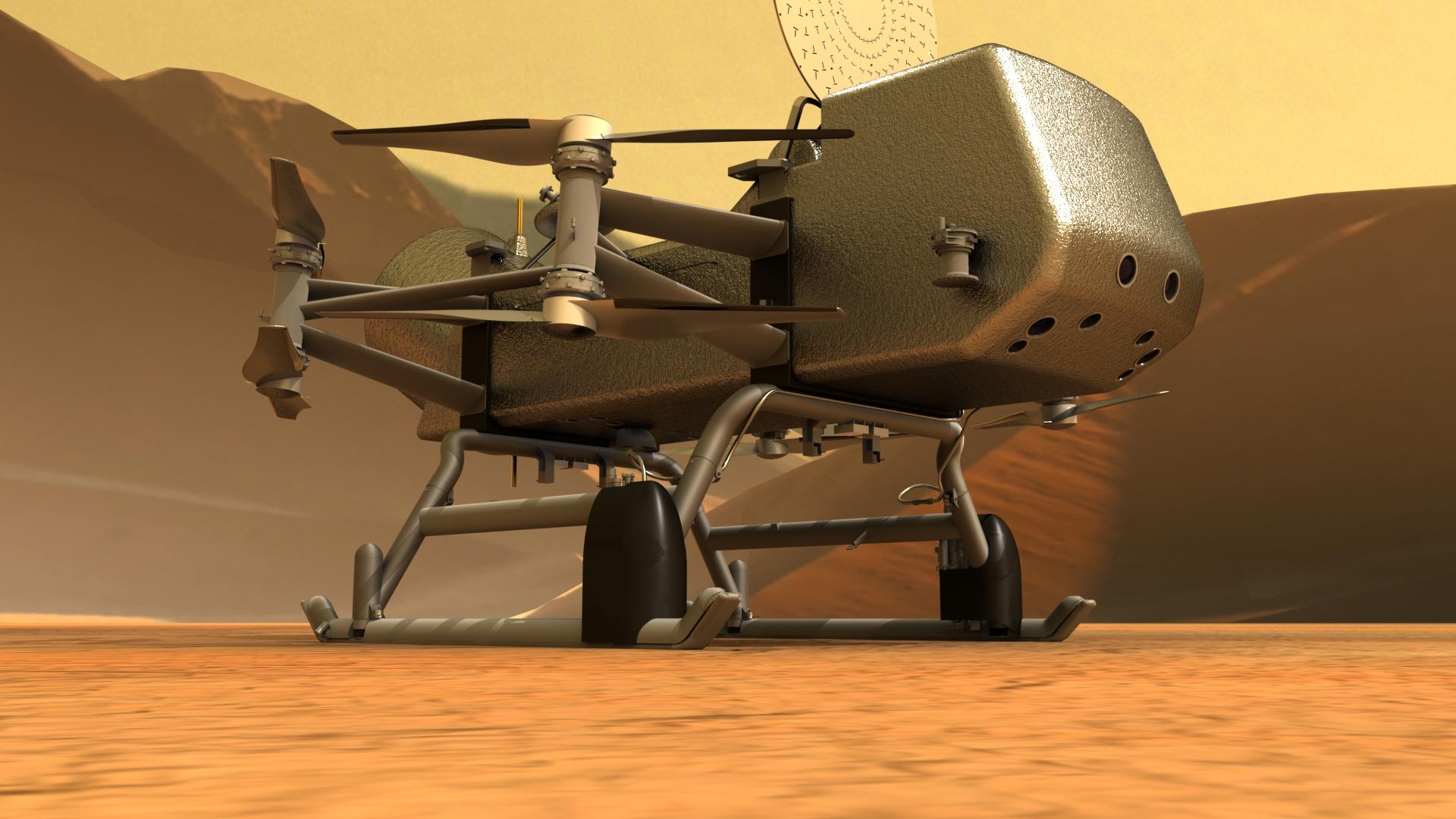
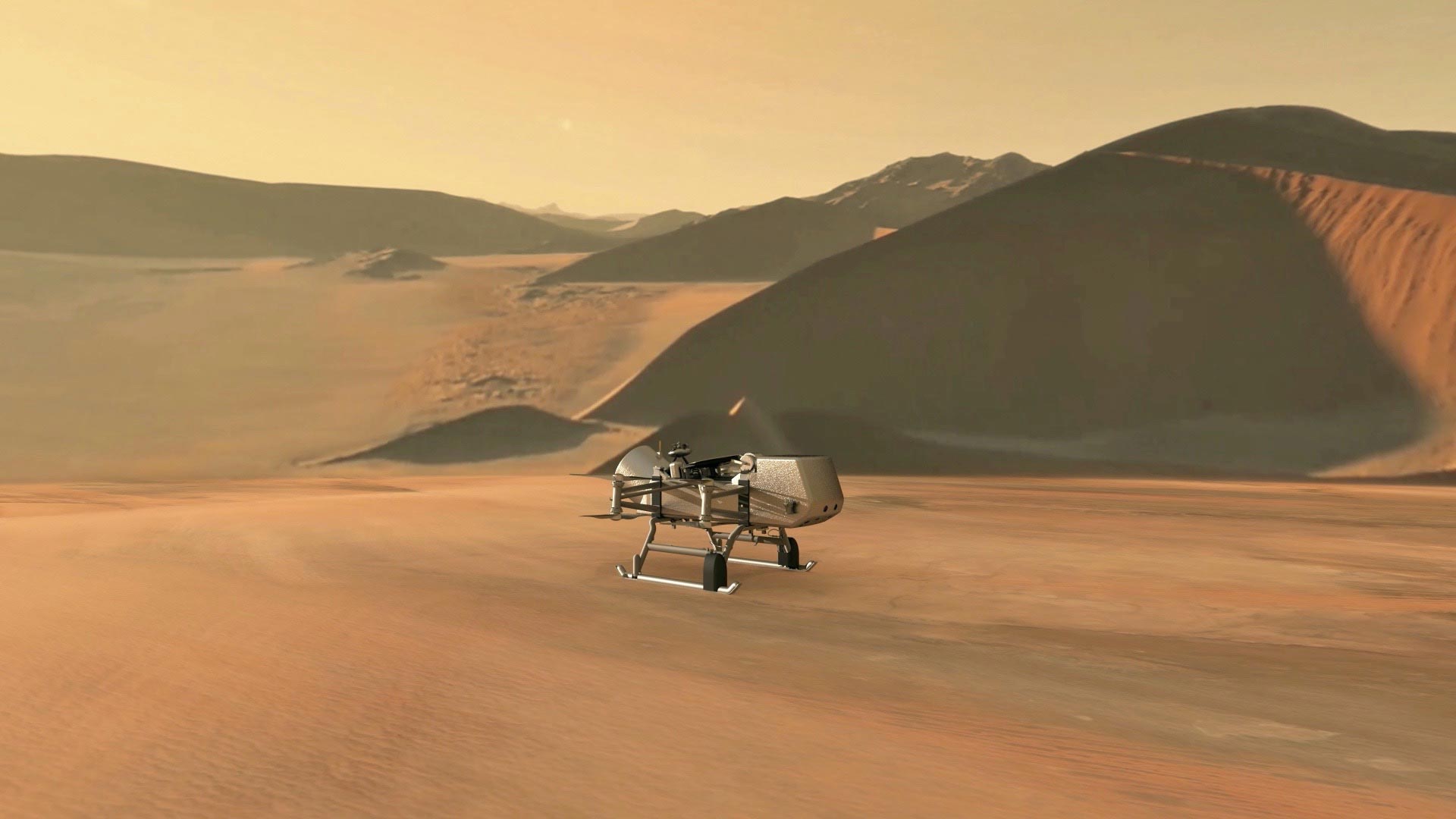
NASA’s Dragonfly mission team is moving on to the next stage of development on the revolutionary, car-sized nuclear-powered drone it plans to fly over and land on the organic-rich sands of Saturn’s large moon Titan.
NASA has authorized Dragonfly to proceed with work on final mission design and fabrication, known as Phase C. Earlier this year, Dragonfly passed all the success criteria of its Preliminary Design Review. The team also was asked to conduct a replan of the mission based on funding levels in the fiscal year 2024 president’s budget request. That replan has been completed and reviewed with NASA, with a revised launch readiness date of July 2028. NASA will officially assess the mission’s launch readiness date in mid-2024 at the Agency Program Management Council.
Overcoming Challenges and Preparing for Titan
“The Dragonfly team has successfully overcome a number of technical and programmatic challenges in this daring endeavor to gather new science on Titan,” said Nicola Fox, associate administrator of NASA’s Science Mission Directorate in Washington. “I am proud of this team and their ability to keep all aspects of the mission moving.”
NASA’s only mission to the surface of another ocean world, Dragonfly is designed to investigate the complex chemistry that is the precursor to life. The vehicle, which the Johns Hopkins Applied Physics Laboratory (APL) in Laurel, Maryland, will build and operate, will be equipped with cameras, sensors, and samplers to examine areas of Titan known to contain organic materials that may have previously mixed with liquid water now frozen on the icy surface.
Teamwork and Technical Milestones
“Dragonfly is such a daring endeavor, like nothing that has ever been done before,” said APL’s Elizabeth “Zibi” Turtle, Dragonfly principal investigator. “I’m inspired by the way our team has repeatedly overcome challenges by working together and thinking outside the box. We’ve demonstrated that we’re ready for the next steps on the path to Titan, and we’ll keep moving forward with the same curiosity and creativity that have brought Dragonfly to this point.”
More than a decade before the real Dragonfly soars over the organic dunes of Titan, the team developing the NASA rotorcraft lander at the Johns Hopkins Applied Physics Laboratory is refining the concept by sending instrumented models over the sands of Earth’s deserts. A team of APL engineers ventured back to Imperial Dunes, California, in May 2022 to send the Dragonfly “testbed” through the skies to collect data they’ll need to develop guidance, control and navigation algorithms for the actual Dragonfly, set for launch toward Saturn’s largest moon in 2028. Credit: Johns Hopkins Applied Physics Laboratory
The Dragonfly team has made significant technical strides, among them: a progression of tests of Dragonfly’s guidance, navigation and control systems over California deserts that resemble Titan’s dunes (see video above); multiple flight-system tests in the one-of-a-kind wind tunnels at NASA’s Langley Research Center; and running a full-scale, instrumented lander model though temperature and atmospheric pressure simulations in APL’s new, 3,000-cubic-foot Titan Chamber.
Collaborative Effort and Future Expectations
“The dedicated efforts of the Dragonfly team have been nothing short of heroic,” said Bobby Braun, head of APL’s Space Exploration Sector. “Engineers, scientists, and project management across APL, NASA’s Goddard Space Flight Center, the NASA Langley and Ames Research Centers, Lockheed Martin, Sikorsky, and our many university and industry partners have formed a seamless team whose experience and expertise is shaping a game-changing mission of exploration. I’m very proud of this team and am confident that they will continue to mature this system in Phase C.”
APL manages the Dragonfly mission for NASA. The team includes key partners at NASA’s Goddard Space Flight Center in Greenbelt, Maryland; Lockheed Martin Space in Littleton, Colorado; Sikorsky, a Lockheed Martin company; NASA’s Ames Research Center in Silicon Valley, California; NASA’s Langley Research Center in Hampton, Virginia; Penn State University in State College, Pennsylvania; Malin Space Science Systems in San Diego, California; Honeybee Robotics in Pasadena, California; NASA’s Jet Propulsion Laboratory in Southern California; the French space agency (CNES) in Paris; the German Aerospace Center (DLR) in Cologne, Germany; and the Japan Aerospace Exploration Agency (JAXA) in Tokyo.
Dragonfly is the fourth mission in NASA’s New Frontiers Program, managed by NASA’s Marshall Space Flight Center in Huntsville, Alabama, for the agency’s Science Mission Directorate in Washington.
Never miss a breakthrough: Join the SciTechDaily newsletter.
Follow us on Google and Google News.