

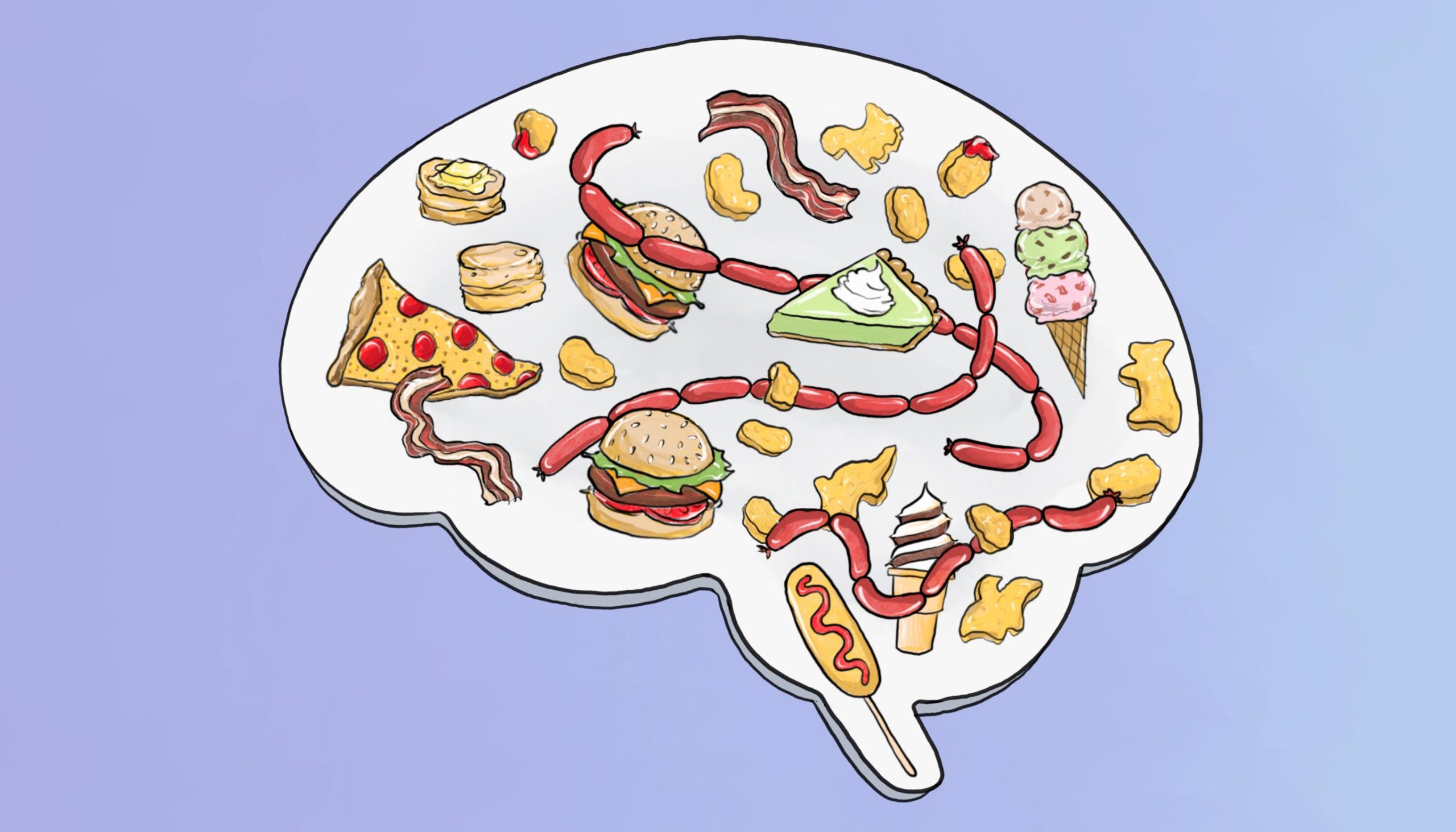
Eating junk food gives us a dopamine-fueled rush — but paradoxically, people with obesity may get less pleasure from it.
A new study uncovers that long-term high-fat diets reduce a brain chemical called neurotensin, dulling food-related enjoyment. Surprisingly, this lack of pleasure might drive more habitual overeating. The researchers found that restoring neurotensin can reawaken the joy of eating and help normalize food behavior — possibly paving the way for more precise, pleasure-based treatments for obesity.
Junk Food Pleasure and Obesity Paradox
The pleasure we get from eating junk food — like the dopamine rush triggered by salty fries or a juicy burger — is often blamed for overeating and rising obesity rates.
But a new study from scientists at the University of California, Berkeley, suggests that enjoying food, even junk food, may actually help support a healthy weight in an environment filled with cheap, high-fat options.
Paradoxically, people with obesity often report getting less enjoyment from eating than those of normal weight. Brain scans back this up, showing reduced activity in reward-related regions of the brain when people with obesity are shown food, a pattern also seen in animal studies.
Now, UC Berkeley researchers have identified a possible cause: a drop in neurotensin, a brain peptide that helps regulate the dopamine system. Their findings also point to a potential way to restore the pleasure of eating, which could, in turn, help reduce overeating.
How High-Fat Diets Change the Brain
The study reveals an unsuspected brain mechanism that explains why a chronic high-fat diet can reduce the desire for high-fat, sugary foods, even when these foods remain easily accessible. The researchers propose that this lack of desire in obese individuals is due to a loss of pleasure in eating caused by long-term consumption of high-calorie foods. Losing this pleasure may actually contribute to the progression of obesity.
“A natural inclination toward junk food is not inherently bad — but losing it could further exacerbate obesity,” said Stephan Lammel, a UC Berkeley professor in the Department of Neuroscience and a member of the Helen Wills Neuroscience Institute.
The Power of Neurotensin in Regulating Appetite
The researchers found that this effect is driven by a reduction in neurotensin in a specific brain region that connects to the dopamine network. Importantly, they demonstrate that restoring neurotensin levels — either through dietary changes or genetic manipulations that enhance neurotensin production — can reinstate the pleasure in eating and promote weight loss.
“A high-fat diet changes the brain, leading to lower neurotensin levels, which in turn alters how we eat and respond to these foods,” Lammel said. “We found a way to restore the desire for high-calorie foods, which may actually help with weight management.”
While findings in mice don’t always translate directly to humans, this discovery could open new avenues for addressing obesity by restoring food-related pleasure and breaking unhealthy eating patterns.
Dopamine, Desire, and the Paris Dessert Effect
“Imagine eating an amazing dessert at a great restaurant in Paris — you experience a burst of dopamine and happiness,” said Neta Gazit Shimoni, a UC Berkeley postdoctoral fellow. “We found that this same feeling occurs in mice on a normal diet, but is missing in those on a high-fat diet. They may keep eating out of habit or boredom, rather than genuine enjoyment.”
Gazit Shimoni and former UC Berkeley graduate student Amanda Tose are co-first authors, and Lammel is senior author of the study, which will be published March 26 in the journal Nature.
Rethinking Obesity Treatments and Brain Circuits
For decades, doctors and researchers have struggled to understand and treat obesity, as countless fad diets and eating regimens have failed to produce long-term results. The recent success of GLP-1 agonists like Ozempic, which curb appetite by increasing feelings of fullness, stands out among many failed approaches.
Lammel studies brain circuits, particularly the dopamine network, which plays a crucial role in reward and motivation. Dopamine is often associated with pleasure, reinforcing our desire to seek rewarding experiences, such as consuming high-calorie foods.
A Curious Contradiction in Feeding Motivation
While raising mice on a high-fat diet, Gazit Shimoni noticed a striking paradox: While in their home cages, these mice strongly preferred high-fat chow, which contained 60% fat, over normal chow with only 4% fat, leading them to gain excessive weight. However, when they were taken out of their home cages and given free access to high-calorie treats such as butter, peanut butter, jelly or chocolate, they showed much less desire to indulge than normal-diet mice, which immediately ate everything they were offered.
“If you give a normal, regular-diet mouse the chance, they will immediately eat these foods,” Gazit Shimoni said. “We only see this paradoxical attenuation of feeding motivation happening in mice on a high-fat diet.”
She discovered that this effect had been reported in past studies, but no one had followed up to find out why, and how the effect connects to the obesity phenotype observed in these mice.
Rewiring Reward Through Neurotensin
To investigate this phenomenon, Lammel and his team used optogenetics, a technique that allows scientists to control brain circuits with light. They found that in normal-diet mice, stimulating a brain circuit that connects to the dopamine network increased their desire to eat high-calorie foods, but in obese mice, the same stimulation had no effect, suggesting that something must have changed.
The reason, they discovered, was that neurotensin was reduced so much in obese mice that it prevented dopamine from triggering the usual pleasure response to high-calorie foods.
“Neurotensin is this missing link,” Lammel said. “Normally, it enhances dopamine activity to drive reward and motivation. But in high-fat diet mice, neurotensin is downregulated, and they lose the strong desire to consume high-calorie foods — even when easily available.”
Resetting Brain Chemistry and Eating Behavior
The researchers then tested ways to restore neurotensin levels. When obese mice were switched back to a normal diet for two weeks, their neurotensin levels returned to normal, dopamine function was restored, and they regained interest in high-calorie foods.
When neurotensin levels were artificially restored using a genetic approach, the mice not only lost weight, but also showed reduced anxiety and improved mobility. Their feeding behavior also normalized, with increased motivation for high-calorie foods and a simultaneous reduction of their total food consumption in their home cages.
“Bringing back neurotensin seems to be very, very critical for preventing the loss of desire to consume high-calorie foods,” Lammel said. “It doesn’t make you immune to getting obese again, but it would help to control eating behavior, to bring it back to normal.”
Precision Targets for Future Therapies
Although directly administering neurotensin could theoretically restore feeding motivation in obese individuals, neurotensin acts on many brain areas, raising the risk of unwanted side effects. To overcome this, the researchers used gene sequencing, a technique that allowed them to identify specific genes and molecular pathways that regulate neurotensin function in obese mice.
This discovery provides crucial molecular targets for future obesity treatments, paving the way for more precise therapies that could selectively enhance neurotensin function without broad systemic effects.
“We now have the full genetic profile of these neurons and how they change with high-fat diets,” Lammel said. “The next step is to explore pathways upstream and downstream of neurotensin to find precise therapeutic targets.”
Beyond Obesity: Broader Implications for Neurotensin
Lammel and Gazit Shimoni plan to expand their research to explore neurotensin’s role beyond obesity, investigating its involvement in diabetes and eating disorders.
“The bigger question is whether these systems interact across different conditions,” Gazit Shimoni said. “How does starvation affect dopamine circuits? What happens in eating disorders? These are the questions we’re looking at next.”
Reference: “Changes in neurotensin signalling drive hedonic devaluation in obesity” by Neta Gazit Shimoni, Amanda J. Tose, Charlotte Seng, Yihan Jin, Tamás Lukacsovich, Hongbin Yang, Jeroen P. H. Verharen, Christine Liu, Michael Tanios, Eric Hu, Jonathan Read, Lilly W. Tang, Byung Kook Lim, Lin Tian, Csaba Földy and Stephan Lammel, 26 March 2025, Nature.
DOI: 10.1038/s41586-025-08748-y
Other co-authors are Charlotte Seng, Tamás Lukacsovich and Csaba Földy of the University of Zurich in Switzerland; Yihan Jin and Lin Tian of UC Davis; Hongbin Yang of Zhejiang University in Hangzhou, China; Jeroen Verharen, Christine Liu, Michael Tanios, Eric Hu, Jonathan Read and Lilly Tang of UC Berkeley; and Byung Kook Lim of UC San Diego.
The work was supported by the McKnight Foundation, One Mind Foundation, Weill Neurohub, Rita Allen Foundation, Wayne and Gladys Valley Foundation and National Institutes of Health (R01DA042889, U01NS120820, U01NS113295, R01NS121231, R01DA049787). Shimoni was supported by a Young Investigator Award from the National Alliance for Research on Schizophrenia and Depression.
Never miss a breakthrough: Join the SciTechDaily newsletter.
Follow us on Google and Google News.