
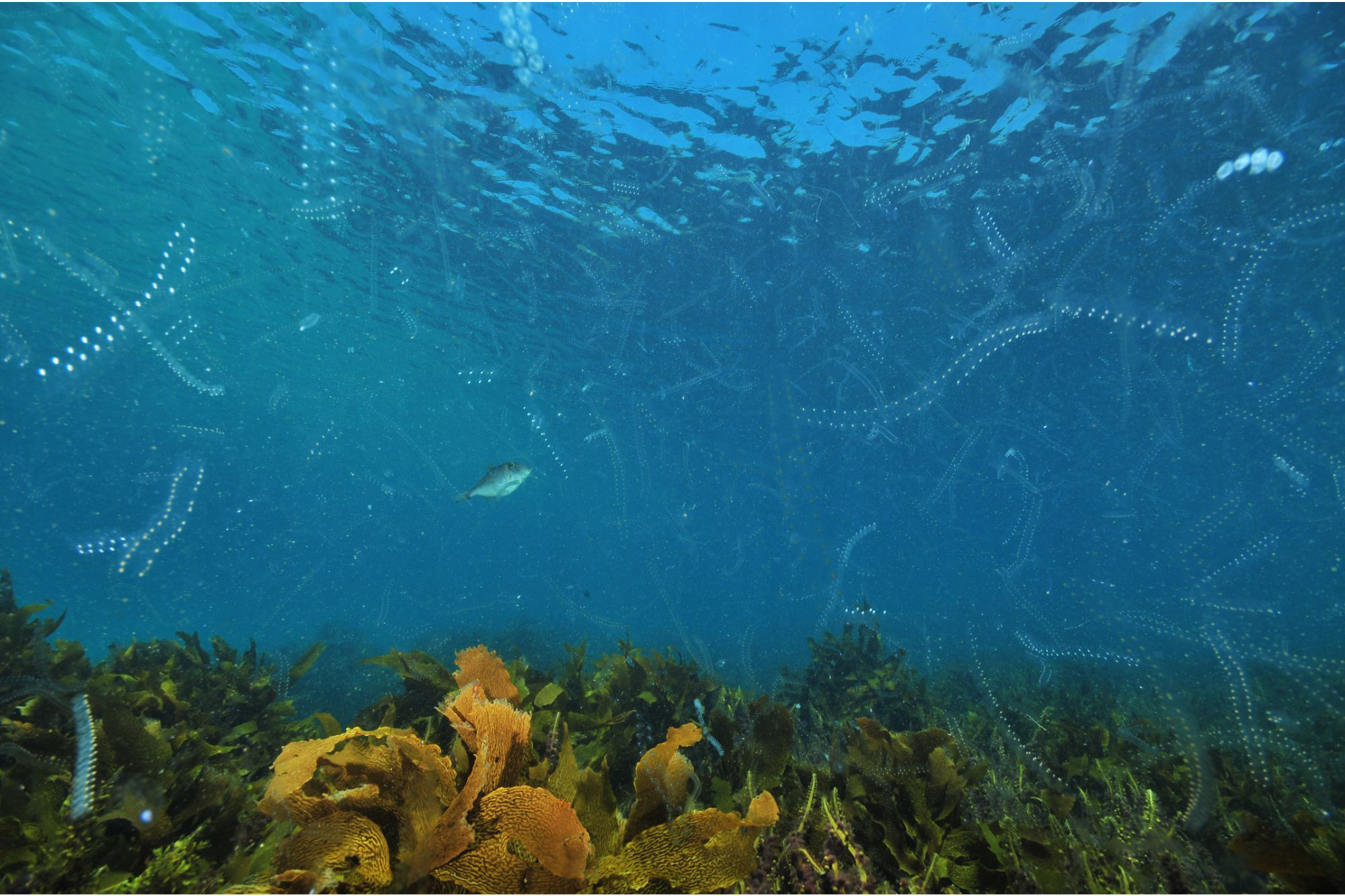
A study reveals plankton, crucial for marine ecosystems, cannot adapt to rapid global warming, threatening marine life and human food supplies. Researchers stress urgent global action to curb emissions and limit warming under the Paris Agreement.
A recent study reveals that certain marine species may face extinction within the next century if human-driven global warming continues to intensify.
The research, led by the University of Bristol and published in Nature, compares for the first time how tiny ocean organisms called plankton responded, when the world last warmed significantly in ancient history with what is likely to happen under similar conditions by the end of our century.
Findings revealed the plankton were unable to keep pace with the current speed of temperature rises, putting huge swathes of marine life – including fish that depend on these organisms for food – in peril.
Lead author Dr. Rui Ying, who led the project as part of his PhD in marine ecology at the University of Bristol, said: “The results are alarming as even with the more conservative climate projections of a 2°C increase, it is clear plankton cannot adjust quickly enough to match the much faster rate of warming which we’re experiencing now and looks set to continue.

“Plankton are the lifeblood of the oceans, supporting the marine food web and carbon storage. If their existence is endangered, it will present an unprecedented threat, disrupting the whole marine ecosystem with devastating wide-reaching consequences for marine life and also human food supplies.”
Insights from a New Modeling Approach
To reach this conclusion, the researchers developed a new model which allowed analysis of how plankton behaved some 21,000 years ago during the last Ice Age to be analyzed alongside how they might act under future climate projections. By focusing on a specific plankton group which has existed throughout the ages, the modeling work offers unprecedented insights and levels of accuracy.
Dr Ying said: “The past is often considered key to understanding what the world could look like in the future. Geological records showed that plankton previously relocated away from the warmer oceans to survive.

“But using the same model of ecology and climate, projections showed the current and future rate of warming was too great for this to be possible again, potentially wiping out the precious organisms.”
Under The Paris Agreement, 196 nations agreed to limit the increase in the global average temperature to well below 2°C above pre-industrial levels and strive to limit the increase to 1.5°C. But a United Nations report last month warned the world would face as much as 3.1°C warming if governments do not take more action to reduce carbon emissions.
Co-author Daniela Schmidt, Professor of Earth Sciences at the University of Bristol, is a world-renowned marine ecologist who has led multiple Intergovernmental Panel on Climate Change (IPCC) reports.
Prof Schmidt said: “This work emphasizes the great risks posed by the dramatically fast climate and environmental changes the world is now facing. With these worrying trends set to worsen, there will be very real consequences for our ecosystems and people’s livelihoods, including fishing communities. So the message is clear – all nations must collectively and individually step up efforts and measures to keep global warming to a minimum.”
Reference: “Past foraminiferal acclimatization capacity is limited during future warming” by Rui Ying, Fanny M. Monteiro, Jamie D. Wilson, Malin Ödalen and Daniela N. Schmidt, 13 November 2024, Nature.
DOI: 10.1038/s41586-024-08029-0
Never miss a breakthrough: Join the SciTechDaily newsletter.
Follow us on Google and Google News.
2 Comments
The gray line in the studies sst chart tells the whole story. The Earth is heating at a rate above the rcp8.5 level. You can trash the 2100 date.
You are correct.
We will be at 3 degrees above the 1750 baseline date by 2040 if not sooner.
The AMOC throws a spanner in the wheel. But the effect of that will be later.