
Close Menu
    Facebook X (Twitter) Instagram
    SciTechDaily
    • Biology
    • Chemistry
    • Earth
    • Health
    • Physics
    • Science
    • Space
    • Technology
    Facebook X (Twitter) Pinterest YouTube RSS
    SciTechDaily
    Home»Biology»Global Warming Poses Threat to Food Chains – “Impact Could Be Severe”
    Biology

    Global Warming Poses Threat to Food Chains – “Impact Could Be Severe”

    By University of ExeterMarch 1, 20211 Comment3 Mins Read
    Facebook Twitter Pinterest Telegram LinkedIn WhatsApp Email Reddit
    Share
    Facebook Twitter LinkedIn Pinterest Telegram Email Reddit
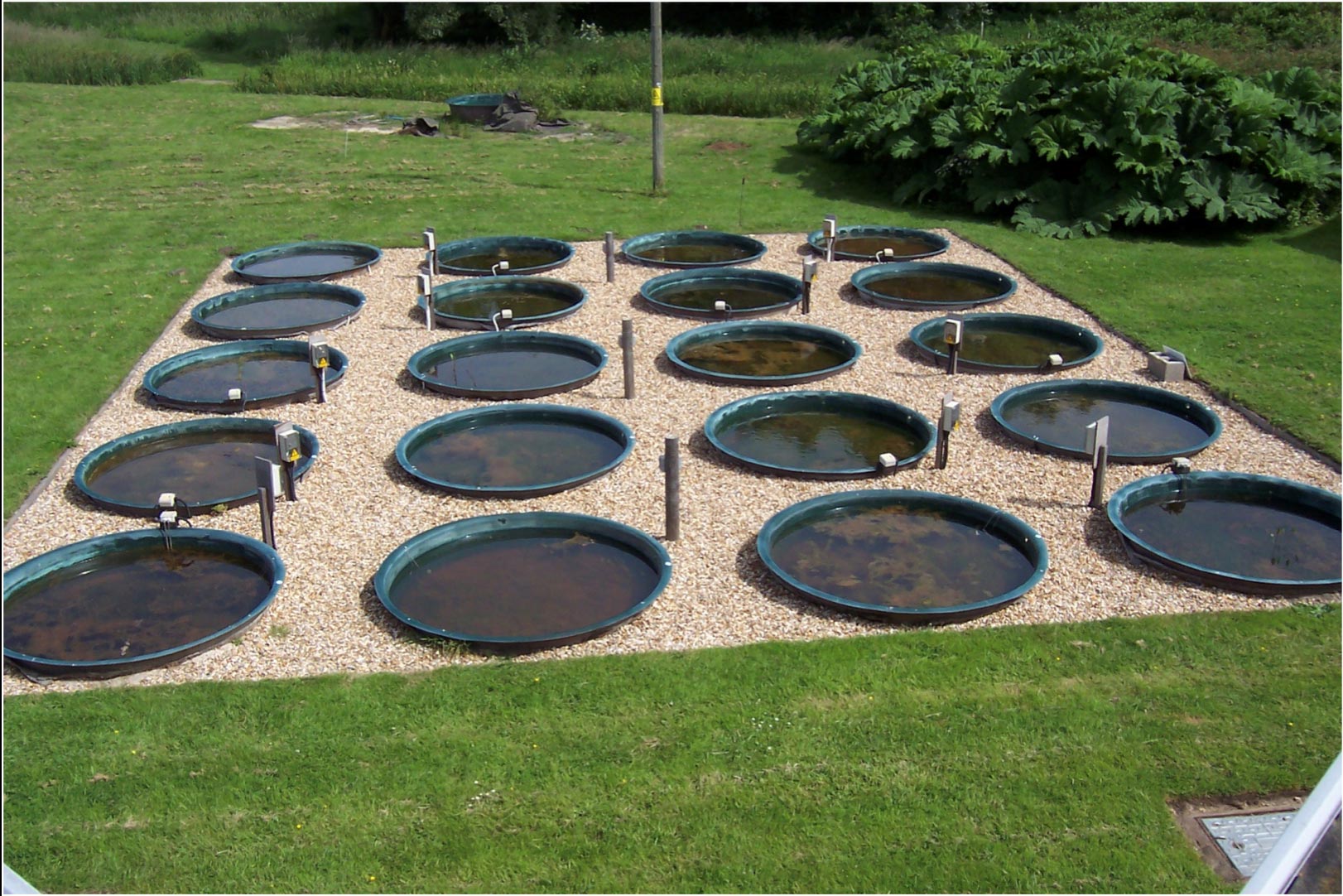
    Plankton in Freshwater Ponds
    The study examined plankton in freshwater ponds exposed to seven years of experimental warming. Credit: University of Exeter

    Rising temperatures could reduce the efficiency of food chains and threaten the survival of larger animals, new research shows.

    Scientists measured the transfer of energy from single-celled algae (phytoplankton) to small animals that eat them (zooplankton).

    The study — by the University of Exeter and Queen Mary University of London, and published in the journal Nature — found that 4°C (7.2°F) of warming reduced energy transfer in the plankton food webs by up to 56%.

    Warmer conditions increase the metabolic cost of growth, leading to less efficient energy flow through the food chain and ultimately to a reduction in overall biomass.

    Underappreciated Impact of Global Warming

    “These findings shine a light on an under-appreciated consequence of global warming,” said Professor Gabriel Yvon-Durocher, of the Environment and Sustainability Institute on Exeter’s Penryn Campus in Cornwall.

    “Phytoplankton and zooplankton are the foundation of food webs that support freshwater and marine ecosystems that humans depend on.

    “Our study is the first direct evidence that the cost of growth increases in higher temperatures, limiting the transfer of energy up a food chain.”

    Professor Mark Trimmer, of Queen Mary University of London, said: “If the effects we find in this experiment are evident in natural ecosystems, the consequences could be profound.

    “The impact on larger animals at the top of food chains — which depend on energy passed up from lower down the food chain — could be severe. More research is needed.”

    “In general, about 10% of energy produced on one level of a food web makes it up to the next level,” said Dr. Diego Barneche, of the Australian Institute of Marine Science and the Oceans Institute at the University of Western Australia.

    “This happens because organisms expend a lot of energy on a variety of functions over a lifetime, and only a small fraction of the energy they consume is retained in biomass that ends up being eaten by predators.

    Warming Distorts Metabolism and Growth Balance

    “Warmer temperatures can cause metabolic rates to accelerate faster than growth rates, which reduces the energy available to predators in the next level up the food web.”

    The study measured nitrogen transfer efficiency (a proxy for overall energy transfer) in freshwater plankton that had been exposed to a seven-year-long outdoor warming experiment in the UK.

    Reference: “Warming impairs trophic transfer efficiency in a long-term field experiment” by Diego R. Barneche, Chris J. Hulatt, Matteo Dossena, Daniel Padfield, Guy Woodward, Mark Trimmer and Gabriel Yvon-Durocher, 1 March 2021, Nature.
    DOI: 10.1038/s41586-021-03352-2

    Funding came from the AXA Research Fund, the Natural Environment Research Council and the European Research Council.

    Never miss a breakthrough: Join the SciTechDaily newsletter.
    Follow us on Google and Google News.

    Climate Change Global Warming Marine Biology Nutrition Plankton University of Exeter
    Share. Facebook Twitter Pinterest LinkedIn Email Reddit

    Related Articles

    Ocean’s Hidden Heroes: How Deep-Sea Algae Are Thriving Amid Global Warming

    Sexual Parasitism: Anglerfish’s Strategy To Conquer the Deep Sea Amid Global Warming

    The Great Coral Divide: Atlantic Reefs Are Struggling and Indo-Pacific Reefs Aren’t

    Climate Change Could Cause Devastating Mass Exodus of Tropical Plankton

    Iconic British Corals Predicted To Be Resilient to Climate Change

    Corals Survive the Heat With Help From Probiotic Bacteria

    More Harmful Algal Bloom Impacts Emerge Amid Rising Seafood Demand and Coastal Development

    Climate Change Resilience: Northern Red Sea Corals Pass Heat Stress Test With Flying Colors

    New Climate Change Research: Future Too Warm for Baby Sharks

    1 Comment

    1. Clyde Spencer on March 1, 2021 9:05 am

      “Rising temperatures COULD …”

      I’ll be concerned when researchers can honestly say “will,” or at least provide a probability, and support it with evidence that is subject to falsification! If they can’t provide an actionable conclusion, then it is subjective conjecture and not worth the time and money expended to conduct what was probably a poorly designed experiment.

      I think the key to understanding this research is their remark, “More research is needed.”

      Reply
    Leave A Reply Cancel Reply

    • Facebook
    • Twitter
    • Pinterest
    • YouTube

    Don't Miss a Discovery

    Subscribe for the Latest in Science & Tech!

    Trending News

    Scientists Uncover Potential Brain Risks of Popular Fish Oil Supplements

    Scientists Discover a Surprising Way To Make Bread Healthier and More Nutritious

    After 60 Years, Scientists Uncover Unexpected Brain Effects of Popular Diabetes Drug Metformin

    New Research Uncovers Hidden Side Effects of Popular Weight-Loss Drugs

    Scientists Rethink Extreme Warming After Surprising Ocean Discovery

    Landmark Study Links Never Marrying to Significantly Higher Cancer Risk

    Researchers Discover Unknown Beetle Species Just Steps From Their Lab

    Largest-Ever Study Finds Medicinal Cannabis Ineffective for Anxiety, Depression, PTSD

    Follow SciTechDaily
    • Facebook
    • Twitter
    • YouTube
    • Pinterest
    • Newsletter
    • RSS
    SciTech News
    • Biology News
    • Chemistry News
    • Earth News
    • Health News
    • Physics News
    • Science News
    • Space News
    • Technology News
    Recent Posts
    • Early Warning Signals of Esophageal Cancer May Be Hiding in Plain Sight
    • Researchers Have Discovered a THC-Free Cannabis Compound That May Replace Opioids
    • Common Blood Pressure Drug Shows Surprising Power Against Deadly Antibiotic-Resistant Superbug
    • Students Build Dark Matter Detector and Set New Experimental Limits
    • Scientists Discover Caffeine Can Repair Key Memory Circuits After Sleep Loss
    Copyright © 1998 - 2026 SciTechDaily. All Rights Reserved.
    • Science News
    • About
    • Contact
    • Editorial Board
    • Privacy Policy
    • Terms of Use

    Type above and press Enter to search. Press Esc to cancel.