
Close Menu
    Facebook X (Twitter) Instagram
    SciTechDaily
    • Biology
    • Chemistry
    • Earth
    • Health
    • Physics
    • Science
    • Space
    • Technology
    Facebook X (Twitter) Pinterest YouTube RSS
    SciTechDaily
    Home»Earth»Old Contaminants Decline in the Great Lakes While Newer Ones Rise
    Earth

    Old Contaminants Decline in the Great Lakes While Newer Ones Rise

    By SciTechDailyNovember 14, 2012No Comments3 Mins Read
    Facebook Twitter Pinterest Telegram LinkedIn WhatsApp Email Reddit
    Share
    Facebook Twitter LinkedIn Pinterest Telegram Email Reddit
    great-lakes-contamination
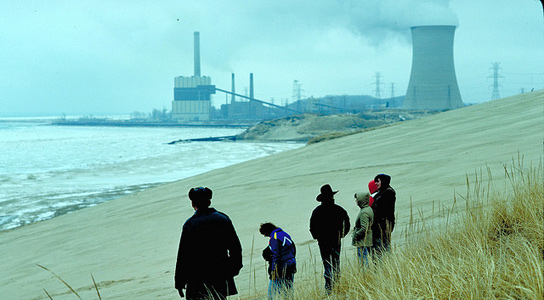
    Lake Michigan dunes with power plant in background. Credit: Flickr/Thoth God of Knowledge

    The concentrations of legacy contaminants are decreasing quicker than previously reported in three of the Great Lakes, but stayed virtually the same in two other lakes.

    The scientists published their findings in the journal Science of the Total Environment. “These are very positive results. The lakes are improving and slowly cleaning themselves up,” states Thomas Holsen, a co-author from Clarkson University.

    Even with these decreases, it will be another 20 to 30 years until the contaminants in the Great Lakes decline enough to the point that fish from them can be consumed. Older contaminants are being replaced by newer ones, which are mainly flame retardants that are building up in the fish and wildlife.

    Polychlorinated biphenyls (PCBs), the pesticide DDT and other banned compounds dropped about 50% in fish in Lakes Michigan, Ontario and Huron from 1999 to 2009. There were no significant changes in Lakes Superior and Erie.

    The status quo of Superior and Erie, which have had lower levels of contaminants than the other lakes isn’t surprising because Superior is big, deep, and cold, so changes will take longer. Lake Erie’s walleye have a shorter food chain than the trout in other lakes, so the contaminants don’t build up as much.

    PCBs are decreasing at the slowest pace, at about 3 to 8% per year, while DDT declined between 11 to 16% per year. The pesticide mirex, which has been only detected in Lake Ontario, has decreased from 15 to 25% per year.

    This is substantially faster than previously estimated. Between 1980 and 2003, PCBs and DDTs decreased 2 to 4%. Between 2000 and 2003, they remained relatively stable.

    All of these compounds were phased out in the 1970s after they began building up in the environment. Since they are slow to break down, they continue to persist in the lakes’ sediments and are still accumulating in fish and other wildlife.

    Bans have eliminated the manufacture and use of these compounds; they are mostly getting into the lakes through what’s circulating in the air.

    Thanks to atmospheric deposition, the chemicals move from the air to the Earth’s surface. Flame retardants that have replaced polybrominated diphenyl ethers (PBDEs) in furniture and other consumer products are showing up more frequently in the region.

    The old are just being replaced by something new. The concentrations of new flame retardants like Firemaster 550 are doubling every two years.

    Reference: “Temporal trends of polychlorinated biphenyls and organochlorine pesticides in Great Lakes fish, 1999-2009” by Fengchih Chang, James J Pagano, Bernard S Crimmins, Michael S Milligan, Xiaoyan Xia, Philip K Hopke and Thomas M Holsen, 15 November 2012, Science of the Total Environment.
    DOI: 10.1016/j.scitotenv.2012.09.019

    Never miss a breakthrough: Join the SciTechDaily newsletter.
    Follow us on Google and Google News.

    Contamination Environment Lakes Pollution
    Share. Facebook Twitter Pinterest LinkedIn Email Reddit

    Related Articles

    Toxic Downpour: “Forever Chemicals” Rain on All Five Great Lakes

    Presence of Hog Farms in Neighborhoods Raises Blood Pressure of People

    New Chinese Survey Reveals Extensive Coastal Pollution

    Global Warming Impacts Lake Water

    Nitrogen Pollution Is Altering Sensitive Ecosystems

    The First ‘Bottom-Up’ Estimates of China’s CO2 Emissions

    Coral Reveals Lead Levels from Gasoline in the Ocean

    Particulate Pollution Created ‘Warming Hole’ that Delayed Climate Change

    Study Reports Air Pollution Causes Thousands of Premature Deaths Each Year

    Leave A Reply Cancel Reply

    • Facebook
    • Twitter
    • Pinterest
    • YouTube

    Don't Miss a Discovery

    Subscribe for the Latest in Science & Tech!

    Trending News

    Just a Few Breathless Minutes a Day Could Slash Your Risk of 8 Major Diseases

    This Simple Habit Could Cut Your Risk of Dementia by 30%

    Scientists Debunk Rattlesnake Myth That Fooled Hikers and Doctors for Decades

    Scientists Discover Plants Can “Count” – and May Be Smarter Than We Thought

    New Research Reveals Ancient Mars May Have Been Warm, Wet – and Possibly Alive

    This Surprising Daily Habit Could Cut Dementia Risk by 35%

    Just 10 Minutes a Day: Scientists Say This Ancient Chinese Practice Shows Powerful Blood Pressure Benefits

    Scientists Say This Popular Food Could Help Your Body Get Rid of Microplastics

    Follow SciTechDaily
    • Facebook
    • Twitter
    • YouTube
    • Pinterest
    • Newsletter
    • RSS
    SciTech News
    • Biology News
    • Chemistry News
    • Earth News
    • Health News
    • Physics News
    • Science News
    • Space News
    • Technology News
    Recent Posts
    • Even Occasional Binge Drinking May Triple Liver Damage Risk
    • Quantum Circuits Have a Hidden Weakness and It Changes Everything
    • Liftoff! NASA’s Artemis II Launch Sends Astronauts Around the Moon for First Time in 50 Years
    • Giant Invasive Mantises Are Taking Over Europe
    • Ancient Farmers Accidentally Bred Aggressive “Warrior” Plants
    Copyright © 1998 - 2026 SciTechDaily. All Rights Reserved.
    • Science News
    • About
    • Contact
    • Editorial Board
    • Privacy Policy
    • Terms of Use

    Type above and press Enter to search. Press Esc to cancel.