
Persistent Symptoms After Mild COVID-19
Eight months after mild COVID-19, one in ten people still has at least one moderate to severe symptom that is perceived as having a negative impact on their work, social or home life. The most common long-term symptoms are a loss of smell and taste and fatigue. This is according to a study published in the journal JAMA, conducted by researchers at Danderyd Hospital and Karolinska Institutet in Sweden.
Since spring 2020, researchers at Danderyd Hospital and Karolinska Institutet have conducted the so-called COMMUNITY study, with the main purpose of examining immunity after COVID-19. In the first phase of the study in spring 2020, blood samples were collected from 2,149 employees at Danderyd Hospital, of whom about 19 percent had antibodies against SARS-CoV-2. Blood samples have since then been collected every four months, and study participants have responded to questionnaires regarding long-term symptoms and their impact on the quality of life.
In the third follow-up in January 2021, the research team examined self-reported presence of long-term symptoms and their impact on work, social and home life for participants who had had mild COVID-19 at least eight months earlier. This group consisted of 323 healthcare workers (83 percent women, median age 43 years) and was compared with 1,072 healthcare workers (86 percent women, median age 47 years) who did not have COVID-19 throughout the study period.
The results show that 26 percent of those who had COVID-19 previously, compared to 9 percent in the control group, had at least one moderate to severe symptom that lasted more than two months and that 11 percent, compared to 2 percent in the control group, had a minimum of one symptom with negative impact on work, social or home life that lasted at least eight months. The most common long-term symptoms were loss of smell and taste, fatigue, and respiratory problems.
Quality of Life Impacts for Mild Cases
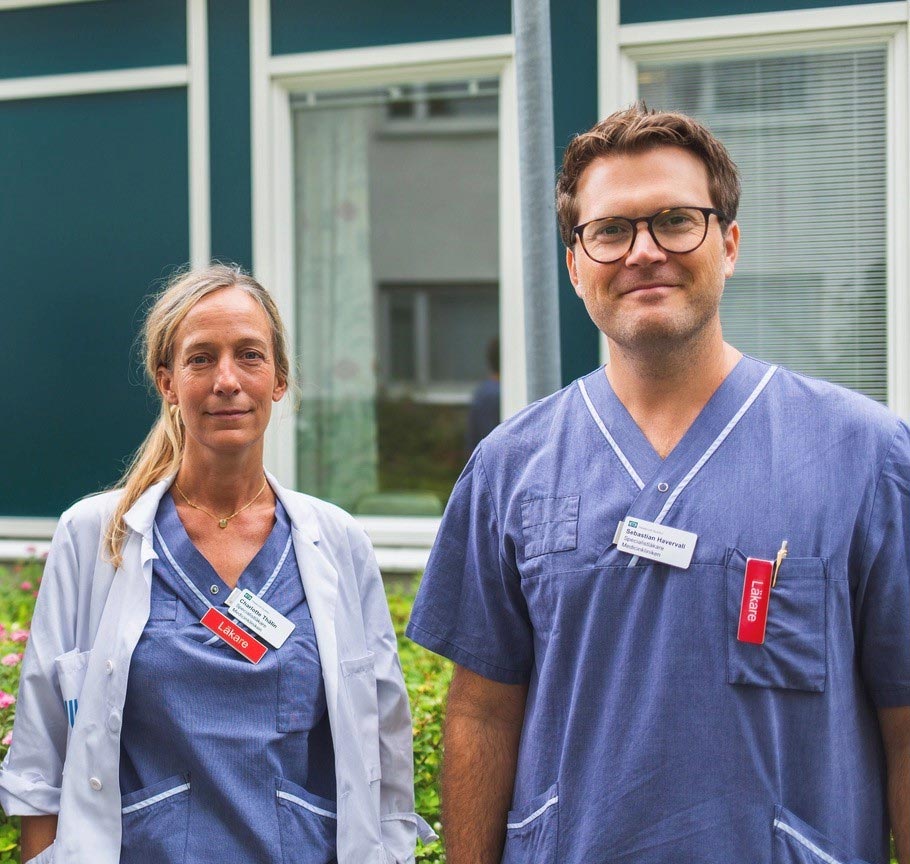
“We investigated the presence of long-term symptoms after mild COVID-19 in a relatively young and healthy group of working individuals, and we found that the predominant long-term symptoms are loss of smell and taste. Fatigue and respiratory problems are also more common among participants who have had COVID-19 but do not occur to the same extent,” says Charlotte Thålin, specialist physician, Ph.D. and lead researcher for the COMMUNITY study at Danderyd Hospital and Karolinska Institutet. “However, we do not see an increased prevalence of cognitive symptoms such as brain fatigue, memory and concentration problems or physical disorders such as muscle and joint pain, heart palpitations or long-term fever.”
“Despite the fact that the study participants had a mild COVID-19 infection, a relatively large proportion report long-term symptoms with an impact on quality of life. In light of this, we believe that young and healthy individuals, as well as other groups in society, should have great respect for the virus that seems to be able to significantly impair quality of life, even for a long time after the infection,” says Sebastian Havervall, deputy chief physician at Danderyd Hospital and PhD student in the project at Karolinska Institutet.
The COMMUNITY study will now continue, with the next follow-up taking place in May when a large proportion of study participants are expected to be vaccinated. In addition to monitoring immunity and the occurrence of re-infection, several projects regarding post- COVID are planned.
“We will, among other things, be studying COVID-19-associated loss of smell and taste more closely, and investigate whether the immune system, including autoimmunity, plays a role in post-COVID,” says Charlotte Thålin.
The article has been peer-reviewed and published as a Research Letter in the journal JAMA.
Reference: “Symptoms and Functional Impairment Assessed 8 Months After Mild COVID-19 Among Health Care Workers” by Sebastian Havervall, Axel Rosell, Mia Phillipson, Sara M. Mangsbo, Peter Nilsson, Sophia Hober and Charlotte Thålin, 7 April 2021, JAMA: Journal of the American Medical Association.
DOI: 10.1001/jama.2021.5612
Facts about the COMMUNITY study:
- The study is conducted in close collaboration between Danderyd Hospital (principal of the study), Karolinska Institutet, KTH, SciLifeLab, Uppsala University, and the Public Health Agency of Sweden.
- The research group includes the following investigators: from Danderyd Hospital and Karolinska Institutet, specialist physician, medical doctor, and principal researcher Charlotte Thålin and deputy chief physician Sebastian Havervall (PhD student in the project); from Karolinska Institutet and the Public Health Agency of Sweden, associate professor Jonas Klingström; from KTH, professors Sophia Hober and Peter Nilsson; and from Uppsala University, associate professor and associate senior lecturer Sara Mangsbo and Professor Mia Phillipson.
- The study is funded by the Jonas & Christina af Jochnick Foundation, Leif Lundblad with family, Region Stockholm, the Knut and Alice Wallenberg Foundation, SciLifeLab, the Erling-Persson Family Foundation, and Atlas Copco.
Never miss a breakthrough: Join the SciTechDaily newsletter.
Follow us on Google and Google News.