
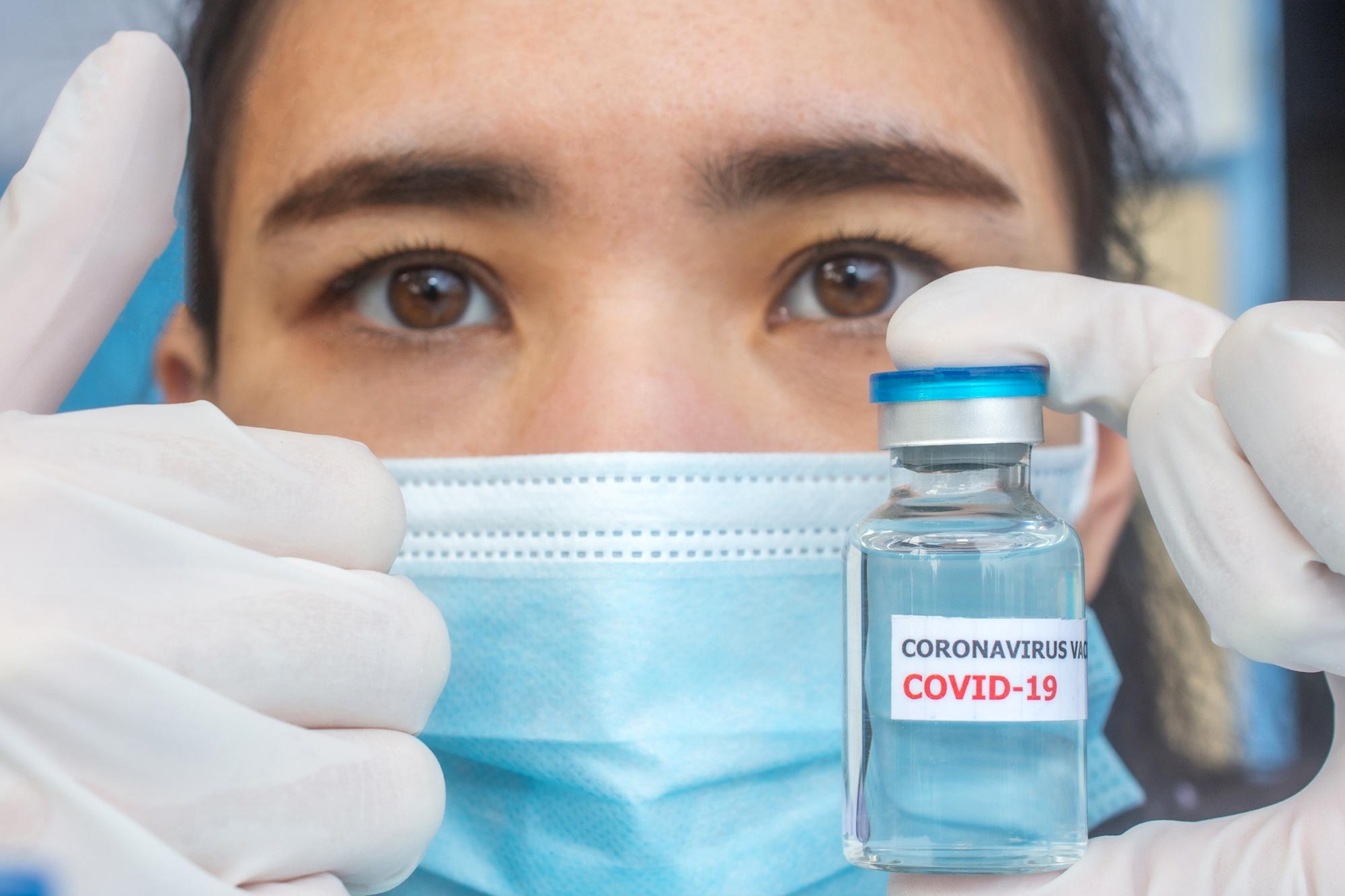
A new study reveals the updated COVID-19 vaccine’s strong response against Omicron and other SARS-CoV-2 variants, suggesting broad protection and highlighting its significance for vulnerable populations.
Researchers at Karolinska Institutet and Danderyd Hospital have followed recipients of the new updated COVID-19 vaccine and analyzed the antibody response to different SARS-CoV-2 variants. The results show a surprisingly strong response to the now dominant and highly mutated Omicron variants.
The ongoing COMMUNITY study, which was launched in the spring of 2020 with the regular testing of 2,149 members of the Danderyd Hospital staff, has recently published the results of this autumn’s leg of the study. Twenty-four participants were recorded in this study, the majority of whom were over 64 and had received four or five previous vaccine doses.
Exclusively Targets Omicron
Previous updates of the COVID-19 vaccine have included both the original SARS-CoV-2 variant and Omicron. However, they triggered a much stronger antibody response to the former than to the latter. Omicron variants are now globally dominant, and the sharp rise in the Omicron XBB variant and its sub-variants prompted the development of vaccines to these strains. However, other variants have since taken over, amongst them the highly mutated BA.2.86, and scientists have been uncertain if the new vaccine protects against these as well.
The results of this study now show that the updated COVID-19 vaccine gives a ten-fold increase in antibodies against not only XBB but also newer and more mutated strains, such as BA.2.86.
“It’s good to see that the new updated vaccine induces such a broad antibody response,” says Charlotte Thålin, researcher at Karolinska Institutet, the Department of Clinical Sciences, Danderyd Hospital, M.D. at Danderyd Hospital and head researcher of the COMMUNITY study upon which the results are based. “Previous updates have not managed to shift the response towards Omicron and the new variants, since they have been adapted to the original virus. The broad response we’re seeing now is likely due to the fact that the new vaccine only targets Omicron, which differs greatly from the original virus.”
Unexpectedly Effective
“We’re seeing a sharper rise than we’d been hoping for in the neutralizing antibodies against all the new variants we’d tested,” says the paper’s first author Ulrika Marking, doctoral student at Karolinska Institutet, the Department of Clinical Sciences, Danderyd Hospital. “This strongly suggests that the new vaccine also provides cross-protection against the new variants and corroborates the recommendation that older people and people in the risk group for influenza and COVID-19 should get vaccinated.”
Reference: “Humoral immune responses to the monovalent XBB.1.5-adapted BNT162b2 mRNA booster in Sweden” by Ulrika Marking, Oscar Bladh, Katherina Aguilera, Yiqiu Yang, Nina Greilert Norin, Kim Blom, Sophia Hober, Jonas Klingström, Sebastian Havervall, Mikael Åberg, Daniel J Sheward and Charlotte Thålin, 5 January 2024, The Lancet Infectious Diseases.
DOI: 10.1016/S1473-3099(23)00779-X
The results were first published on December 21, 2023, on the preprint server bioRxiv, after it had been peer-reviewed and accepted for publication in a scientific journal, and a previous version of this news article was then published. The study has now been published in The Lancet Infectious Diseases.
The COMMUNITY study is being run as a collaboration among Danderyd Hospital, Karolinska Institutet, the Swedish Public Health Agency, Uppsala University and SciLifeLab. It is funded by the Jonas and Christina af Jochnick Foundation, Region Stockholm, the Knut and Alice Wallenberg Foundation and SciLifeLab. The researchers declare no conflicts of interest.
Never miss a breakthrough: Join the SciTechDaily newsletter.
Follow us on Google and Google News.
2 Comments
Which vaccine is it? Who manufactures it?
My nephew, a genome researcher, told me when the first Covid vaccines were introduced that this was the cautious expectation. If it proved true (which is has), then all other new vaccines will use this technology. Vaccine can be produced far more quickly in greater quantities that older vaccines, all of which are grown in egg culture, meaning they take longer and are dependent on a huge supply of eggs in short notice.